
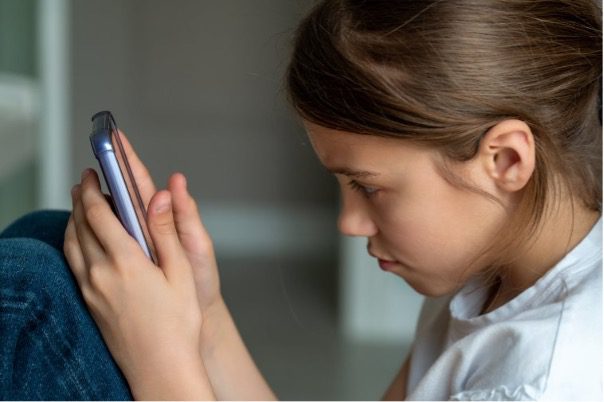
On 15 June, Sir Keir Starmer announced plans to implement a social media ban for under-16s by spring 2027. The measure will apply to major platforms including TikTok, Snapchat and Instagram, but not WhatsApp or Signal; this is framed as a response to growing public concern regarding children’s online safety. With Ofcom reporting that UK children aged 8–14 spend almost three hours online each day, policymakers are under increasing pressure to address the risks associated with digital life, from cyberbullying and harmful content to online grooming and declining mental wellbeing.
Social Media Ban: The Government’s Solution to a Public Health Emergency
The task of protecting children has been fundamentally transformed since the dawn of the digital age. Parents, educators, and policymakers alike are now confronted by the threat of what consultant paediatrician, Dr Sanjiv Nichani OBE, has coined a “screendemic“. In response to growing concerns about the impact of social media and artificial intelligence on young people, the Labour government has unveiled a series of online safety reforms. These include a social media ban for under-16s, restrictions on AI “romantic companion” chatbots for under-18s, and tighter controls on a range of high-risk online features.
The reform package represents one of the most ambitious attempts worldwide to regulate children’s activity online. However, while there is broad agreement that online harms require urgent intervention, experts remain divided over whether a blanket social media ban is the most effective way to achieve this goal.
Social Media, AI and Online Harm
Jim Steyer, founder of Common-Sense Media, places particular emphasis on the harms posed to children by the ever-expanding world of generative AI. He has suggested that UK policy should emulate California’s regulatory ‘Parents & Kids Safe AI Act’, which necessitates the provision of age-assurance systems for AI providers. Such measures would ensure that children under 18 are automatically subject to child-protective settings, parental controls and restrictions on child-targeted advertising when using software such as AI chatbots.
Chris Sherwood makes a similar case. The NSPCC chief executive has warned that reports of AI-generated child sexual abuse material are increasing at an alarming rate’, citing concerns that applications such as Stability AI, Grok and Black Forest Labs have been used by predators to abuse and blackmail young people. Sherwood has therefore called for a ‘Statutory Duty of Care for Children’s Safety’, that would hold AI developers accountable for preventing the generation of child sexual abuse material on their platforms.
The government’s reforms are intended to address some of these concerns. Alongside the proposed social media ban, ministers have announced restrictions on AI romantic companion chatbots and other high-risk online features. Yet these proposals underscore a key point of contention: should regulation focus on restricting children’s access to digital services, or on redesigning those services to make them safer?
Could the Social-Media Ban Do More Harm Than Good?
Prime Minister, Sir Keir Starmer, is convinced that a comprehensive social media ban for under-16s, is the only way forward, unwilling to “compromise on the safety and happiness of our children”.
However, critics argue that the policy risks creating new problems of its own.
In an article recently published by Chamber UK, CEO of the Molly Rose Foundation, Andy Burrows, explains “why a ban is the wrong answer”. The online safety advocate claims that such a “blunt and simplistic approach” is harmful because it will leave young girls ill-prepared and vulnerable when the floodgates of online misogyny are opened at age 16. He also claims that this policy could have adverse effects for neurodiverse or LGBTQ+ children who rely on social media for “connection, identity exploration and support”.
Lessons from Australia’s Under-16s Social-Media Ban
Burrows cites the example set by Australia as evidence that this legislation may prove ineffective in the long-term. He notes that the country’s equivalent of CAHMS (Child and Adolescent Mental Health Services) has reported that 10% of new referrals stem from the country’s recent social media ban.
Meanwhile the Molly Rose Foundation has also reported that 60% of Australian Children are still using social media despite the ban’s implementation for under-16s, suggesting that a blanket reform may not be the catch-all solution that it is often believed to be.
Burrows therefore advocates amendments to the Online Safety Act, including measures to tackle the purposefully addictive design of social media algorithms, as well as targeted minimum age ratings on specific, high-risk software features such as livestreaming or AI-Chatbots.
These criticisms do not diminish the seriousness of online harms. Rather, they raise important questions concerning the most effective way to address them. While experts may vehemently disagree on how best to respond, there is consensus on one essential point: the need for swift and decisive action. Whether the under-16s ban will ultimately prove effective is difficult to foresee. What is clear, however, is that the government has heard the public’s cry to intervene.
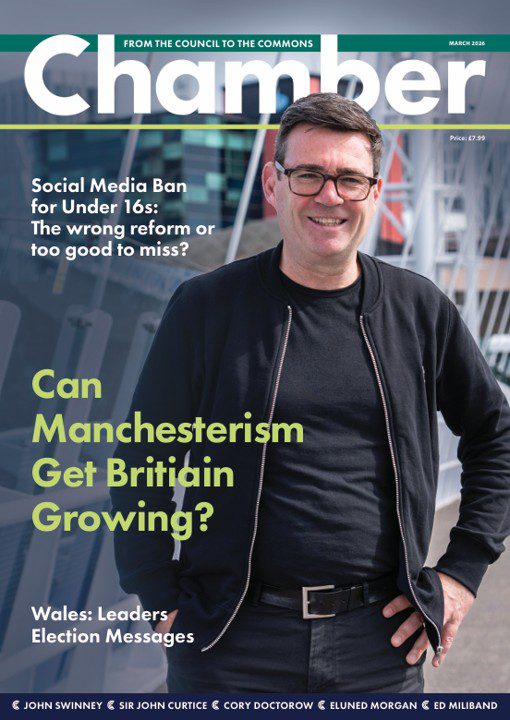
You can still get a copy of our new edition of ChamberUK. Our parliamentary journal.
Photo Credit: Shutterstock