
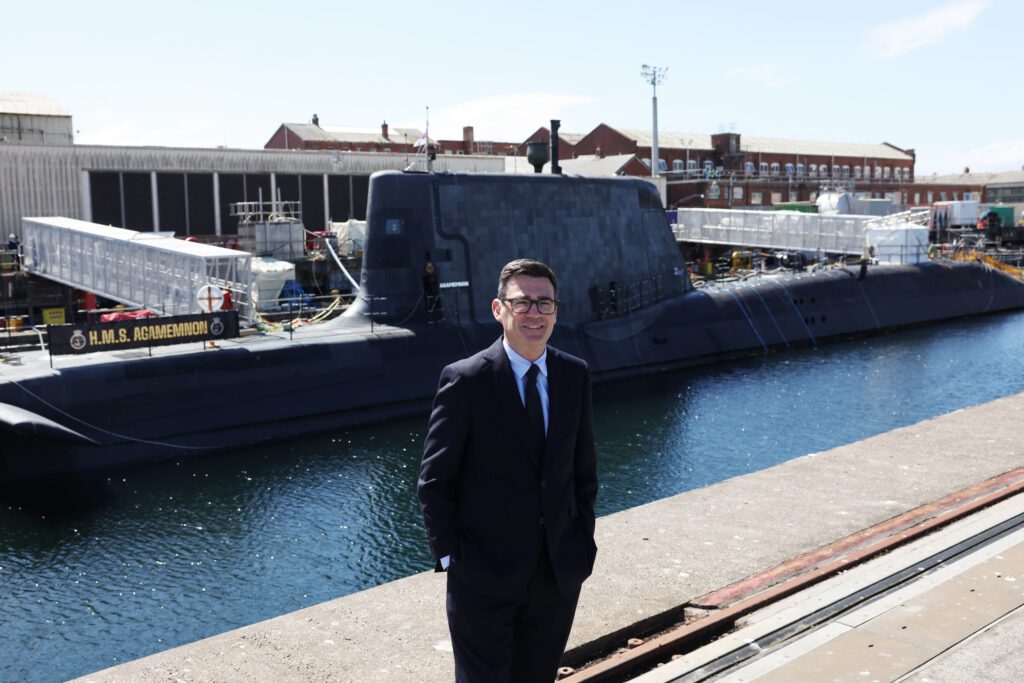
This week, Prime Minister Andy Burnham announced an £8.4 billion investment in the next stage of the Dreadnought-class nuclear submarine programme. The initiative includes £5.9 billion awarded to BAE Systems, which is responsible for building the fleet that will replace the ageing Vanguard-class submarines.
The programme aims to strengthen the UK’s defence capabilities by delivering four new Dreadnought-class ballistic missile submarines. They will be the Royal Navy’s largest, stealthiest and most powerful submarines, maintaining the UK’s continuous at-sea nuclear deterrent from the 2030s onwards.
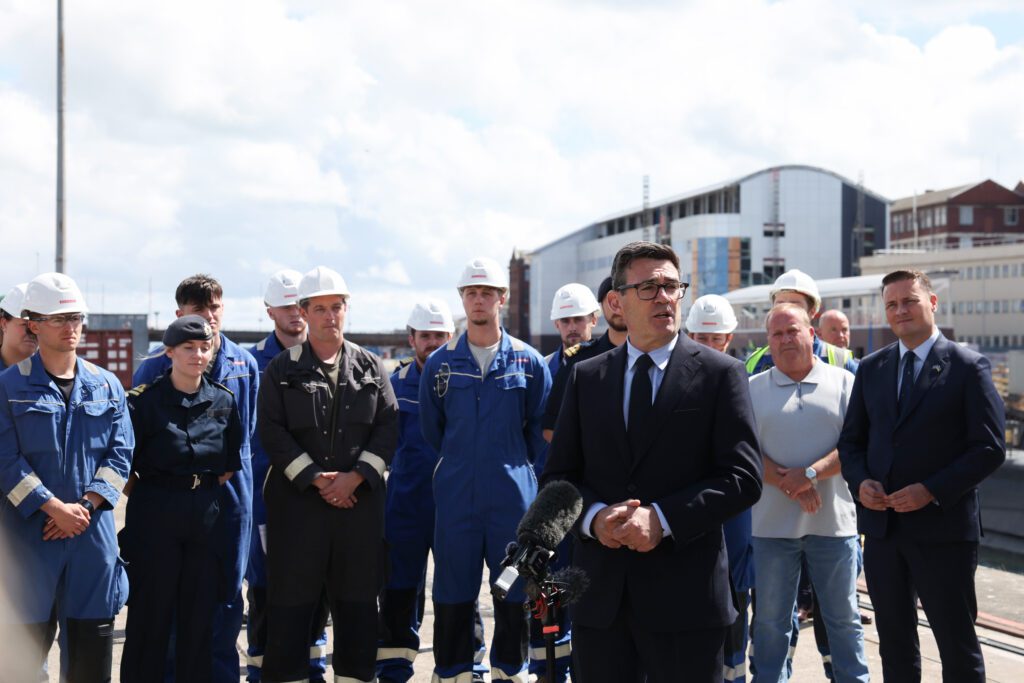
Burnham, however, has chosen to focus as much on the economic and social impact of the programme as on its defence benefits. Alongside the unveiling of the latest funding phase, known as Delivery Phase 4, or DP4, he launched an apprenticeship initiative aimed at creating opportunities for young people, particularly in the North West, where much of the project is based.
Jobs, Skills and Apprenticeships
The funding is divided into two main allocations: £5.9 billion for BAE Systems and £2.5 billion for the wider supply chain. The Government says the investment will help support and create 22,000 apprenticeships by 2035.
This aligns closely with Burnham’s announcement earlier this week emphasising the importance of vocational training and giving “the hard hat just as much value as the graduation cap”.
Burnham argues that the programme can help reverse the rise in the number of young people who are not in education, employment or training, while also supporting smaller local businesses to recruit and train new workers.
The Government claims that current spending on the UK’s nuclear deterrent supports approximately 47,000 jobs, with this figure expected to rise to 65,000 by 2030. This supports Burnham’s wider ambition to reduce youth unemployment and inactivity, although the announcement has attracted criticism.
With public finances already under considerable pressure, some have questioned whether additional funding should be directed towards existing training programmes or invested in other forms of economic development.
Part of the apprenticeship initiative will help small and medium-sized enterprises in the local defence supply chain recruit up to 30 apprentices over the next three years. It draws on a model developed by BAE Systems in Barrow-in-Furness, but the initial target has been criticised as modest.
With the number of young people not in education, employment or training now exceeding one million, critics argue that 30 targeted apprenticeships will make only a limited contribution to addressing the national challenge.

Questions over Defence Spending
The funding forms part of a four-year plan to spend £63.6 billion on the Defence Nuclear Enterprise, a partnership between government and industry responsible for maintaining the UK’s continuous at-sea deterrent.
Most of the funding will be used to keep the existing nuclear submarine fleet operational, develop replacements for submarines currently in service or production, and expand manufacturing facilities.
These spending plans sit alongside Burnham’s ambition to honour NATO commitments by increasing defence spending to 3.5 per cent of national income. However, questions remain over whether the Government will meet its own target of spending 3 per cent of GDP on defence by 2030.
The plans themselves are not entirely new. Much of the programme was already under way towards the end of Keir Starmer’s premiership and was included in the Defence Investment Plan.
John Healey, who resigned as Secretary of State for Defence under Starmer amid frustrations over the unclear timetable for defence funding, is now serving as Chancellor of the Exchequer under Burnham and supporting the programme.
Despite previously expressing concern that Starmer was not moving quickly enough to meet the UK’s defence targets, Healey has remained positive about the latest announcement. It remains to be seen whether this reflects renewed confidence in the Government’s plans or whether familiar concerns about funding and delivery will return.
Adding to the uncertainty, the current Defence Secretary, Wes Streeting, has declined to provide further details about how Burnham intends to meet the 3 per cent target.
Political Criticism and Continuity
Opposition parties have also raised concerns about the initiative.
Green Party Westminster leader Dr Ellie Chowns questioned why such substantial funding was being provided for “weapons that should never be used”, highlighting the longstanding ethical debate surrounding the UK’s nuclear deterrent.
For Reform UK, Danny Kruger described Burnham’s announcement as a “rehashed spending plan that did nothing”, arguing that the “crisis” facing the UK’s nuclear programme was not being properly addressed or understood.
The criticisms are significant, but some may be directed as much at the wider programme as at Burnham himself. Many of the policies and spending commitments announced this week were inherited from the previous government and would probably have continued regardless of the change in leadership.
Final Thought
The Dreadnought-class announcement is far from surprising and, as the country becomes more familiar with Andy Burnham’s domestic agenda, neither is its emphasis on apprenticeships and regional opportunity.
The real question is what the next four years will hold: whether the Prime Minister can remain within the available budget, whether Healey will again become frustrated by the pace of defence investment, and whether the programme can deliver meaningful opportunities for the communities it is intended to support.
Only then will it become clear whether the initiative can help steer the country towards greater security and prosperity – or leave it drifting into deeper financial waters.
Photo: Lauren Hurley/No 10 Downing Street