
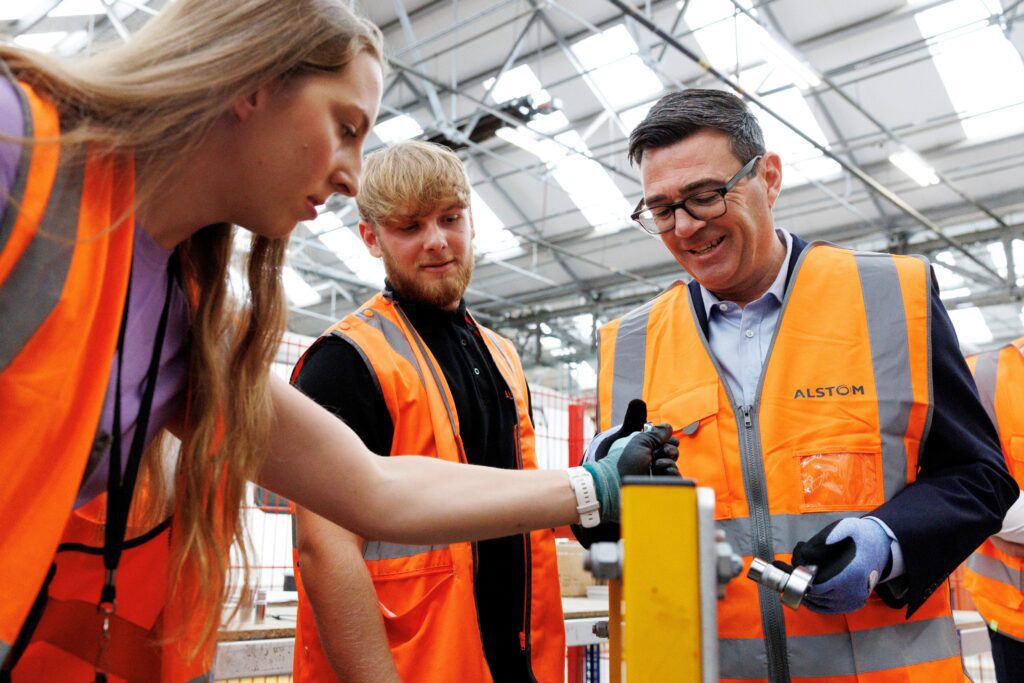
As of yesterday, the Prime Minister has unveiled a new plan to revitalise the education system, placing a greater importance on vocational training and technical skills. He has set out a new policy that will come into practice in September of 2028, launching new vocational pathways for children starting from Year 10 in combination with the core subjects. Following a report from Alan Milburn that warned of a “lost generation” of skills in the UK youth, this is a dramatic effort to tackle the youth unemployment crisis and lower welfare payments.
The aim of this educational reform is to promote technical skills and vocational knowledge by offering courses alongside the core subjects, maths, English, and science. Included in this is the chance to gain work experience and create connections with local employers, boosting local business visibility and recognising practical skills and qualifications with the same weight as traditional academic orientations.
Vocational Pathways or AI – Who Will Win?
Following data published earlier this year, the UK is observing over 1 million young people aged 16-24 who are not in employment, education or training (NEET), the highest number seen for more than 12 years.
The UK retains a strong service sector. This programme aims to teach the skills required to work in the service sector and encourage young people to enter the workforce, specifically for local vocational jobs within their community. The hope is that this will help tackle the NEET problem.
This change to the education system has been welcomed by many, including the Education Secretary Lucy Powell, who called the programme “a real shared effort…that connects young people to jobs and careers in their local area”. The Mayor of London, Sadiq Khan “welcomed the new plans” and warned against the advancements of AI as “changing the world of work altogether”, an idea echoed by multiple political figures and business owners throughout England.
In a similar vein, Jambi Palaniappan, CEO of Checkatrade expressed that in an age of AI reshaping the job market, “a trade is one of the most secure bets a person could make”.
Georgina Hutchinson, Insights Director at Regenerate, a charity that pioneers business solutions to the UK’s biggest social and environmental challenges said:
“Delighted by this announcement on education. In our new world of AI, a good job to a young person today looks quite different to what it did a decade ago. Today’s announcement is government policy catching up with young people’s aspirations, and the reality of jobs now and in the future.
Shadow of a Doubt
This proposal however has not been met with universal acclaim. The Shadow Work and Pensions Secretary Helen Whately told the BBC that although improving vocational education was the general consensus, the job shortage was caused by the Labour Government themselves, arguing that “this announcement will not solve that”.
Even those who have welcomed the changes still express reservations. The Association of School and College Leaders warned that schools were already dealing with strict budgets and having to adapt to new SEND regulations – the addition of vocational courses could create issues with funding and struggles to introduce high-quality technical education on top of what they are already providing.
Critics of the programme have noted Burnham’s emphasis on working in conjunction with local industries, and questions have been raised concerning the efficacy in areas with low industry. Additionally, such focus on local employment could result in a lack of transferrable skills to other areas.
Munira Wilson, spokesperson for education for the Liberal Democrat’s argued that the change had to come with “flexibility” for students to change between academic and technical pathways. This follows concerns that choosing vocational education at just 14 years old could limit young people’s access to wider knowledge and force them onto a more narrow pathway – a direct transgression of this programme’s aim.
What’s Old is New Again
The concept of vocational training is not a new idea. In the early 2000s, the Labour Government, of which Burnham was a member, launched GCSE equivalents to many vocational subjects. This boosted the number of children taking these Level 2 alternatives, as schools were eager to place children on courses deemed “easier” in an attempt to reach the milestone of achieving 5 or more GCSES at grade A* – C. However, a national data study conducted by researchers Simon Burgess and Dave Thompson found that the majority of children placed on these courses were receiving free school meals.
This raises the question of whether this programme is just a dressed-up way of enunciating the divide between state and private education. Wilson of the Liberal Democrats hinted at this idea by emphasising that children should not be left “baking in disadvantage” as a result of these new measures.
Final Thought
While the new education programme has certain distinct advantages, including widening vocational skill sets, lowering welfare payments and boosting job availability for young people, the worry remains that this measure will just be another New Labour Government endeavour that Burnham is trying to revive. His emphasis on locality could prove to be both a blessing and a curse, improving local economies while reducing opportunity for young people. We are now left to see what this education programme will teach us about Burnham and the future of Britain’s youth.

You can still get a copy of our new edition of ChamberUK. Our parliamentary journal.
Photo Credit: Number 10