
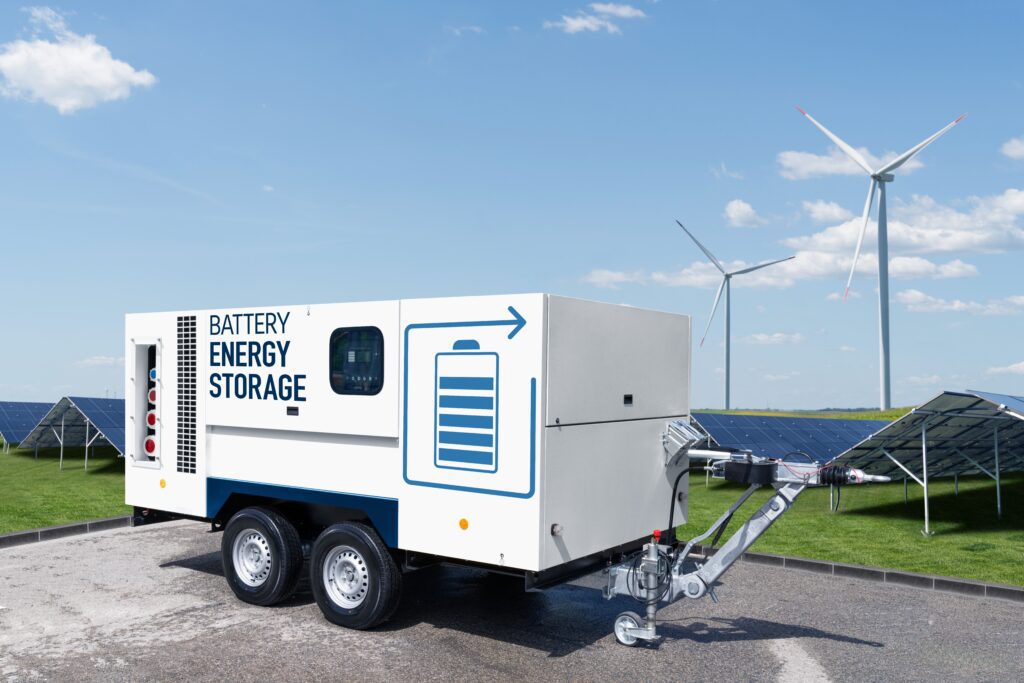
A new £28 million Government challenge will back technologies capable of storing renewable electricity for more than 100 hours, creating new opportunities for clean energy innovators to secure public funding. Curia has previously supported successful green hydrogen projects by developing the economic, social, and environmental evidence used to strengthen the case for government investment.
The Government has launched a new £28 million Ultra-Long Duration Energy Storage (Ultra-LDES) Challenge, opening another source of public funding for UK businesses developing technologies capable of helping solve one of the biggest challenges facing the transition to renewable energy.
Announced on 20 August by the Department for Business, Innovation, Science and Trade (DBIST), the Department for Energy Security and Net Zero (DESNZ) and UK Research and Innovation (UKRI), the programme will support technologies capable of storing clean energy for at least 100 hours.
That is equivalent to providing power for homes and businesses for more than four days, helping the electricity system bridge extended periods in which wind and solar generation is low.
The programme will focus particularly on new battery technologies and underground hydrogen storage, with Government arguing that developing both at scale could reduce Britain’s exposure to volatile international gas markets while opening up new industrial and investment opportunities.
Why storing renewable power for 100 hours matters
Wind and solar are now among the cheapest sources of electricity available in Britain, but their intermittency creates a fundamental challenge.
When generation exceeds demand, renewable electricity can be wasted or constrained. When wind and solar output falls, the system requires other sources of electricity to make up the difference, including gas-fired generation.
Ultra-long duration storage is intended to bridge that gap by allowing large quantities of renewable electricity to be stored when generation is plentiful before being released back into the system when it is needed.
The Government believes reducing reliance on natural gas could both strengthen domestic energy security and insulate households and businesses from some of the international commodity price movements which contributed to the recent energy crisis.
Science Minister Chris McDonald MP said:
“When we unlock the potential of science and innovation, it can improve all of our lives. That is what this challenge is all about; using the world class scientific expertise that we have in the UK to benefit people in every postcode.
“Clean sources of power are vital to meeting our energy needs as a nation. If we can meet the challenge of storing energy from renewables, we will improve our energy security, bring down energy bills in the long-term, and leave all of us better off.”
Batteries and hydrogen form two sides of the challenge
The programme is divided into two principal areas.
The first will support the development of electrochemical technologies capable of supplying electricity for more than 100 hours. Many of these technologies have yet to reach commercial deployment at scale, creating an opportunity for Britain to establish domestic manufacturing, intellectual property and supply chains as the global market develops.
The second will focus on systems capable of storing hydrogen underground and releasing it when required.
Government estimates suggest this could eventually reduce total energy-system costs by between £14 billion and £50 billion between 2035 and 2050.
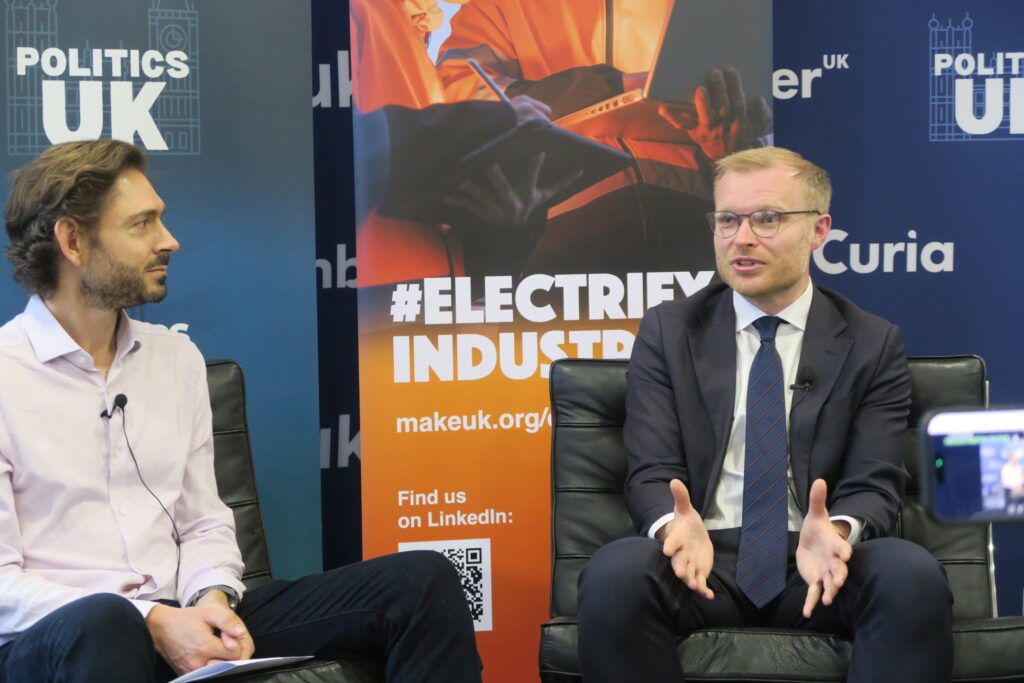
Energy Minister Michael Shanks MP said:
“Homegrown clean energy is our route to more affordable bills and energy security and storing it for when we need it most is critical.
“By backing new cutting-edge battery technology and hydrogen storage with this £28 million grant, we will store more clean power, reduce reliance on expensive gas generation and deliver a more secure energy system.”
For the businesses developing these technologies, however, the challenge is not simply proving that an innovation works.
Moving emerging energy technologies from demonstration into commercial infrastructure requires businesses to demonstrate technical viability, deliverability, economic value, credible routes to market and their potential contribution to wider Government objectives.
That is where previous experience of securing Government backing for emerging clean-energy technologies could become increasingly relevant.
Curia Past Success: building the investment case for green hydrogen
Independent policy institute, Curia has previously worked with energy infrastructure developer Carlton Power to demonstrate the wider economic, social and environmental value of emerging green hydrogen projects.
Curia produced detailed assessments covering Carlton Power’s proposed green hydrogen developments at Trafford in Greater Manchester, Barrow-in-Furness in Cumbria and Langage near Plymouth.
Rather than focusing solely on the engineering proposition, the work sought to establish what investment in the projects could mean for their surrounding economies.
Curia assessed factors including local economic growth, jobs, skills, carbon reductions, energy resilience, impacts on local industry and wider social value, drawing on Government data alongside evidence gathered from stakeholders, suppliers and prospective hydrogen users.
The Barrow analysis, for example, estimated that development could support more than 300 jobs, contribute millions of pounds in Gross Value Added to the local economy and avoid more than 23,000 tonnes of carbon emissions annually.
At Langage, Curia estimated the project could add £1.26 million in GVA to the local economy by 2030, while helping demonstrate how smaller distributed hydrogen facilities could support industrial decarbonisation and renewable-energy integration.
Importantly, the work also considered the projects against the Government’s Social Value Model, helping translate a new energy technology into the economic and public-policy outcomes relevant to Government investment decisions.
All three Carlton Power projects were subsequently successful in the first Hydrogen Allocation Round, securing financial contracts from DESNZ.
The projects represented around 55MW of capacity and approximately £100 million of investment, providing a useful case study in how emerging energy projects can build an evidence base extending beyond the technology itself.
The experience does not mean independent policy analysis alone wins Government funding. But it demonstrates the importance of being able to answer a wider set of questions: What problem does the technology solve? What economic value will it create? Where will the jobs be? Who will buy the product? What are the environmental benefits? And how does the project contribute to Government’s wider objectives?
Those same questions are likely to matter as businesses compete for the next generation of clean-energy funding.

A £3 million competition is already open
Alongside the wider £28 million programme, UKRI has launched an initial competition providing up to £3 million for project-development studies into electrochemical ultra-long duration energy storage.
UK registered businesses can apply individually or as part of collaborations, with projects expected to examine areas including technology, engineering design, costs, scale-up, markets, manufacturing, supply chains and future development.
Individual funding requests are expected to fall between £350,000 and £700,000, with the competition closing on 30 September 2026.
A further at least £10 million is planned for a second phase supporting large-scale demonstrator projects, currently expected to launch in 2027.
For innovators, that means the current competition is as much about establishing whether projects can move credibly from concept to deployment as it is about advancing the underlying technology.

Building a new UK energy-storage industry
Jenny Hill, UKRI’s Clean Energy Challenge Director, said:
“Ensuring the UK has the technologies capable of storing energy efficiently and effectively is a vital part of the equation in the move to a clean and more secure energy system. This Challenge will help propel the UK to the forefront of the global energy storage market, creating skilled jobs and attracting private investment.”
The industrial opportunity could extend well beyond batteries.
As renewable electricity generation grows, hydrogen could provide a mechanism for converting excess renewable electricity into an energy source capable of being stored over significantly longer periods before being returned to the energy system or used directly by industry.
Clare Jackson, CEO of Hydrogen UK, said:
“Ultra-long duration energy storage is critical for ensuring the UK moves to a more secure, low-carbon energy system with lower costs for consumers and businesses. Hydrogen has a fundamental role to play in that future energy mix, providing a way to store renewable energy over long periods and use it when the system needs it most. Supporting the development of hydrogen storage alongside flexible power generation will be key to unlocking these benefits across the wider energy system.
“The Ultra-LDES Challenge is an important step towards developing the technologies and infrastructure the UK will need at scale, and we look forward to supporting the innovative hydrogen technologies that emerge.”

From public funding to private investment
The £28 million Ultra-LDES Challenge forms part of a much bigger attempt to use Government research and innovation spending to establish commercially viable industries.
It completes the rollout of £102 million of Clean Energy challenges, alongside the £74 million Consumer-led Flexibility Challenge.
Both sit within the R&D Missions Accelerator Programme, through which Government plans to invest at least £500 million by 2030, while seeking to leverage a further £1.5 billion in private investment alongside public money.
That private-investment dimension will ultimately determine whether technologies backed by programmes such as Ultra-LDES develop into significant British industries.
Government grants can help de-risk early development and demonstration, but successful businesses will still need to prove their commercial markets, build supply chains, secure private capital and demonstrate measurable economic and social returns.
Previous projects such as Carlton Power’s green hydrogen developments illustrate how building that wider evidence base can support the journey from an emerging technology proposition towards Government backing and private investment.
With billions likely to be invested in Britain’s electricity system over the coming decades, the £28 million announced this week may be relatively small in isolation.
The bigger prize is whether it helps create technologies, businesses and supply chains which allow Britain to store its increasingly abundant renewable electricity – and turn an energy-system challenge into a new domestic industry.
Find out more
Curia is supporting members as they look to enter this Challenge with advisory services.
To speak to Curia’s expert team at the Clean Energy and Environment Research Group, please contact team@curiauk.com