
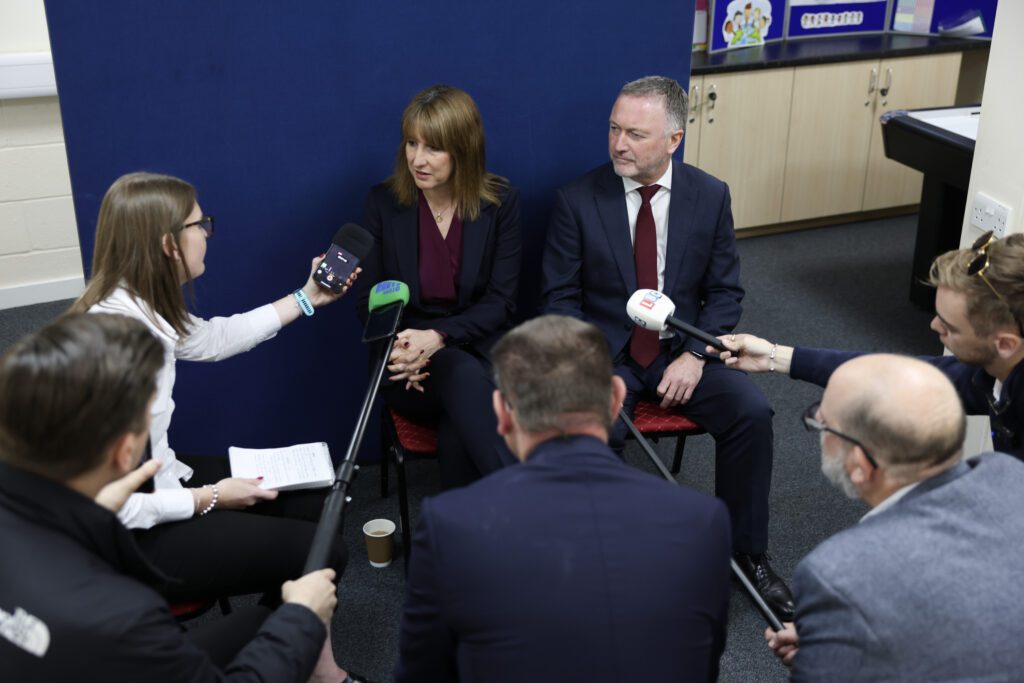
When Housing, Communities and Local Government Secretary, Steve Reed met with leaders of the social care sector earlier this week, he issued a firm warning: providers extracting profit from children’s social care services, funded by the taxpayer, could soon be publicly “named and shamed” and face caps on profit.
In a speech delivered on behalf of the Ministry of Housing, Steve Reed declared that neither he, nor the Secretary of State for Education, Bridget Phillipson, will “flinch from capping the profits of private providers placing vulnerable children in care…Profiteering is not good for business or for taxpayers and most of all, it’s not good for the vulnerable children who deserve our support”
Targeting what providers have conceded are “bad apples” in the industry, the Government signalled its willingness to intervene in a market which has historically enabled private providers to charge inflated fees to local authorities, and thereby generate substantial profits from publicly funded care.
Biggest Reform of Children’s Social Care In A Generation
The announcement builds upon wider reforms introduced through the Children’s Wellbeing and Schools Act 2026, designed to strengthen government oversight of the children’s social care market and grant ministers powers to cap provider profits if necessary. Backed by £2.4 billion of investment over the next three years, the Government hopes to deliver what it has described as the “biggest overhaul of children’s social care and child protection in a generation”.
The decision to target profits reflects a growing belief within government that the current care market is failing to deliver value for money. While private providers argue that profits are necessary to attract investment and expand capacity, ministers increasingly view excessive returns as evidence of a system operating in the interests of providers rather than children. Naming and shaming therefore serves both a practical and political purpose. It allows the Government to place immediate pressure on providers while signalling to voters that it is willing to intervene where public money is perceived to be funding private profiteering.
The Market is Failing Britain’s Most Vulnerable Children
The proposed reforms come amid growing concern that the children’s social care market is no longer working for either local authorities or the vulnerable children who rely upon it. Demand for care placements has risen sharply over the past decade, while the number of suitable placements has failed to keep pace. As a result, authorities are often left with little choice but to accept increasingly expensive contracts from private providers, or resort to using homes which have not been officially registered with Ofsted. This trend is exacerbated by councils’ statutory duty to look after children who cannot be cared for by their parents.
What Does Labour’s Social Care Reform Mean for Britain’s Most Vulnerable Children?
If successful, the reforms could ensure that more public money is spent directly on supporting children rather than generating profits. Reduced pressure on council budgets could also allow local authorities to invest more heavily in preventative services, helping families before children enter the care system.
However, these reforms are not without risk. Some providers argue that tighter regulation and profit caps could discourage investment in a sector already struggling to meet demand. If fewer providers enter the market, placement shortages could become even more severe.
Ultimately, Labour’s reforms represent a significant intervention in a sector many believe has become unsustainable. The Government’s strategy assumes that driving out the sector’s “bad apples” will improve outcomes for children and taxpayers alike.
Whether that proves successful will depend on a larger question: are profiteering providers the problem, or are they simply operating within a system that has been dysfunctional for years?

You can still get a copy of our new edition of ChamberUK. Our parliamentary journal.
Photo Credit:
Featured Image: Suriyachan/Shutterstock
In-Text Image: Simon Dawson/UK Government