

Businesses seeking major government contracts will be judged more heavily on the jobs, training and opportunities they create in local communities under a significant overhaul of public procurement announced by the Burnham Government.
The reforms will double the importance attached to local economic and social benefits when contracts worth at least £5 million are awarded. At the same time, ministers are removing several of the broader environmental and social criteria contained within the existing Social Value Model.
The Government says the changes will make procurement easier for smaller businesses, voluntary organisations and social enterprises while ensuring that its £90 billion annual central government contracting market supports British jobs and skills.
Businesses will be able to gain additional credit by creating well-paid local jobs, treating workers fairly, responding to regional skills shortages and offering apprenticeships, training or work placements.
Social-value weighting doubled for major contracts
Under the new model, the weighting attached to local benefits will rise from 10 per cent to 20 per cent for government contracts worth £5 million or more.
This means a bidder’s commitments on jobs, fair work, skills and opportunities could become substantially more influential in deciding which organisation receives a major public contract.
The reforms will apply to central government procurements from 1 January 2027, following the publication of detailed technical guidance in the autumn.
Suppliers will be assessed on whether they will create or retain high-quality jobs, pay above the legal minimum and help address skills shortages within the communities or industries connected to a contract.
Commitments could include training programmes, apprenticeships and up to 45 days of work experience. Ministers want particular attention to be given to young people not in education, employment or training, known as NEETs, alongside care leavers and people with long-term health conditions.
The Government says its objective is to ensure that public spending creates visible benefits in every postcode, whether a contract is delivered by a British company or an international provider.
Procurement became a ‘tick box exercise’
First Secretary of State Louise Haigh said the existing system had become too focused on demonstrating compliance with complicated requirements rather than producing outcomes that residents could see.
Haigh said:
“Every pound of taxpayer money should be spent in a way that benefits local communities – creating good jobs and giving young people the skills they need for the future.
“For too long, securing government contracts has been a tick box exercise that fails to deliver the positive change that people feel in their pocket and see in the places they live.
“We are doing things differently. These new rules will ensure the £90 billion that is spent each year through government contracts supports British jobs, skills and people in every postcode.”
Cabinet Office Minister Mark Ferguson said companies benefiting from public expenditure should also be expected to give something back to the communities in which they operate.
He said:
“We believe that if you benefit from something you have a responsibility to give back.
“These changes will mean that businesses that benefit from the billions of taxpayer pounds spent by Government will have to create more local jobs and opportunities for young people in their area.
“This is about using every tool we have to help people in every postcode live a better life.”
The Government’s press release presents the reforms as part of a wider package intended to protect national security, reduce waste, strengthen supply chains and support local economies.
Net Zero and wider social tests removed
The announcement has been described as the Government scrapping procurement rules, although the changes more specifically relate to the Social Value Model used to evaluate the additional benefits promised by bidders.
The existing model includes a menu of outcomes from which procurement teams can select criteria that are relevant and proportionate to an individual contract.
These include reducing carbon emissions, supporting clean energy, improving biodiversity, reducing waste, addressing modern-slavery risks, promoting physical and mental wellbeing, supporting equality and raising awareness of domestic abuse.
Under the new approach, the principal model will be narrowed to focus on jobs, fair work, skills and economic opportunity.
This does not mean that every environmental, employment, safeguarding or modern-slavery obligation applying to public suppliers has been abolished. Separate legislation, procurement rules, departmental policies and contract-specific requirements may continue to apply.
However, companies will no longer ordinarily be asked to compete for social-value points across the same broad range of environmental and social policy objectives. The Government argues that the previous model became too complicated and could reward polished tender responses rather than clear, measurable benefits for the places in which contracts were being delivered.
Environmental organisations have criticised the change, arguing that local employment and environmental improvement should not be treated as competing objectives. Campaigners have said public procurement could simultaneously create jobs, reduce emissions and develop the industries required for the transition to a lower-carbon economy.
Deindustrialised communities have been let down
Labour MP for Cannock Chase and Chair of the APPG on Public Sector Efficiency, Josh Newbury welcomed the change in direction but said successful reform would depend on what happened after contracts were awarded.
The APPG examines effective delivery in public sector procurement and commissioning, including how contracting can achieve better outcomes and value.
Newbury told Politics UK:
“These announced reforms suggest a promising shift in the Government’s approach to the wider benefits of public sector procurement.
“For too long, complex rules have effectively locked out small businesses and meant that, for example, environmental projects hundreds of miles from where construction happens or services are provided have sometimes taken precedence over opportunities for young people living nearby. This broad-brush approach to environmental and social good has all too often let down deindustrialised communities like the ones the Prime Minister and I represent. I know that this announcement will be music to the ears of people in towns and villages like mine in Cannock Chase.
“But the reality is that this change won’t come simply from tweaking the weighting that decides who wins public sector contracts. Everyone in public sector procurement must ensure that good jobs, fair work, skills and opportunity are demanded and delivered right the way through the life of contracts.”
His intervention places the focus on contract management as well as the initial procurement decision.
A company could promise jobs, training and placements as part of a successful tender, but those commitments will have little value unless departments measure whether they are delivered, examine the quality of the opportunities created and act when performance falls short.

Performance reports to be made public
To address this risk, government departments will be expected to assign a key performance indicator to the jobs, skills or opportunity commitments made under major contracts.
Suppliers’ performance will be assessed against their original pledges, with annual progress reports made publicly available.
This should allow departments, Parliament and the public to compare the promises used to secure a contract with what the supplier actually delivered.
The detail of the performance framework will matter. Contracting authorities will need to define what qualifies as a new or retained job, establish whether work placements provide useful experience and determine how apprenticeships and training contribute to sustainable employment.
Departments will also need to monitor delivery through supply chains. On major infrastructure, technology and service contracts, much of the work may be carried out by subcontractors rather than the organisation that originally won the procurement.
Newbury’s comments suggest that the reforms should affect the management of the entire contract rather than operate solely as a scoring exercise during the tender process.
Matthew Gordon OBE, Chief Executive of Spectra, the delivery partner for the Care Leaver Covenant, similarly emphasised the need for measurable outcomes.
He said:
“Today’s announcement is a welcome sign that government is taking both social value, and the places it can reach, more seriously. If companies are asked to deliver real, measurable social value wherever they win public work, then social value stops being a box to tick and becomes what it should always have been: an enabler of opportunity, and of good growth in every postcode.”
£1 million threshold intended to help small firms
The Government is also raising the threshold at which the social-value requirements will generally apply.
The simplified model will normally cover contracts worth more than £1 million, meaning smaller procurements will not be subject to the same requirements.
Ministers argue that the previous approach placed a disproportionate administrative burden on small businesses, scaling companies, charities, social enterprises and civil society organisations.
Large suppliers often employ specialist bid teams capable of responding to detailed procurement questions. Smaller organisations may already create jobs, use local supply chains and support their communities but lack the resources required to quantify these activities through lengthy tender submissions.
Craig Beaumont, Executive Director of the Federation of Small Businesses, said:
“FSB is pleased to have worked with the Government on making social value work better for small businesses. Lifting the threshold to £1 million ought to see many more small firms winning contracts, as small businesses deliver huge intrinsic social value, but they can often struggle to demonstrate this in procurement processes.
“This is an example of the Government and the public sector acting as a good customer, paying invoices rapidly, and helping drive economic growth through small businesses in every postcode.”
The Government says the higher threshold will allow smaller businesses and civil society organisations to demonstrate the innovation and local benefits they already provide without having to navigate unnecessary layers of bureaucracy.
‘Back British by design’
Chancellor John Healey linked the announcement to the Burnham Government’s wider economic and industrial strategy.
Healey said:
“I want every government department to be a growth department.
“We have made it a leading priority to back British, not just if possible but by design, so that procurement supports British jobs, British apprenticeships and British innovation.
“This is an active, hands-on government determined to support British businesses and make our country more resilient.”
The approach reflects a broader attempt to use the Government’s purchasing power as an economic policy tool rather than treating procurement simply as an administrative process for obtaining goods and services.
Public sector procurement from private providers increased from £288.7 billion in 2019–20 to £394.8 billion in 2024–25. The central government contracts directly affected by the new model represent approximately £90 billion of annual spending.
The Government argues that directing even a proportion of this expenditure towards skills, domestic innovation and local employment could influence labour markets, strengthen supply chains and support its Modern Industrial Strategy.
Digital infrastructure and AI skills
The National Cloud Infrastructure Programme is being presented as an example of how the Government intends to connect procurement with wider economic objectives.
The programme is examining how public bodies can better co-ordinate their demand for cloud services and use consolidated purchasing power to support the UK’s long-term digital infrastructure.
The Government says this could help create opportunities for young people, including NEETs, to develop digital and artificial intelligence skills while ensuring that the benefits of the digital economy extend beyond London and the South East.
This links the procurement reforms to the Government’s wider emphasis on sovereign capability, technological resilience and the development of domestic industries in strategically important sectors.
However, translating that ambition into practice will require departments to ensure that skills commitments correspond to genuine areas of workforce demand and lead to credible routes into employment.

Devolution and the 3,000 Futures initiative
The reforms will also be linked to the Government’s “devolution by default” agenda.
Central government intends to work with local and mayoral authorities to match procurement commitments to regional economic priorities. The Government’s argument is that local leaders are often better placed to understand their area’s skills shortages, employment barriers and industrial strengths.
In the West Midlands, social-value requirements are being used as part of the 3,000 Futures initiative, through which local government, central departments and industry will seek to help additional young people enter work or training.
The programme builds on the region’s Youth Guarantee Trailblazer and will test how procurement can be used preventatively to address youth economic inactivity.
This place-based approach reflects Newbury’s argument that benefits should be connected to the communities in which construction takes place or services are provided, rather than being satisfied through projects elsewhere in the country.
Industry and civil society welcome new focus
The announcement has received support from major suppliers, infrastructure businesses and organisations working with people facing barriers to employment.
Stuart Togwell, Chief Executive of Kier Group, said the new model recognised that public infrastructure should generate benefits beyond the asset being constructed.
He said:
“This new model is a welcome step to ensuring public procurement supports lasting benefits for people, communities and businesses across the UK.
“At Kier, we have long believed that what we do is about more than just the infrastructure we create. Via our regional presence, we create jobs, develop skills, strengthen local supply chains and open opportunities for those who face barriers to employment.
“This new approach recognises the powerful role procurement can play in supporting British businesses to generate positive social impact alongside economic growth. It provides a clear framework for industry and Government to work together to deliver growth and opportunity, while building the skilled workforce the country needs.”
Catch22 also welcomed the emphasis on youth unemployment and the recognition of civil society organisations within public procurement.
Andy Canniford, its Chief Officer for Impact and Growth, said:
“Catch22 very much welcomes the Government’s commitment to ensure that public procurement reaches further through social value – delivering local growth, addressing youth unemployment, and supporting local communities.
“As both a provider of employability and skills programmes through social value funding and as public sector contractor, Catch22 knows the crucial role social value requirements play in creating local opportunities.
“We are also encouraged to see the Government’s recognition of civil society expertise, innovation, and local partnership by a fairer process for the voluntary sector in public procurement processes.”
Support was also expressed by the Business Services Association, Sopra Steria, Serco and Amey, which highlighted the potential for public contracts to create skilled employment, support underrepresented groups and generate measurable benefits within local economies.
Delivery will determine whether reforms succeed
The Government has presented the policy as a move away from bureaucracy and towards social value that people can experience directly through employment, wages, training and career opportunities.
For smaller businesses, the higher threshold could reduce the cost and complexity of competing for public work. For major suppliers, the increased 20 per cent weighting means commitments to jobs and skills will carry greater commercial importance.
The controversy will centre on whether ministers were right to remove environmental and wider social criteria from the principal model, rather than retaining them alongside the stronger focus on employment.
The practical test, however, will be whether promised opportunities are delivered and whether public bodies have the capacity to monitor suppliers effectively.
As Newbury has warned, changing a tender evaluation will not, by itself, transform local economies. Success will depend on whether government departments demand clear commitments, measure them consistently and enforce them throughout every stage of a contract.
If that happens, the Government’s purchasing power could provide new routes into employment and training for thousands of people. If it does not, one form of procurement box-ticking may simply be replaced by another.
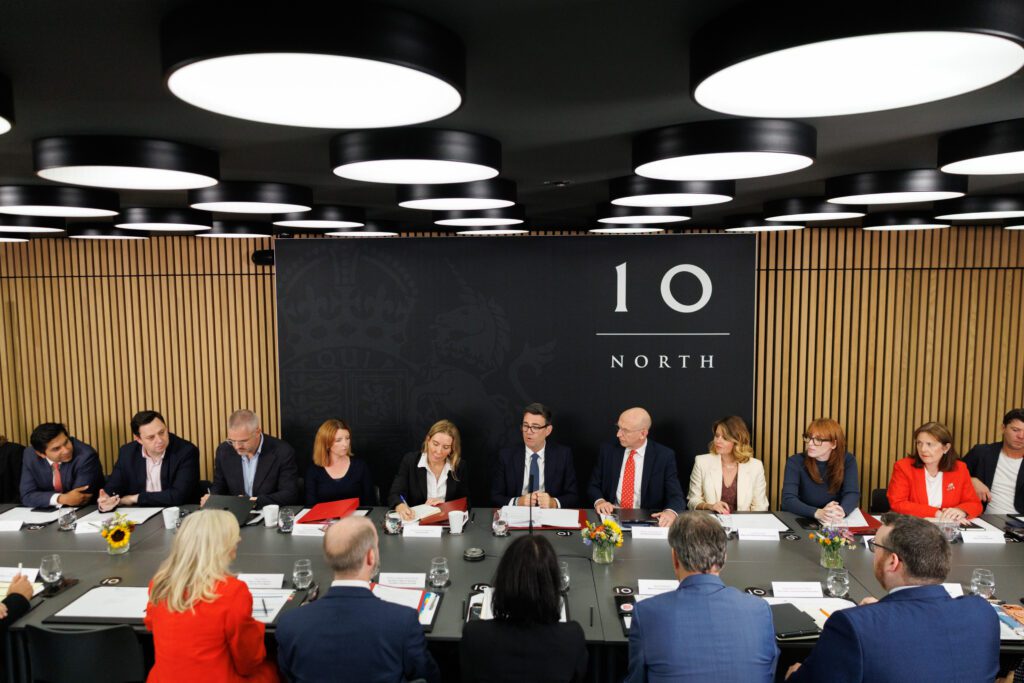
Photo: Simon Dawson/No 10 Downing Street