
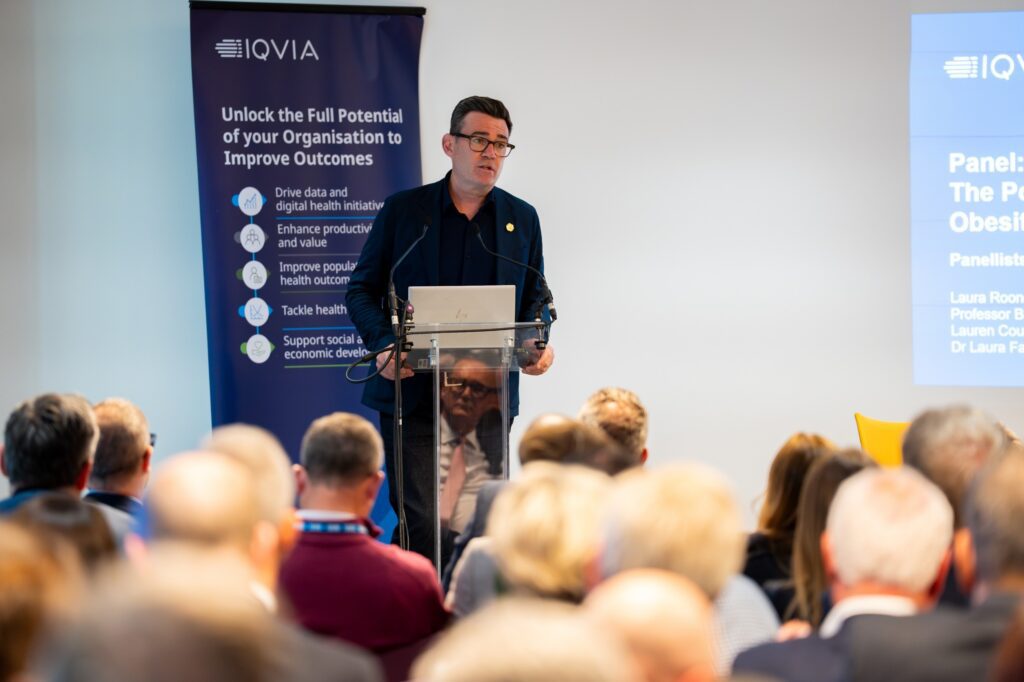
Ahead of tomorrow’s Obesity Summit, Curia looks back at what Andy Burnham set out at their Shaping a Healthier Future report launch in 2025. He offered a glimpse of a governing philosophy built around prevention, place, and the rebuilding of public services from the ground up.
When Andy Burnham addressed Curia’s Shaping a Healthier Future report launch in Manchester in 2025, he was speaking about obesity, prevention, and health inequality. But heard now, against the backdrop of his return to Westminster, and growing speculation about his national ambitions, the speech reads as something more significant.
Ahead of tomorrow’s Obesity Summit technical intervention about weight management. Nor was it simply a mayoral speech about Greater Manchester’s public health challenges. It was a statement of how Burnham thinks public services should work, why the NHS is struggling, and what kind of state he believes Britain now needs.
The NHS Cannot Be Left as the Last Service Standing
At the heart of the speech was a powerful message – the NHS cannot be expected to solve poor health on its own.
Burnham told the audience that Britain had become trapped in the wrong cycle. Since the early 2010s, governments of all colours had repeatedly promised to protect the health budget. But, in doing so, they had protected what he described as the “treatment budget” while cutting the things that create health in communities: housing, councils, leisure, welfare support, and local services.
That, he argued, leaves the NHS as “the last service standing”, absorbing the consequences of problems that began elsewhere. It is a striking phrase because it captures much of Burnham’s wider critique of government. Public services have become too reactive, too centralised, and too fragmented. The state intervenes once things have gone wrong but does not do enough to prevent people from reaching crisis in the first place.
From Treatment to Prevention
This matters because Burnham’s speech was not anti-NHS. Quite the opposite. It came from someone who has served as Health Secretary, and who clearly understands the pressure the service faces. But his argument was that the NHS, as currently conceived, is fundamentally a treatment service. What Britain lacks is a serious prevention service alongside it.
That is where the speech becomes politically revealing.
Burnham’s answer is not to continually pump more money for hospitals, more national targets, or another Whitehall reorganisation. His answer is a different model of public service reform, rooted in place. Greater Manchester, in his view, is not just a city region. It is a test bed for how the country could govern differently.
He described the city region as a highly networked place, where public services, councils, business, voluntary organisations, community groups, and health leaders are able to pull in the same direction. That is the essence of what might be called the Manchester model: devolved, practical, relational, and focused on the whole person rather than the departmental box they happen to fall into.
Given his views on reorganisation, where does this leave the NHS Modernisation Bill?
What Obesity Reveals About the Wider Crisis
On obesity, that approach has particular force.
Burnham did not frame obesity simply as a matter of individual willpower, clinical treatment or even access to new medicines. He acknowledged the importance of emerging treatments, including the new generation of weight loss drugs. But he warned against the idea that treatment alone could produce sustainable change.
His point was that obesity, smoking and addiction are often symptoms of deeper pressures. Debt, poor housing, fear, unsafe communities, financial insecurity, poor mental health, difficult relationships, and lack of purpose all shape people’s ability to live healthier lives. If public services ignore those causes, they end up treating the consequences again and again.
That is an important message for the national obesity debate. As Curia and UK Healthcare and Life Sciences Innovation (UKHLSI) convene the annual Obesity Summit in the House of Lords, the policy challenge is moving beyond access to treatment. The question is how to make interventions work safely, fairly, and sustainably in real communities.
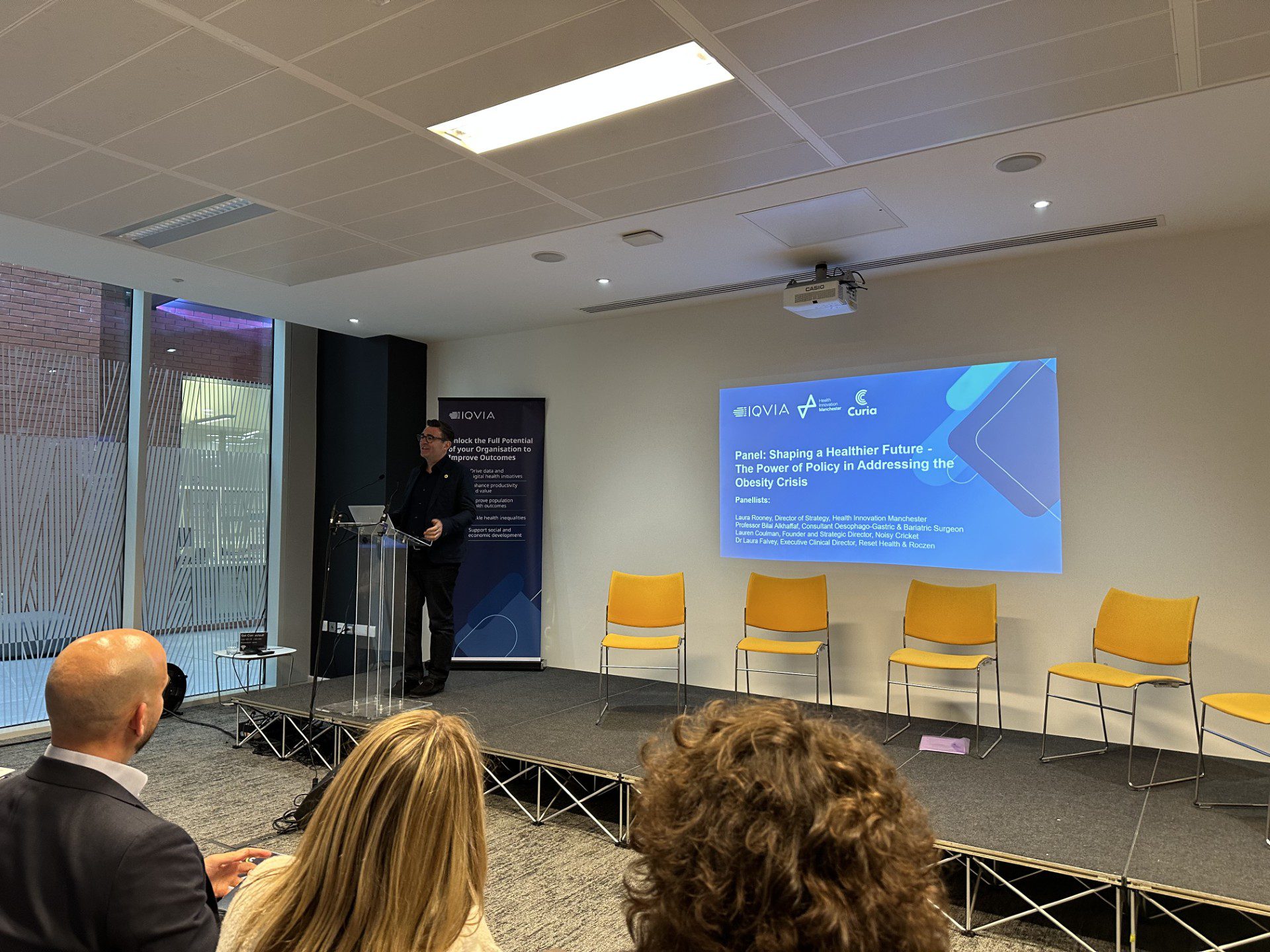
Burnham’s speech hosted by Health Innovation Manchester points towards one answer: obesity policy has to be designed around people’s lives, not just around clinical pathways.
A Whole Person Approach to Public Service Reform
That means treatment must sit alongside trusted local support. It means neighbourhood delivery matters. It means trauma-informed care is not a “nice to have”, but part of making services work for people who may have experienced stigma, poverty, poor mental health, or exclusion. It means employment, housing, debt advice, community connection, and primary care cannot be treated as separate conversations.
If Burnham were to become Prime Minister, this speech suggests he would try to make prevention the organising principle of government.
That would be a major shift from the way Whitehall usually works. The government in Whitehall is often organised around departments, budgetsm, and short-term spending settlements. Burnham’s argument is that this structure misses the way people actually live. A person struggling with obesity may also be struggling with debt, employment, housing, confidence, family pressure, and mental health. Treating any one issue in isolation may help, but it is unlikely to transform their life.
The Manchester Model as a National Offer
His vision points towards a more integrated state: one that brings health, work, housing, skills, councils, and community organisations into a common mission. In Greater Manchester, that is expressed through the Live Well approach. Nationally, it could become the basis for a new form of public service reform.
Politically, this is also why Burnham’s message has resonance beyond health policy. He is speaking to a country tired of services that feel distant, overstretched, and difficult to navigate. His argument is that reform should not mean abandoning the public realm. It should mean rebuilding it around people and places.
There is an old Labour instinct in this, but also a modern one. The old instinct is collective responsibility: the idea that health is shaped by the society around us, not only by personal choice. The modern instinct is devolution: the belief that Whitehall cannot run everything well from the centre, and that local systems need power, flexibility, and accountability.
That combination could become the basis of a Burnham pitch to the country. Not simply “more spending”, and not simply “reform” in the abstract, but a new settlement between national government and places. Westminster would set missions, funding, and rights. Places would be trusted to build the services that fit their communities.
The Challenge for a Burnham Premiership
There are risks in this approach. Prevention is easy to praise and hard to fund. Its benefits often appear over years, while Treasury decisions are made over much shorter horizons. Devolution can also be uneven, with some places better equipped than others to take on responsibility. A Burnham government would have to show how this model could be made consistent, measurable, and financially credible.
But the speech in Manchester suggests Burnham understands that challenge. His comments recognise the hard reality that the current model is not working. If the NHS is left to pick up the consequences of poverty, poor housing, insecure work, and weak community infrastructure, demand will keep rising, and the system will keep struggling.
That is why his remarks at Curia’s Shaping a Healthier Future report launch now feel important. They show a politician thinking beyond the immediate NHS crisis and asking a bigger question: what actually creates health?
Prevention Before Crisis, Place Before Whitehall
For Burnham, the answer is not only hospitals, medicines, or doctors – essential though they are. Health is created by good homes, decent work, safe communities, trusted relationships, financial security, and local support that people can actually access. The NHS treats illness. A functioning society should help prevent it.
That may be the clearest insight into Burnham’s possible vision for government. He would not seek to reform the NHS in isolation. He would seek to reform the conditions around it.
If that became the organising idea of a future premiership, the real test would be whether Burnham could turn the Manchester model into a national governing programme: prevention before crisis, place before Whitehall, and public services built around the whole person rather than the system itself.
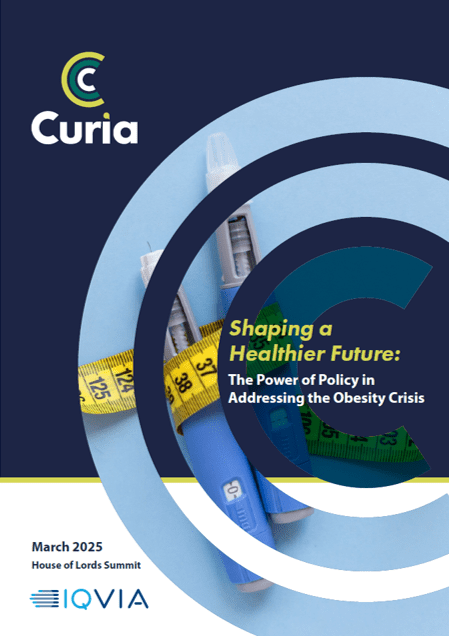
The Shaping A Healthier Future report was sponsored by IQVIA.