
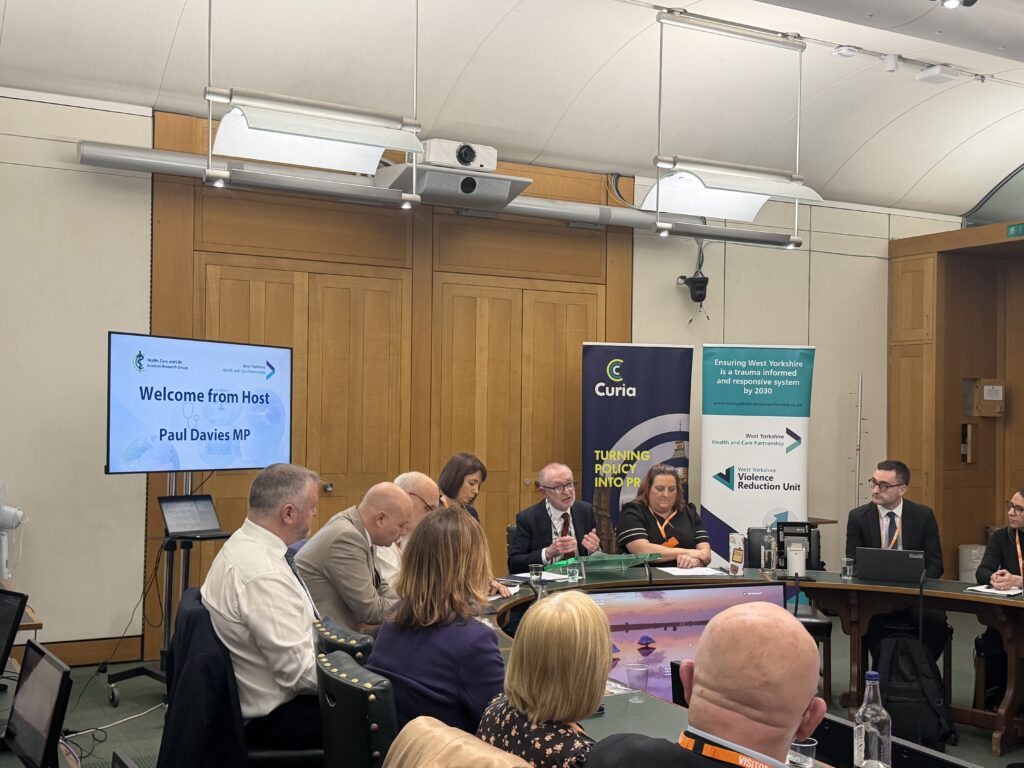
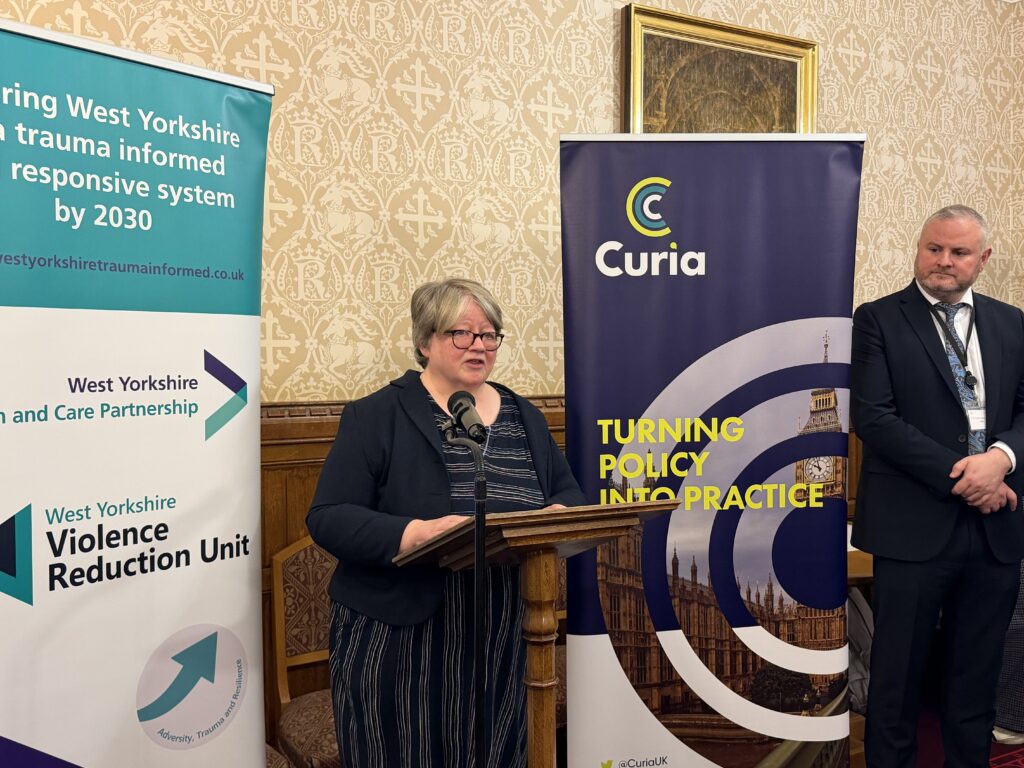
Curia has launched its new parliamentary policy roundtable report, Building a Trauma Responsive Nation, setting out the case for trauma responsive practice to become a central part of public service reform in England. (Photo: The Parliamentary Roundtable was hosted by MP for Colne Valley and Chair of the All Party Parliamentary Group for Tackling Loneliness and Connected Communities, Paul Davies)
Partner Content: The Parliamentary Policy Roundtable and Reception on which this report is based were funded by West Yorkshire Health and Care Partnership and Curia’s Health, Care, and Life Sciences Research Group. The report was produced by Curia in partnership with West Yorkshire Health and Care Partnership.
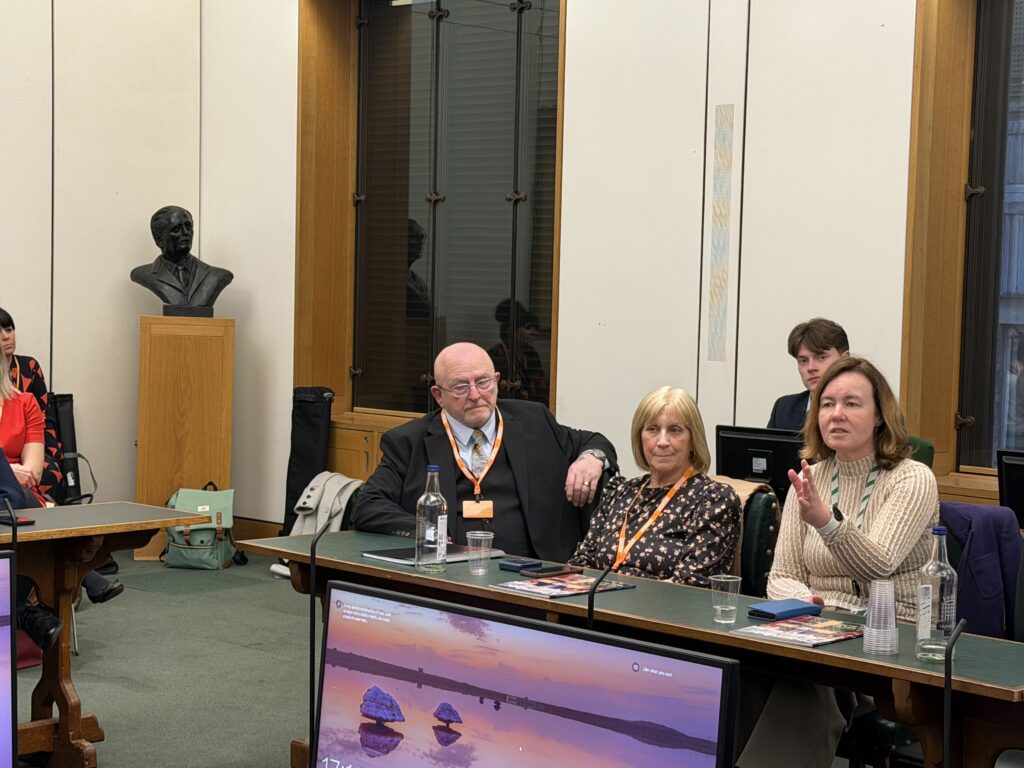
The report follows a parliamentary roundtable and reception held in Parliament, hosted by Member of Parliament for Colne Valley and Chair of the All Party Parliamentary Group for Tackling Loneliness and Connected Communities, Paul Davies MP. The event brought together parliamentarians, health and care leaders, local government, prisons, education, academics, voluntary sector representatives, and people with lived experience to examine how trauma responsive practice can be embedded across public services.
Curia argues that trauma responsive practice should not be treated as a niche clinical issue. It is a national public policy issue affecting health, education, policing, justice, housing, employment, and community life. If public services are serious about prevention, early intervention, and reducing long term demand, then trauma responsive practice must be treated as part of mainstream reform rather than an optional specialist approach.
From Awareness to Implementation
The strongest theme running through the report is that the case for action has already been made. Participants at the roundtable agreed that there is now a strong evidence base linking adverse childhood experiences, trauma, and adversity with poorer long-term outcomes across health, education, employment, and contact with the criminal justice system.
The report cites evidence that around 40% of adults have experienced at least one adverse childhood experience. It also points to the wider economic consequences, with adverse childhood experience related health costs alone estimated at approximately £58 billion per year in the UK.
“What we do not yet have is consistent implementation at scale.”
However, the report’s central conclusion is not that more proof is needed. Instead, Curia argues that the next phase must be about implementation, scaling, and policy alignment. It was clear from the evidence presented that trauma responsive practice works, but local examples of best practice must be embedded consistently across systems.
This is where the report is most useful for policymakers. It does not present trauma responsive practice as another pilot programme, nor as a narrow workforce training exercise. It frames it as a system reform agenda. That means aligning policy, commissioning, leadership, workforce development, evaluation, and accountability around a shared approach.
The North of England as a Blueprint
The report highlights that in comparison, the North of England faces higher levels of socioeconomic inequality, adverse childhood experiences, and avoidable health inequity than the South East England. But it also argues that the North of England is already demonstrating significant leadership in trauma responsive reform.
Examples from West Yorkshire, Greater Manchester, Humber and North Yorkshire, Cheshire and Merseyside, and the North East and North Cumbria show that trauma responsive approaches are already being developed through integrated care systems, local authorities, policing, justice, schools, voluntary organisations, and community partners.
This matters because the North of England is not simply presented as a region of need. It is presented as a region of getting on and doing something about the problem. Through the report, the North is positioned as a practical test bed for how trauma responsive systems can work at scale.
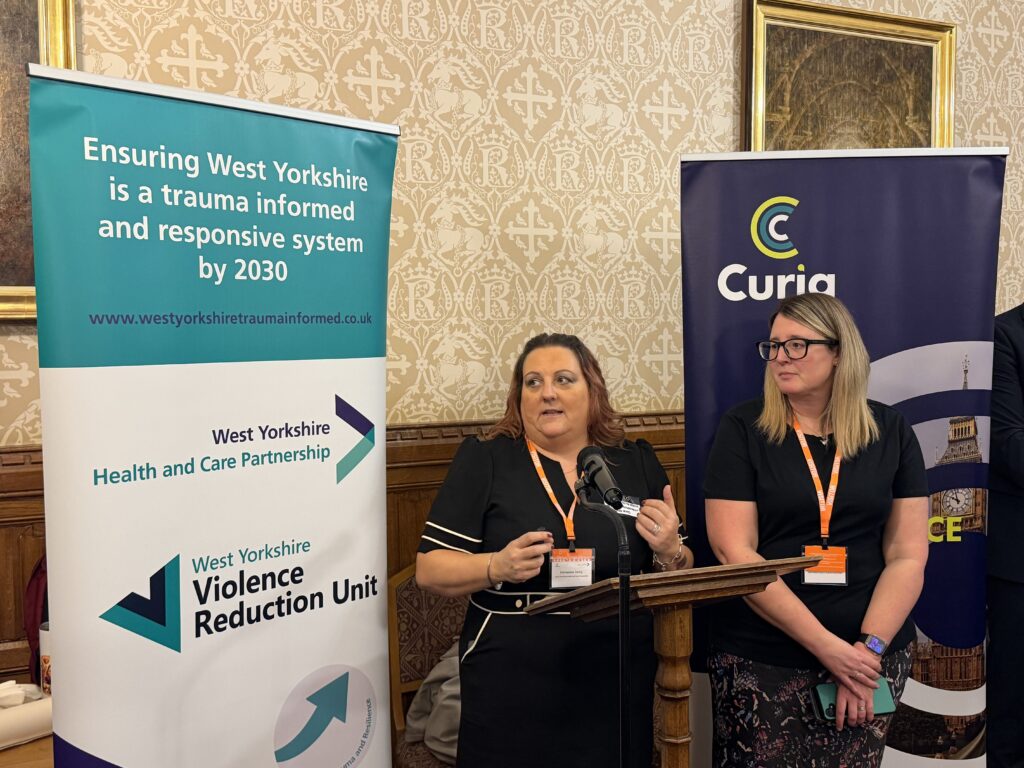
West Yorkshire is particularly prominent. The report highlights its ambition to become a trauma informed and responsive system by 2030, bringing together work across health, care, violence reduction, local government, communities and wider public services. The lesson from this roundtable and other sessions Curia has run with West Yorkshire Health and Care Partnership in 2026: trauma responsive reform is most effective when it is locally led, partnership based and grounded in lived experience.
Why Trauma Responsive Must Mean More Than Training
One of the most important distinctions in the report is between trauma informed awareness and trauma responsive action.
Trauma informed practice often begins with understanding. It asks services to recognise the impact of trauma and adversity, and to change the way professionals interpret behaviour, distress and need. That awareness is essential, but the report argues that it is not enough.
Trauma responsive systems go further. They change how organisations operate, how services are designed, how workforces are supported, how people are treated and how public services collaborate around individuals and communities.
This is particularly important in overstretched public services. A service may understand trauma but still be too fragmented, under resourced or transactional to respond effectively. The report therefore argues for deeper cultural and structural change, including leadership development, supervision, staff wellbeing, commissioning reform and shared accountability across sectors.
The point is not simply to make individual workers more compassionate – though that matters. It is to redesign systems, so they do not unintentionally retraumatise people, exclude them from support or push demand further downstream into crisis services.
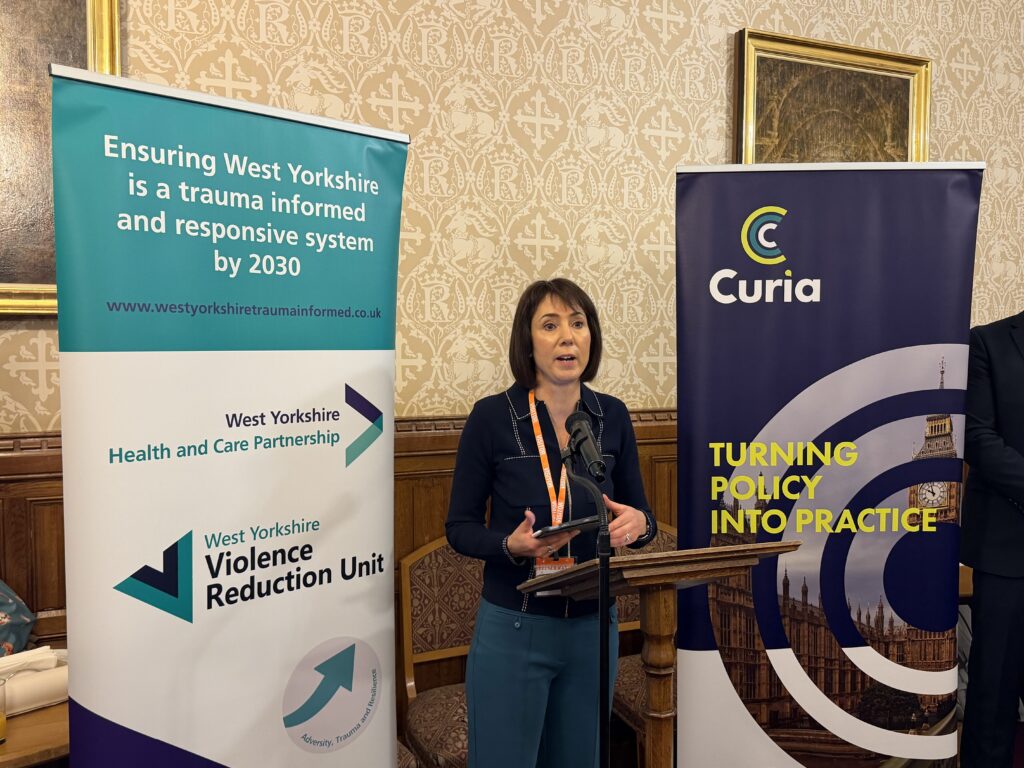
Podcast Presenter, Coach, and Mentor Tanya Arnold.
A Cross-Government Challenge
The report rightly points to the fact that trauma does not respect departmental boundaries, nor the level at which government operates.
Its effects are visible in mental health, substance misuse, obesity, cardiovascular disease, and other long-term conditions. They are visible in schools through attendance, behaviour, attainment and exclusion. They appear in policing, and justice through violence, victimisation, offending and reoffending. They affect housing, homelessness, employment, productivity, and community resilience.
This is why Curia’s report calls for a national trauma responsive strategy for England. Scotland, Wales, and Northern Ireland already have national priorities or frameworks in place, but England does not yet have an equivalent strategic approach.
“England currently lacks a national strategy.”
The absence of a national strategy matters. Without shared language, common standards and cross government coordination, local systems are left to develop approaches unevenly. Some areas make progress because of committed local leadership, while others lack the funding, infrastructure or policy support needed to move beyond small scale initiatives.
The report’s recommendations set out that the Government should develop a national trauma responsive strategy for England, create a cross-departmental framework spanning health, education, justice, housing, and employment, establish shared definitions, embed lived experience in design and evaluation, and support regional implementation through guidance, infrastructure, and long-term investment.
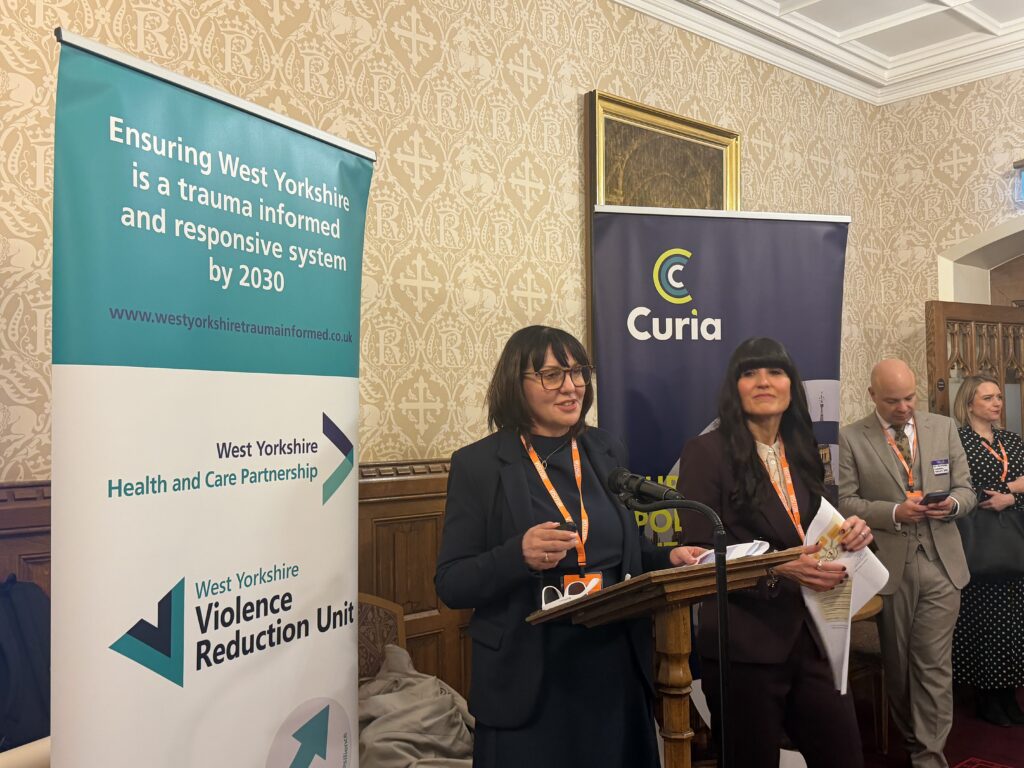
The Role of Parliament
Parliament is central to the report’s argument. The roundtable was deliberately held in Westminster because trauma responsive practice is not only a health policy question. It requires national political leadership, legislative awareness, and cross-party engagement.
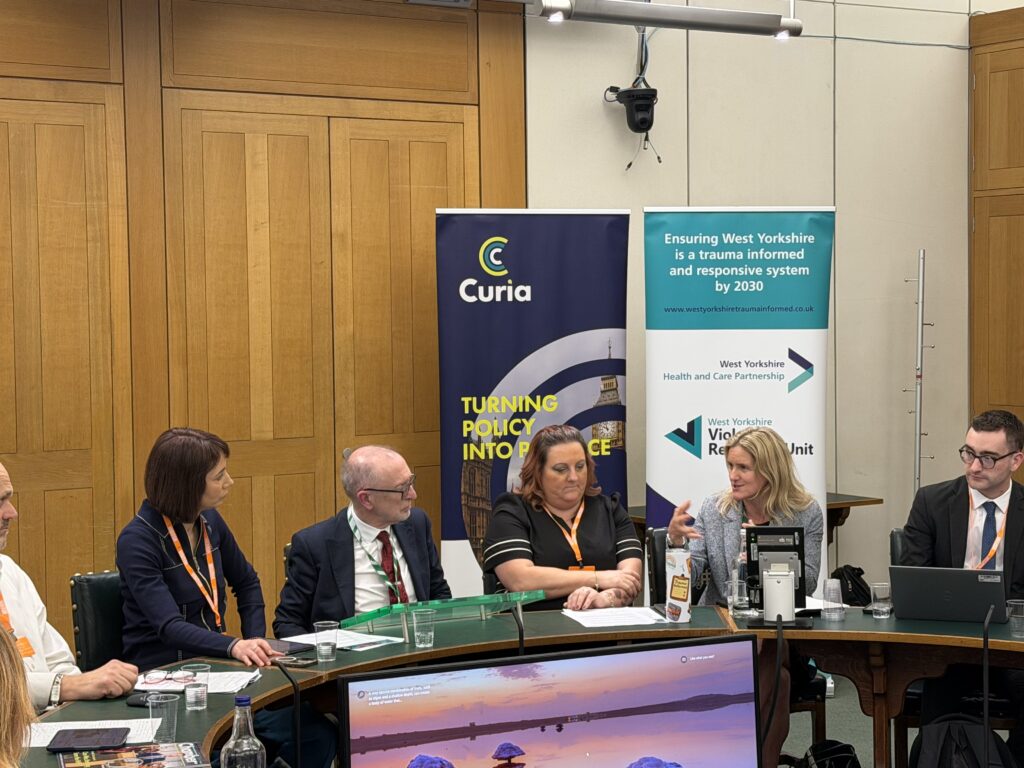
The event brought together MPs from different parties, including Paul Davies MP, Kim Leadbeater MP, and Marie Goldman MP, alongside health and care leaders, academics, practitioners and lived experience voices. The presence of cross-party and cross-sector participants was important because the report positions trauma responsive reform as a human and public service issue, not a party political one.
“The task now is to move from conversation to action.”
Curia argues that Parliament can help raise awareness, embed trauma across legislation and policy, support a national strategy, convene system leaders and strengthen the practical policy case. This could include parliamentary debates, inquiries, ministerial engagement, and future policy development across departments.
The report also makes clear that lived experience must remain central. Trauma responsive policy cannot be designed only by institutions. It must be shaped by the people and communities most affected by trauma, adversity and service failure.
A Prevention Agenda with Economic Weight
One of the most important analytical contributions of the report is that it places trauma responsive practice firmly within the prevention and public service sustainability agenda.
Public services are currently managing rising demand, workforce pressure, and increasingly complex need. Health services, schools, policing, justice, and social care are often dealing with the downstream consequences of trauma, adversity, poverty, violence, exclusion and instability.
A trauma responsive approach does not solve all these issues, but it offers a way of reducing avoidable escalation. Earlier support, trusted relationships, safer services, and better coordinated systems can improve outcomes for individuals while reducing pressure on crisis services.
This is why the economic case matters. Trauma responsive practice should not be framed only as compassion, although it is central to it. It should also be understood as a practical reform agenda that can reduce long-term demand, support workforce resilience, and improve productivity by helping people remain connected to education, employment, health, and community life.
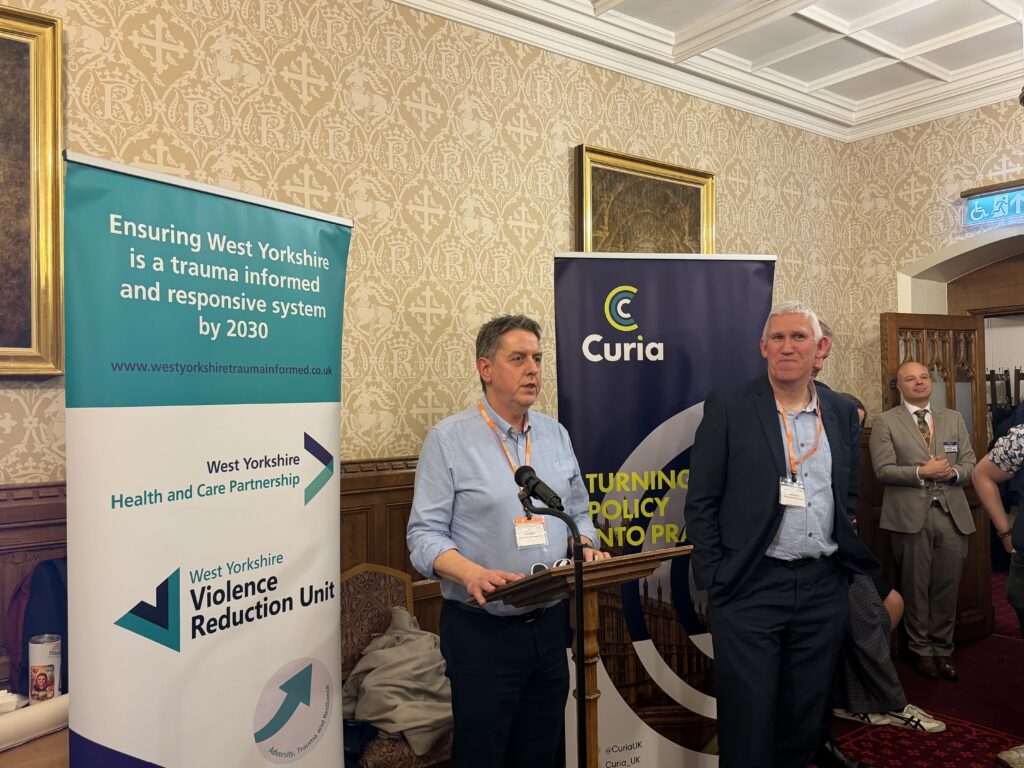
Gareth Nixon is listed as Programme Lead for ACEs and Trauma Informed Practice at Manchester City Council, and Dr Paul Wallis is listed as Director of Psychological Services at Manchester University NHS Foundation Trust
The Next Phase
The Curia report lands at a moment when prevention, early intervention and system reform are increasingly central to national policy debates – including the NHS Modernisation Bill. The challenge is that public services often still operate in fragmented, reactive, and short-term ways.
Building a Trauma Responsive Nation argues that England now needs to move from awareness to action. Local leadership across the North of England has already shown what is possible. The next task is to ensure that those lessons are not left as isolated examples, but are scaled through national policy, sustainable funding, and consistent implementation.
As was demonstrated through some powerful contributions to the roundtable and presentations showcase, trauma is widespread, complex, and deeply damaging. But it is not beyond the reach of public policy. With the right strategy, leadership, and long-term commitment, trauma responsive practice can help build stronger communities, safer services, and a more resilient society.
Over the coming days, Curia will be publishing a series of case studies presented at the event for the benefit of preparing the system for a trauma informed approach and UK Healthcare and Life Sciences Innovation (UKHLSI) and Curia Health, Care, and Life Sciences Research Group members.
Declaration: The Parliamentary Policy Roundtable and Reception on which this report is based were funded by West Yorkshire Health and Care Partnership and Curia’s Health, Care, and Life Sciences Research Group. The report was produced by Curia in partnership with West Yorkshire Health and Care Partnership.