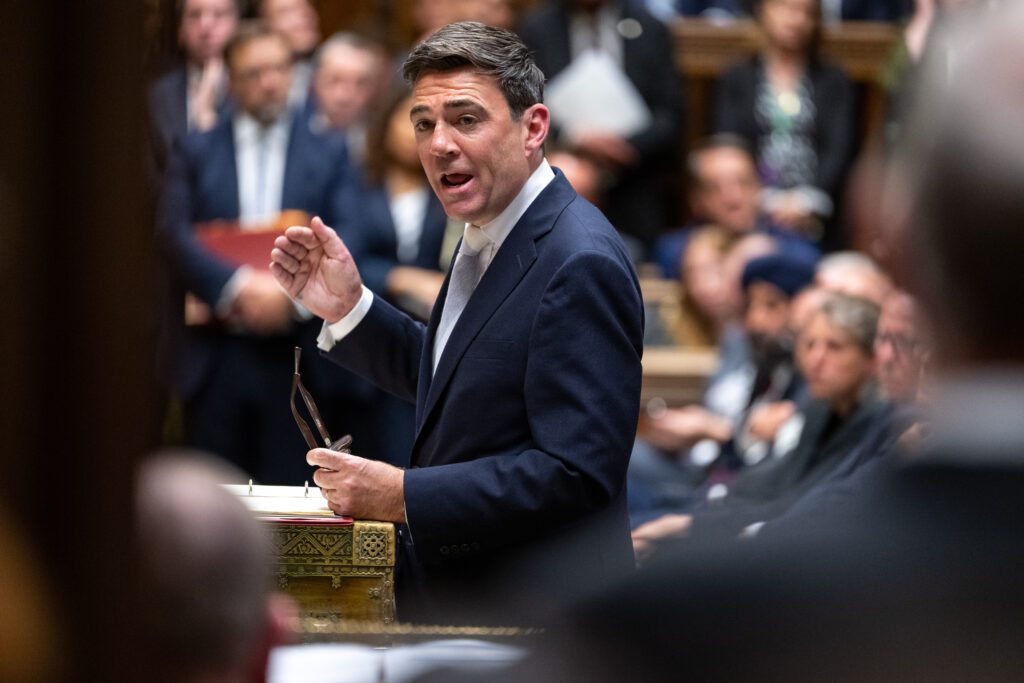

Andy Burnham has faced Kemi Badenoch at his first Prime Minister’s Questions, defending his approach to public spending and welfare while refusing to rule out tax rises and promising a fully funded plan to increase defence spending to 3.5 per cent of GDP.
Prime Minister Andy Burnham has faced his first PMQs since entering Downing Street, with Conservative leader Kemi Badenoch using their opening encounter to challenge him over government spending, welfare reform, taxation and Britain’s defence commitments.
The exchanges came just a day after Burnham returned to the Commons despatch box for the first time in 16 years to set out his wider vision for government. At the start of PMQs, the Prime Minister joked about the extraordinary length of Tuesday’s appearance, which ran for around three and a half hours, saying it was “good to be back at this despatch box”.
But the tone quickly moved from ceremony to the central political question facing the new Government: can Burnham fund the programme he is promising at a time when government borrowing costs are putting increasing pressure on the public finances?
Badenoch targets Burnham on welfare spending
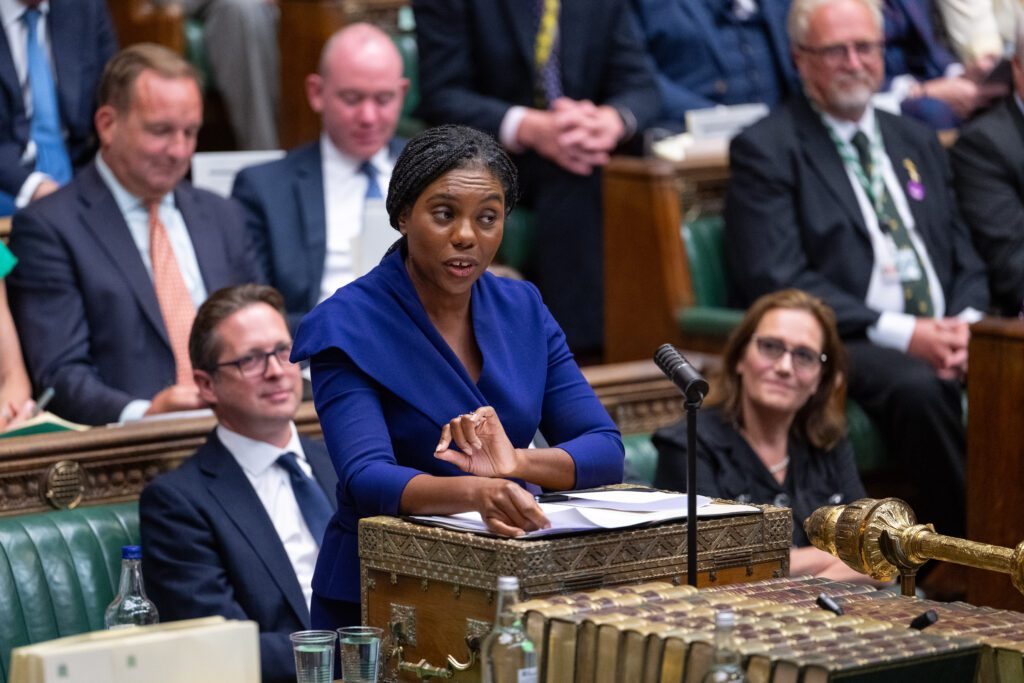
Badenoch opened by congratulating Burnham on his “stamina” following his marathon Commons appearance before asking whether he could identify a single spending request that he had rejected.
Burnham responded by focusing on welfare, telling MPs that the benefits bill needed to fall and arguing that it was not acceptable for so many young people to remain dependent on benefits.
However, rather than presenting welfare reductions primarily as a spending-cutting exercise, Burnham argued that government should invest in helping younger people move into work and opportunity.
He invited the Conservatives to work with the Government on the issue through what he described as “problem solving, not point scoring”, continuing one of the central themes of his first Commons statement.
Badenoch sought to turn that approach against him, accusing the Prime Minister of wanting to please everyone rather than taking difficult decisions.
“I think it’s delightful that he wants to make everyone happy. But a prime minister needs to be a leader, not a people pleaser,” she told the Commons.
Asked what he had actually cut, Burnham replied “tax”, pointing to the tax reductions announced during his first week in office. He also cited his decision to cancel the Government’s digital ID programme.
Burnham refuses to rule out tax rises
The sharpest dividing line came when Badenoch described Burnham as a “spendthrift” and challenged him directly to rule out tax increases at the Government’s forthcoming Budget.
Burnham did not do so.
Instead, he told MPs that he would not announce the Budget at Prime Minister’s Questions and argued that his early decisions demonstrated that his instinct was to cut taxes.
He then turned the attack back on the Conservatives, highlighting the record of Liz Truss’s short-lived administration and Badenoch’s appointment of Andrew Griffith as shadow chancellor, drawing attention to Griffith’s involvement in the Truss government.
The refusal to rule out tax rises is likely to remain significant as Chancellor John Healey prepares for the Budget on 28 October.
The economic backdrop has become increasingly difficult. UK government borrowing costs have risen sharply during a wider global bond sell-off, reducing the Chancellor’s room for manoeuvre against the Government’s fiscal rules. Reuters had already identified funding Burnham’s domestic ambitions as one of the defining challenges facing his administration as Parliament returned.
That means the political argument over whether Burnham can simultaneously reduce household costs, expand investment, increase defence expenditure and control borrowing is unlikely to disappear after one PMQs.
Defence spending becomes another dividing line
Defence provided Badenoch with another route into the same question.
The Conservative leader argued that reductions in welfare spending should be used to finance higher defence expenditure.
Burnham reaffirmed the Government’s commitment to increase defence spending to 3.5 per cent of GDP by 2035, saying a fully funded route to reaching that target would be presented at the spending review.
He also defended his decision to appoint former Defence Secretary John Healey as Chancellor, pointing directly to Healey’s defence experience.
Burnham used the exchange to return to his wider argument about economic growth and his record as Mayor of Greater Manchester.
“Yesterday I laid out a clear, coherent, credible plan for growth based on ten years of delivering it myself,” he told MPs. “This is grounded in reality. I want to take it to all parts of the country, and it’s all about bringing back a sense of positivity.”
It was perhaps the clearest summary of how Burnham intends to defend his premiership: that the policies he pursued through devolution in Greater Manchester can provide a template for a different national economic model.
Early prisoner release remains politically sensitive
PMQs also returned to the Government’s controversial changes to the prisoner early release scheme.
Plaid Cymru MP Ann Davies asked Burnham to apologise to victims and relatives who had been distressed by the proposals.
The Prime Minister said he understood the “anguish” experienced by families and argued that he had demanded further changes after concluding that the original proposals had not adequately addressed their concerns.
Burnham told MPs he wanted to ensure that “we are never in this position again”, reinforcing the more cautious approach to early release that his Government has adopted following criticism of the scheme.
Former Welsh Secretary Jo Stevens also raised police funding, highlighting Cardiff’s position as a UK capital without dedicated capital city policing funding. Burnham confirmed that the police funding formula is under review and said he would engage with Stevens on the issue.
A different style of PMQs, but the numbers will determine Burnham’s success
Burnham entered Downing Street promising to change not only government policy but the way politics operates. His repeated appeal for “problem solving, not point scoring” is clearly intended to distinguish his premiership from the confrontational Westminster politics he has criticised.
His first PMQs showed both the attraction and the difficulty of that approach.
Burnham appeared willing to acknowledge problems with welfare spending, engage with opposition proposals and defend changes made following criticism of the prisoner release scheme. But Badenoch identified the pressure point that is likely to dominate the autumn.
It is considerably easier to promise investment, public service reform, lower household costs and a larger defence budget than it is to explain how all of them will be paid for.
Burnham’s answer is that growth, devolution, reform and a different economic model can begin to change Britain’s trajectory. Badenoch’s argument is that the numbers will eventually force him to choose between higher taxes, lower spending or more borrowing.
The first Burnham versus Badenoch PMQs therefore established what could become the defining economic argument of the new political era.
The Prime Minister may want Westminster to move from point-scoring to problem-solving. The Budget on 28 October will begin to show whether his Government has found the money to do it.
(Photo: House of Commons)