
Sentence excerpt:

Athena Lamnisos
Chief Executive, The Eve AppealWith cervical cancer elimination within reach, this is the time to turbo charge progress and keep the pressure on, writes Chief Executive of The Eve Appeal, Athena Lamnisos. This week, the Government announced the rollout of at-home HPV self-testing kits for women and people with a cervix who have not attended cervical screening following an invitation.
Eliminating cervical cancer isn’t just a grand ambition – it’s an achievable reality. Research, investment in understanding cancer development and risk factors, vaccines and tests, including HPV Testing, that can be scaled and used at the right time, with the right people, have brought us to this amazing point. For the first time, we have the tools to eliminate a type of cancer. How brilliant would that be? Now we need to make sure that everyone has equitable access to use them.
Science gave us the critical information that the vast majority of cervical cancers develop because of a very commonly occurring virus – Human Papillomavirus (HPV). It has many strains, and most people’s immune systems will clear it from their bodies within two years. Around 80% of us will come into contact with it at some point during our lives, and for some of us, it sticks around and causes cell changes that can result in cancer developing. The high-risk strains of HPV (the ones which can lead to the development of cancer) can cause some head and neck cancers, anal, cervical, vulval, vaginal and penile cancer.
Vaccination and screening are essential to eliminating cervical cancer
We can only eliminate cervical cancer by improving uptake of our successful NHS programmes: HPV vaccination and cervical screening. The HPV vaccine is delivered through the schools’ vaccination programme and is available to all Year 8s (and S2s in Scotland). It’s a gender-neutral vaccination (HPV doesn’t discriminate!) and it’s vital that parents and carers heading back to school in September sign the consent letter which might be lurking in their email inbox or at the bottom of their child’s rucksack. Evidence from people vaccinated against HPV in England, who are now in their early 30s, shows that no cases of cervical cancer have been diagnosed within the group studied.
Vaccination offers incredible protection, but we still need eligible women and people with a cervix aged 24 – 64 to attend cervical screening when they’re invited. The HPV vaccine doesn’t cover all strains of high-risk HPV, and there are millions out there who are too old to have been offered the HPV vaccination at school. The NHS Cervical Screening Programme is extremely effective at preventing cervical cancers and it is estimated it saved 5,000 lives a year in England.

How at-home HPV testing could overcome barriers to cervical screening
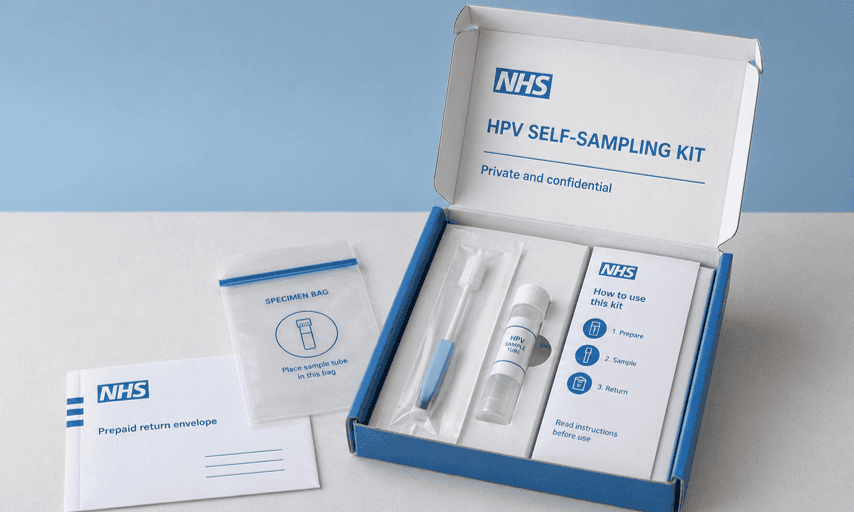
This week, a new option is being rolled out, which offers an HPV self-testing kit to women and people with a cervix who have not attended cervical screening following an invitation. This is brilliant news because we know from the patients we speak to at The Eve Appeal (the UK’s leading gynaecological cancers charity) that there are many reasons why those eligible for cervical screening don’t attend.
Challenges around the type of test it is, limited awareness around HPV and its role in cancer development, as well as practical barriers such as problems around booking and attending an appointment, stop many from going. Some people face particular barriers to cervical screening, making them less likely to attend and thereby exacerbating existing health inequalities.
Cervical screening uptake rates have been falling in England and are still below the 70% target needed to reach elimination by 2040. Self-testing, which can be done at home, will be a step change for many. It will enable people who don’t attend cervical screening to find out if they have high-risk HPV with a less invasive test, in the privacy of their own home.
They will be sent a kit in the post, with clear instructions and a pre-paid envelope for posting the sample back. If someone finds out they have high-risk HPV, they will then need to go for a cervical screening test so their cervical cells can be checked for changes, which need monitoring or treating to prevent them from progressing to cervical cancer.

HPV self-testing won’t replace cervical screening, which is still the gold standard test for preventing cervical cancer, but it will help many by presenting another option to take the first step of the screening pathway. At Eve, we welcome this new option within the NHS screening programme and its focus on supporting the people that need it most. Addressing the existing health inequalities through new service developments is absolutely vital.
There’s a lot of talk about the need for innovation in health and in the NHS. Global brands adjust their services and models of delivery swiftly and seem to embrace change. In health, things seem to take much longer. That’s often for a very good reason. Innovating is one thing, ensuring that new services are equitable and reach those who need them most and benefit the biggest population takes time. With the introduction of self-testing this week, the NHS has demonstrated that it can embrace innovation and deliver more and better options for those who face the biggest barriers to looking after their health.
Having more flexible options, tailored information and appropriate support is important in helping people attend cancer screening when invited. HPV self-testing is not a replacement for clinician-taken cervical screening. Although it will help many people, it will not overcome every barrier. We will continue to support people attending screening, help make appointments more comfortable and accessible, and press for further innovation to improve uptake. We have a national goal and a plan to achieve it. Now we must maintain the momentum and prevent every case of cervical cancer that we can.