
A new public and private finance model will bring solar power to hundreds more schools and colleges, but Chamber UK’s work with Solar for Schools and National Grid Electricity Distribution shows that landlord consent, legal complexity and funding design will determine whether national ambition becomes rooftop delivery.
Hundreds More Schools to Join the Rollout
Schools and colleges across England are expected to save £220 million over the lifetime of panels installed through the Government’s solar programme.
Some 245 schools and colleges already have government-funded panels. A further 100 will join the Great British Energy Solar Partnership, backed by up to £40 million, while 150 institutions across Yorkshire and the Humber, the East Midlands and the South East will test a private-sector model requiring no upfront payment.
Secondary schools combining solar panels with LED lighting upgrades are saving an average of £58,600 a year, while primary schools are saving around £21,000. The Government says the money can be redirected into teaching and support for pupils.
Education Secretary Bridget Phillipson said:
“Every pound a school saves on its energy bills is a pound that can be spent where it matters most – helping children achieve and thrive.
“These figures show our solar programme is already saving schools millions of pounds every year, with some secondary schools saving almost £60,000 annually.
“We’re going further – expanding this programme so hundreds more schools and colleges can cut their bills and put that money straight back into the classroom.”
Chamber UK’s Work Exposed the Delivery Gap
The announcement follows years of Chamber UK coverage and parliamentary engagement on solar for schools, including work supported by National Grid Electricity Distribution.
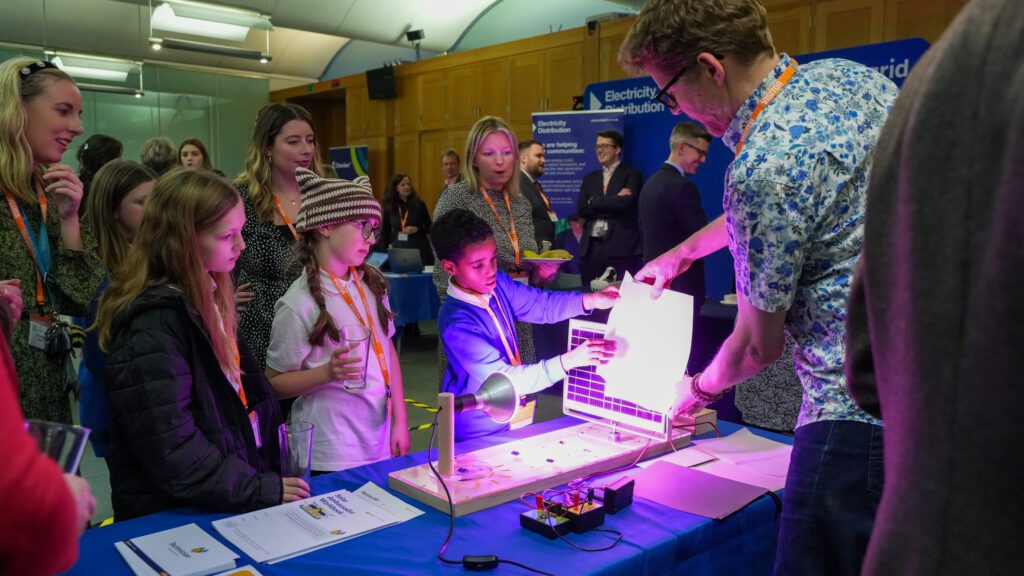
At Chamber UK and Solar for Schools parliamentary showcase in December 2025, ministers, MPs, pupils, community energy groups and industry leaders examined why viable projects were still being delayed. The consistent message was that the technology and finance often existed, but fragmented ownership, landlord consent and lengthy legal processes prevented schools from proceeding.
The Showcase was kindly sponsored by SunSynk and National Grid.
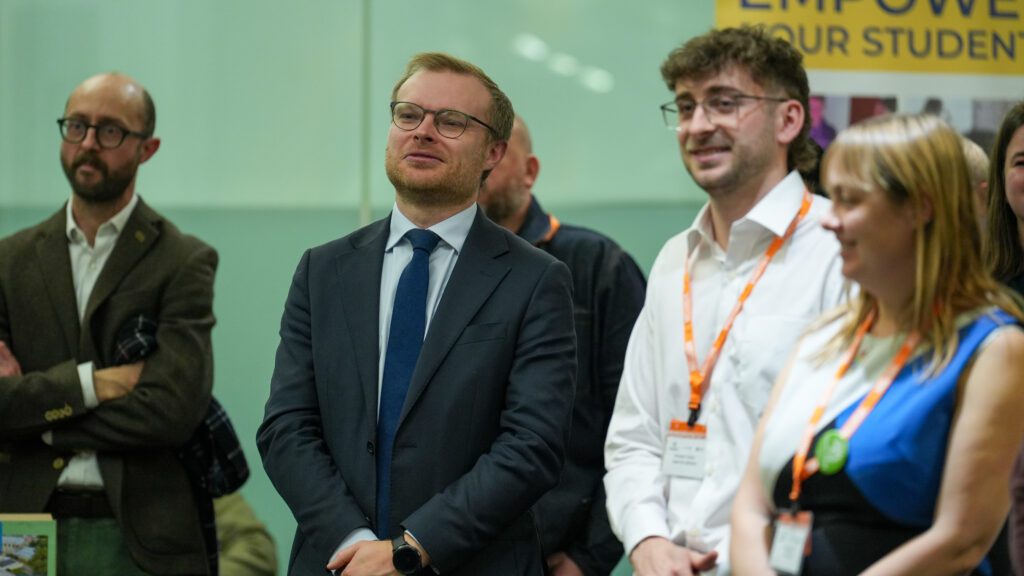
Academies frequently occupy buildings through long leases from councils, dioceses or other bodies. Installations can require landlord approval, planning checks, Land Registry documentation and, in some cases, consent from the Secretary of State. Chamber UK’s journal reported that these hurdles could stop projects even after funding had been secured.
The showcase also demonstrated the value of funding that supports local initiatives. National Grid Electricity Distribution’s partnership had enabled 13 schools to switch to solar, with projected savings exceeding £2.3 million over 25 years and annual carbon reductions of 132 tonnes. A further 50 schools were being developed through top-up grants.
Michael Shanks MP, Minister of State at the Department for Energy Security and Net Zero, told pupils at the showcase:
“But it’s also a huge responsibility on us now, because the truth is, for too long, we haven’t done enough to improve the planet that we live on. We haven’t done enough to protect it for your generation, and we need to do much more.”

A New Private Finance Model
Under the new pilot, private providers will fund, install, own and maintain the panels. Schools will buy the electricity generated at a rate significantly below their normal tariff, while investments and installations will be subject to quality checks.
The pilot will inform a national rollout from 2027–28, with the ambition of eventually making solar accessible to every school and college in England. The wider Great British Energy Solar Partnership represents investment of up to £255 million across schools, colleges, NHS facilities and military sites.
Robert Schrimpff, CEO and Founder of Solar Options for Schools, said:
“We’ve been working with schools and the Department for Education for a decade, so the launch of this new solar PPA pilot, is a significant step.
“It should unlock public and private sector in a way that will make it easier for schools to access all the benefits of having solar power.
“These benefits should include lower electricity costs, no long-term monitoring and maintenance costs, operational peace of mind, and support to inspire education that builds on sustainability skills that will help shape the future. Where this can be combined with community ownership, this is incredibly powerful.”
More Than an Estates Policy
Chamber UK’s previous work has shown that school solar is not simply an energy or buildings policy. Panels can become visible learning tools, connect pupils with the transition to clean power and generate savings for educational activities.
Writing for Politics UK, Schrimpff argued that educating and empowering children is central to accelerating climate action. Solar panels can demonstrate decarbonisation in practice while helping to fund sustainability education.
“Installing solar is only the beginning. The real test is whether it is still operating safely and efficiently in five, ten and twenty-five years.”
He estimated that the UK education estate could accommodate around two gigawatts of solar capacity, requiring approximately £2 billion of investment but potentially saving between £2 billion and £6 billion in electricity costs over 25 years. Private and community investment could help finance that expansion without placing the full cost on taxpayers.
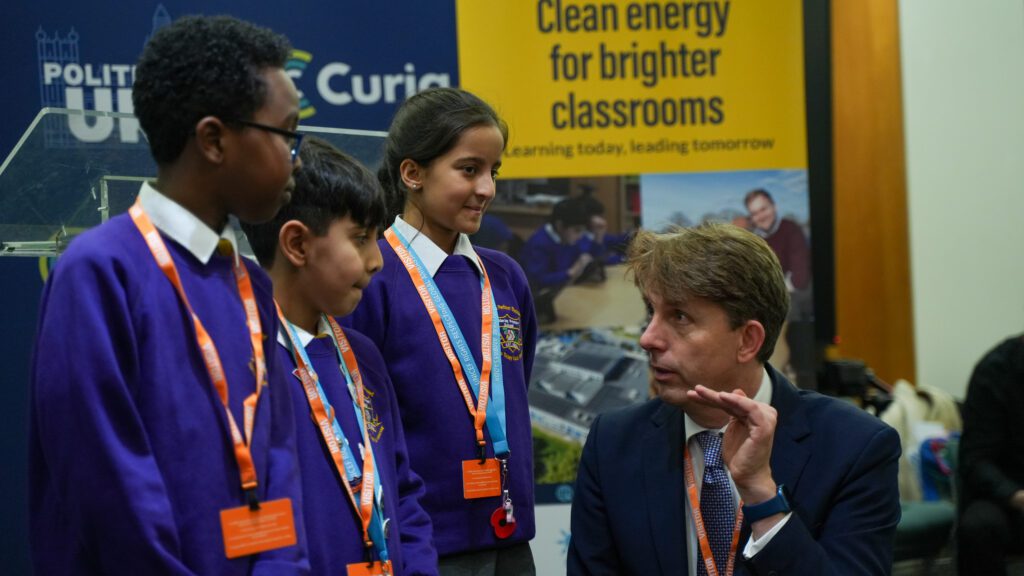
This educational value was visible at Chamber UK’s parliamentary showcase with Solar for Schools. Pupils presented evidence about electricity generation, carbon savings and how lower bills could support trips, extracurricular activities and improvements to their schools.
Students from Adderley Primary School in Birmingham challenged decision-makers to explain what adults would do to create a more sustainable world. At Ark Victoria Academy, pupils reported that a 261-panel system had generated 101 megawatt hours of electricity in a year, worth around £20,382, while preventing 23 tonnes of carbon emissions.
Energy Secretary Ed Miliband said:
“Schools across the country are set to save millions on their energy bills thanks to Great British Energy solar panels.
“Now hundreds more schools and colleges across the country will benefit from this pilot scheme, helping them to bring down their bills with clean homegrown power and put more money back into classrooms where it belongs.”
From Rooftop Generation to Classroom Change
LIFT Feversham School in Yorkshire saved around £23,000 during its first year after installing solar panels alongside other energy-efficiency measures.
Principal Naveed Idrees said:
“Far from being a bolt on, the Great British Energy Solar Partnership programme became a core part of our spiritual, social and moral curriculum.
“It has brought the curriculum to life, created capacity to engage the community and changed mindsets for life. And did I mention the financial savings!”
The latest programme responds directly to themes Chamber UK has given a platform to over several years: schools need routes that remove upfront costs, provide long-term maintenance, simplify legal agreements and allow public, private and community finance to work together.
“For many schools, the biggest barrier has not been the roof, the economics or the availability of investment. It has been the absence of a clear and repeatable legal route.”
The test is now whether ministers can turn the pilot into a repeatable national system. That requires resolving ownership and consent barriers, standardising agreements and ensuring public funding attracts further investment rather than causing schools to wait for the next fully funded offer.
Solar panels can lower bills, reduce emissions and bring climate education to life. The opportunity is to make those benefits routine rather than exceptional.
Get Involved in the Parliamentary Showcase
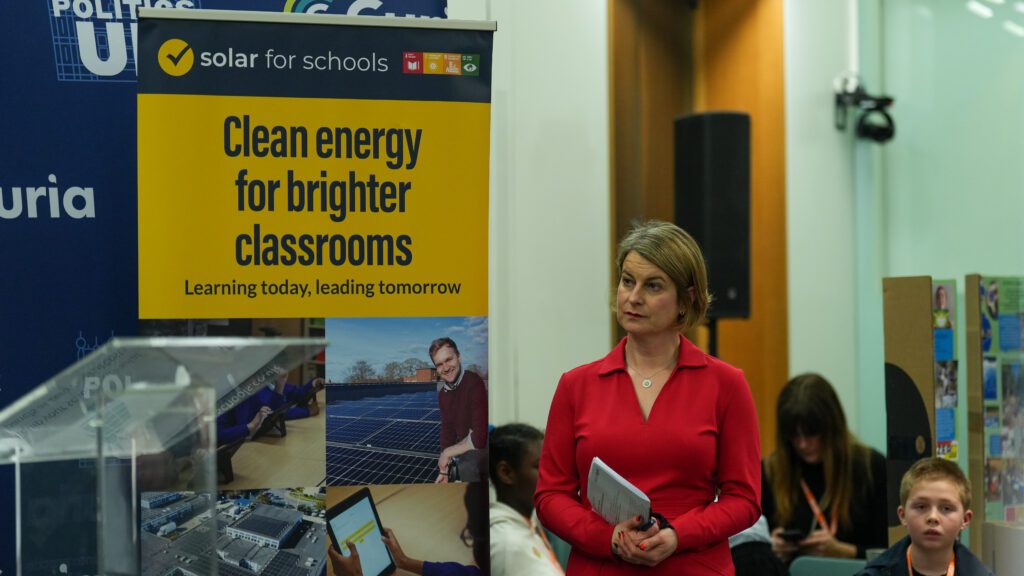
Building on this work, Chamber UK will bring the Solar for Schools Parliamentary Showcase back to Westminster for a fourth year, convening schools, policymakers, energy providers and industry leaders to accelerate delivery across the country. To discuss partnership opportunities or get involved in the programme, contact Chamber UK’s Partnerships Director, Ben McDermott, at ben.mcdermott@chamberuk.com.
To find out more about Solar for Schools, click here.