
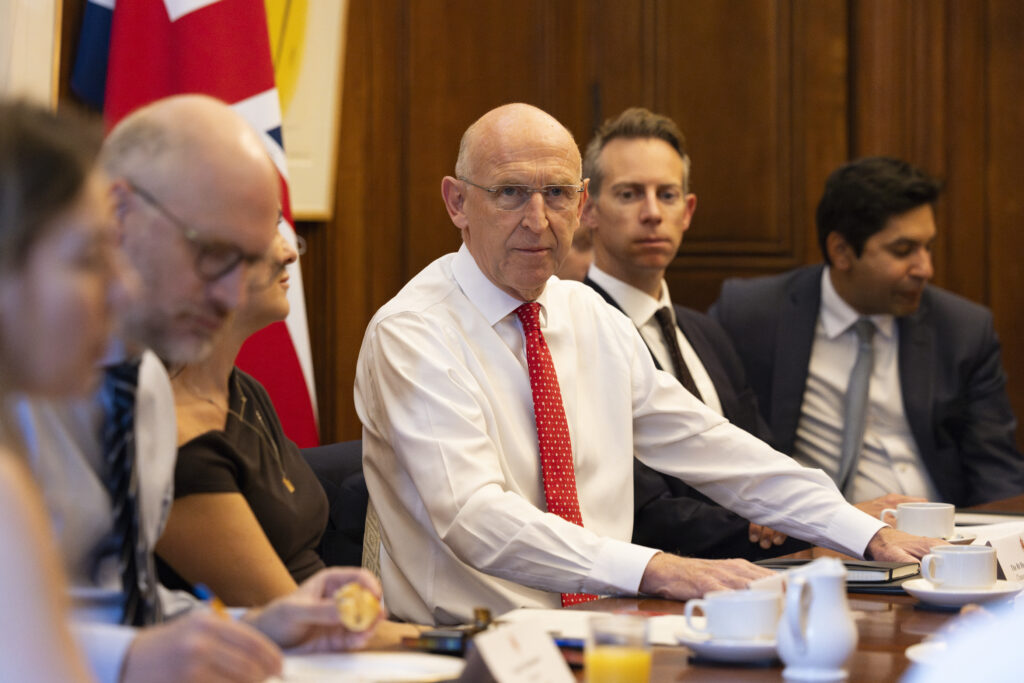
Curia and UK Healthcare and Life Sciences Innovation (UKHLSI) have written to Chancellor John Healey urging the Treasury to support a practical programme for integrated obesity care in the forthcoming Budget.
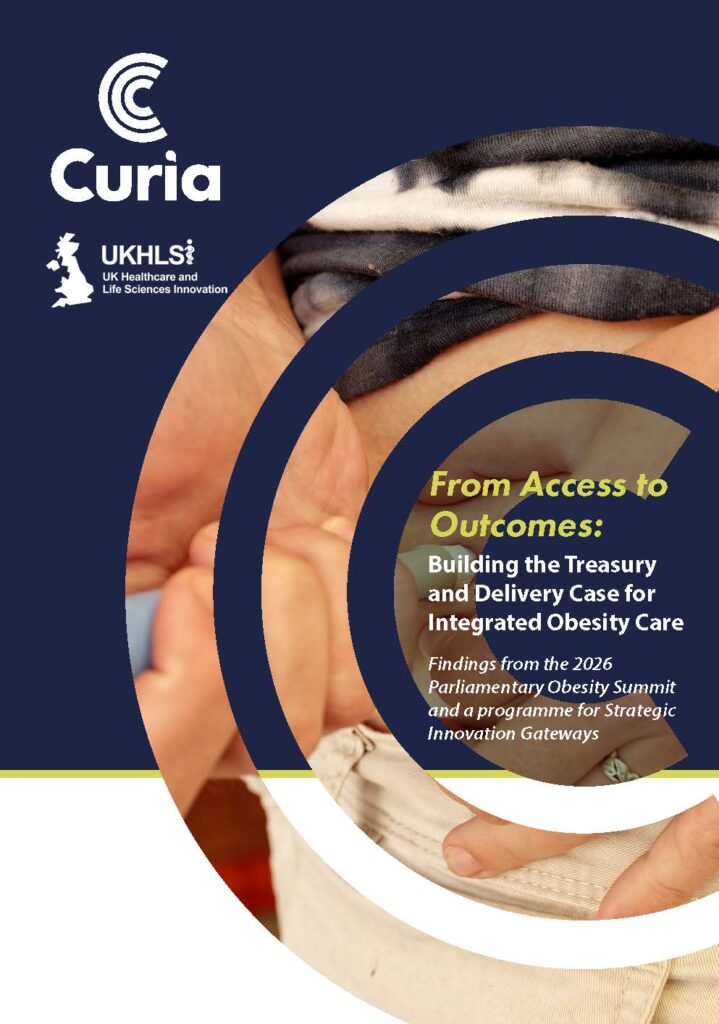
The letter signed by chair of the Obesity Working Group and former Deputy National Medical Director at NHS England Professor Mike Bewick, former Minister of State for Health at the Department of Health and Social Care (DHSC) and Chair of Curia’s Health, Care, and Life Sciences Research Group Rt Hon Andrew Stephenson CBE, Chief Executive of UK Healthcare and Life Sciences Innovation (UKHLSI) Jo Bekis, and former Director General of Communications at the Department of Health under former Secretaries of State including Rt Hon Alan Milburn and Rt Hon Andy Burnham MP Sian Jarvis CB, urges the Chancellor to prioritise multi-year funding, a joint DHSC–Department for Work and Pensions (DWP) programme and independent evaluation to test the health and economic value of integrated obesity pathways. It follows the 2026 Parliamentary Obesity Summit and its report, From Access to Outcomes: Building the Treasury and Delivery Case for Integrated Obesity Care.
The policy institute and innovators membership body argue that the policy question has moved on from whether treatments are available to how the health system can deliver sustained, equitable outcomes – and how government can assess the value of doing so.
A cross-government case for investment
The letter seen by Politics UK says obesity care should be considered across health, social care, employment, productivity, welfare, and inequalities. The costs and benefits are spread across these areas, meaning that the organisation funding an intervention may not be the one that later sees the savings or wider benefits.
To illustrate the scale of that challenge, it cites work in West Yorkshire, Humber, and North Yorkshire which estimated the annual regional cost of obesity at £6.16 billion. This included £683 million in NHS treatment, £2.84 billion in productivity losses, £1.58 billion in social care and £1.05 billion in wider economic impacts.
Curia and UKHLSI are calling on the Treasury to establish a cross-government investment framework and a joint Department of Health and Social Care and Department for Work and Pensions “invest-to-work” fund. The proposed fund would support pathways intended to help people remain in or return to employment, with outcomes measured through health, economic inactivity, sickness absence, and productivity.
The request builds on Curia’s 2025 work on obesity policy, which called for recognition of obesity as a chronic, relapsing condition and for long-term investment in care. Since then, the letter notes, government and industry have committed funding to new obesity pathways. The task now is to turn that momentum into sustained outcomes and demonstrable public value.
From access to whole-pathway care
The summit report argues that access to medicines alone will not deliver those outcomes. Obesity is linked to cardiovascular, renal, metabolic and mental health needs, while services can remain divided by different tiers, thresholds, budgets and data systems.
The letter warns that short programmes are poorly suited to a long-term condition. It calls for pathways that combine clinical treatment with psychological, behavioural, digital, and community support – including maintenance and routes back into care.
Community organisations, pharmacies, workplaces and regulated digital providers could help extend access and capacity, the letter says. Their contribution should sit within transparent clinical governance, shared standards and independent evaluation.
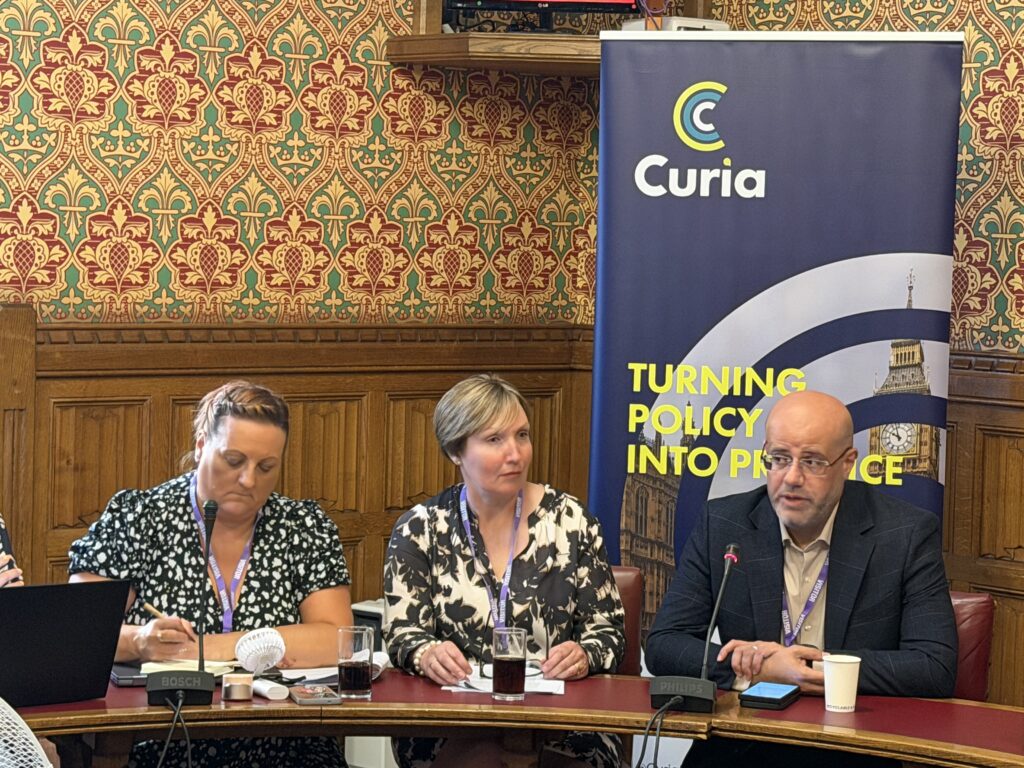
Visiting Associate Professor at the University of Leeds, discusses the need to recognise obesity within a
wider cardiovascular, renal and metabolic framework).
Funding to test what works
Curia and UKHLSI are asking for multi-year “invest-to-save” funding so local systems can test integrated, trauma-informed pathways, build workforce capability, and involve community partners without relying on short-term pilots.
They also propose funding independent economic modelling and real-world evaluation using a common dataset. The assessment should separate cash-releasing savings from capacity benefits, costs avoided in future and wider public value.
The letter stresses that the case should be tested rigorously, rather than relying on claims of immediate savings:
“We are not asking Treasury to accept untested claims that every intervention will immediately pay for itself. We are asking it to create the conditions for a disciplined test of affordability, implementation, and return.”
The proposed programme would identify priority groups transparently, establish a credible comparison with what would happen without intervention, and measure clinical, service, workforce, patient-reported and equity outcomes. The signatories say findings should be published even where results are negative or inconclusive.
A route from local delivery to national decisions
The final request is for funding to support a route to wider adoption: a national minimum service standard, a business case and commissioning toolkit for integrated care systems, and a clear decision point on whether approaches should be scaled.
The letter says this would allow the Treasury and NHS to judge where investment produces the greatest benefit, for whom and over what period. It also offers Curia and UKHLSI’s ability to convene clinical leaders, NHS systems, people with lived experience, community organisations, regulated providers, and industry around an independently governed programme.
Find out more
The full report, From Access to Outcomes, sets out the findings of the Parliamentary Obesity Summit and the proposed Strategic Innovation Gateway programme. To discuss the Obesity Working Group or Gateway programme, contact enquiries@ukhlsi.co.uk.
(Photo: Kirsty O’Connor/HM Treasury)