

The Government is facing calls to strengthen protections against unpaid work as Sainsbury’s launches 10,000 work experience opportunities for young people across the country.
Conservative Peer Lord Holmes of Richmond, who sought tighter restrictions on unpaid internships during the passage of the Employment Rights Act, welcomed the retailer’s initiative but said any expansion of work experience must be accompanied by clear safeguards.
His intervention comes as ministers encourage more employers to follow Sainsbury’s example and prepare to create 300,000 new work experience and training placements as part of a £2.5 billion youth employment package.
Sainsbury’s launches 10,000 opportunities
The retailer’s KickStarter programme has two strands. KickStarter Insights will offer 16 to 24-year-olds a one-day employability workshop focused on exploring careers, developing skills and preparing for work.
KickStarter Explore, aimed at 14 to 18-year-olds, will combine school workshops, digital sessions and workplace visits over the course of an academic year. Each participant will undertake around 24 hours of activity in total.
The programme will target communities with high numbers of young people not in education, employment or training, as well as schools with higher levels of free school meal uptake.
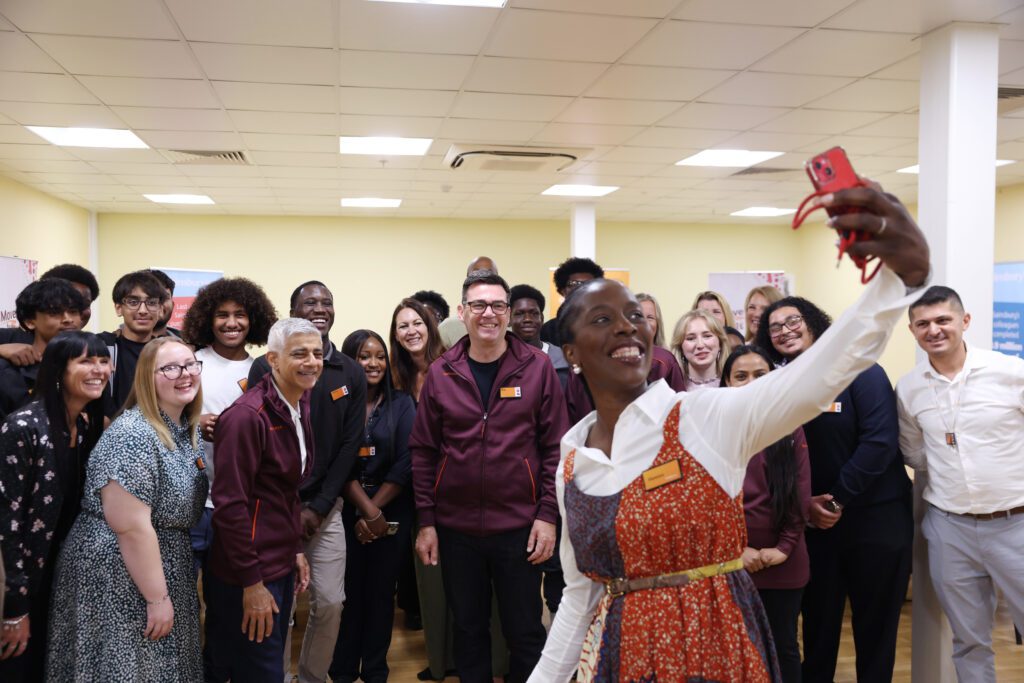
Prime Minister Andy Burnham said the initiative would help close the gap between education and employment, arguing that access to workplace opportunities should not depend on a young person’s personal connections.
Sainsbury’s chief executive Simon Roberts, who began working at 16, said few things mattered more than “helping young people get on that first rung on the career ladder”. He said the programme would reach communities across the UK and help participants develop the confidence, skills and experience needed to enter employment.
Alan Milburn, who is leading the Government’s review of youth unemployment, said: “For too long work experience has been treated as an afterthought.” He argued that a lack of experience prevents young people from securing jobs, creating a cycle that schemes such as Sainsbury’s could help break.
Sainsbury’s told Politics UK that the programme is “educational and voluntary”, rather than employment. Participants will not be paid, although lunch and travel costs will be covered where needed.
Young people will tour stores, meet employees working across retail, logistics, technology and food, learn how products move through the supply chain and receive support with communication, CV writing, interviews and job applications.
The company said participants would not carry out operational roles, replace paid colleagues or contribute to staffing requirements. Activities will have defined learning outcomes, and in-person sessions will be overseen by nominated Sainsbury’s employees and delivery partners.
Participation will not, however, guarantee a qualification, reference, interview, or job offer. Sainsbury’s said it would measure reach, participation and feedback, including the programme’s effect on confidence, employability skills and career awareness. It will also explore opportunities to track longer-term outcomes through delivery partners where appropriate.
Calls for clearer protections
Lord Holmes said he was pleased to see the launch, recalling Sainsbury’s contribution as a partner of the London 2012 Paralympic Games and the difference the business can make in communities.
But he warned that work experience must remain “real, meaningful” and “empowering”, rather than becoming a means of obtaining unpaid labour.
“Anything which is actual work, even if on day one, must be recognised as such and rightly remunerated,” he said.
As a longstanding campaigner on the issue, Lord Holmes argued that placements need clear time limits and precise descriptions of what participants will do. He said four weeks should be the maximum period for unpaid work experience before the risk arises that it develops, or simply drifts, into actual work.
That limit formed part of his 2017 Private Member’s Bill on unpaid internships. He also sought to amend the Employment Rights Bill last year to provide greater clarity about the boundary between work experience and work, but the Government did not accept his proposals.
Lord Holmes said the present system places too much responsibility on young people to identify potential abuses and pursue an employer.
“The Government must act on unpaid internships, putting more resource into enforcement and publicising those organisations who persist in pursuing such an unfortunate course,” he said.
He nevertheless stressed the value of properly designed programmes, particularly if they help young people who are not in education, employment or training and open access to those without personal connections.
Does existing law provide enough protection?
The Government’s position is that existing minimum-wage law already protects anyone who is, in reality, carrying out work.
Official guidance says entitlement depends on the actual relationship between an individual and an organisation, not whether the person is described as an intern, volunteer or work experience participant. If the arrangement makes someone a worker and no exemption applies, they must receive at least the National Minimum Wage.
Pure work shadowing, where someone observes rather than performs work, does not normally qualify. But written descriptions and labels cannot remove rights if the reality of the placement is different.
The Fair Work Agency is responsible for minimum-wage enforcement, with HMRC continuing to undertake that work on its behalf until the full transfer of functions in April 2027. Employers found to have underpaid workers can be ordered to repay arrears and face penalties of up to 200% of the amount owed. They may also be publicly named and, in the most serious cases, prosecuted.
The question for government is therefore not whether productive workers are legally entitled to be paid. It is whether the existing status-based rules are sufficiently clear and whether a complaints-led enforcement system can uncover abuse, particularly when young participants may be reluctant to challenge organisations offering them a first step towards employment.
Sainsbury’s has designed programme to remain educational, short and separate from its operational workforce. The wider test will come as the Government encourages many more employers to provide placements of their own.

Final thought: more pressure on ministers when Parliament returns?
A government spokesperson described work experience as “a vital first step into the world of work for many young people” and welcomed Sainsbury’s involvement in the national effort to tackle youth unemployment.
“It is action like this from Sainsbury’s, alongside the Government’s own £2.5 billion-backed reforms and the creation of 300,000 new work experience and training placements, that will create lasting opportunity for young people, and we encourage other employers to follow their example,” the spokesperson said.
As young people struggle to get on the career ladder, this ambition raises a question ministers may face when MPs and peers return to Westminster: if work experience is to expand substantially, should every provider be required to meet clearer national standards on duration, activities, supervision, and outcomes?
Clearly Sainsbury’s is working within the law, however the scheme provides the backdrop to a broader debate about whether existing protections are strong enough to ensure that a valuable route into employment never becomes a source of unpaid labour.
With Parliament returning and the Government promoting new opportunities, Parliamentarians are likely to speak up for young people and press ministers again on whether guidance and enforcement are enough, or whether the law itself now needs to be strengthened.
Photos: Simon Dawson/No 10 Downing Street