
Last year, policy institute Curia published The Women’s Health Dividend, setting out the economic case for the Government to take women’s health seriously. The argument conveyed to government ahead of the publication of the Renewed Women’s Health Strategy for England was that poor access to women’s healthcare affects work, productivity, families, public services, and the wider economy.
That Curia report helped frame women’s health as a national growth and workforce issue, rather than a narrow clinical concern. It showed how unmanaged menopause symptoms, untreated gynaecological conditions, poor access to contraception, and long waits for care can push women out of work, reduce hours, increase pressure on families, and add avoidable demand to the NHS.
“Women’s health must now be understood as both a clinical priority and as socio economic infrastructure.”
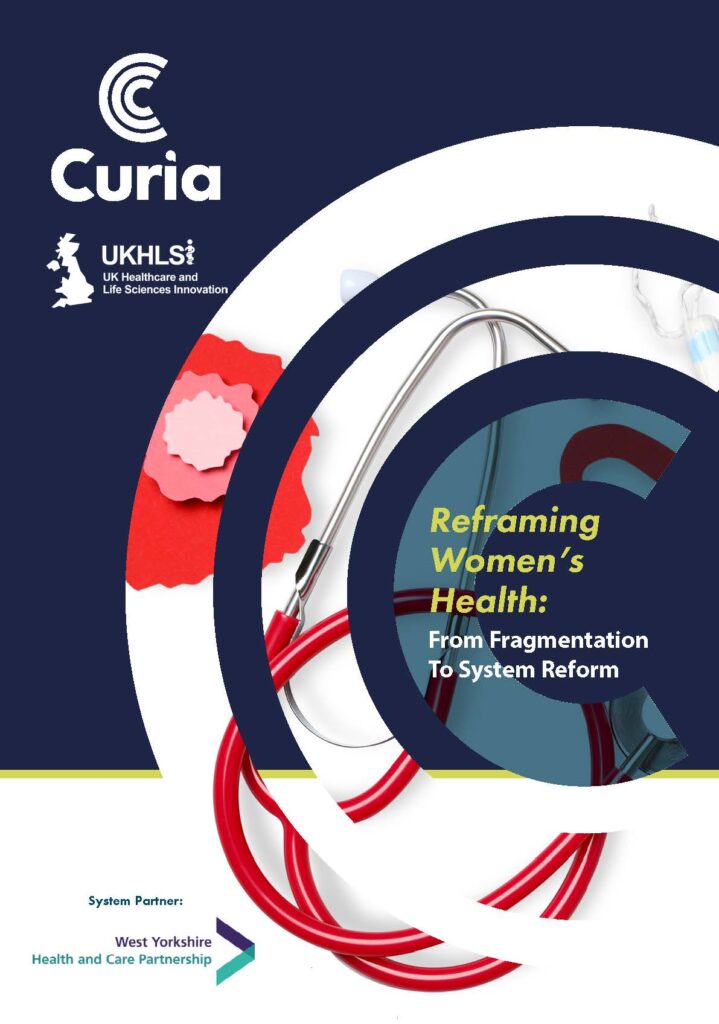
Curia’s latest report commissioned by membership body for healthcare and life sciences innovators, UK Healthcare and Life Sciences Innovation (UKHLSI), Reframing Women’s Health: From Fragmentation To System Reform, takes the argument into its next phase.
From the Government’s publication of their renewed strategy, it is clear they understand that women’s health matters. Curia argues that it is now down to the NHS and government to make care work properly in practice.
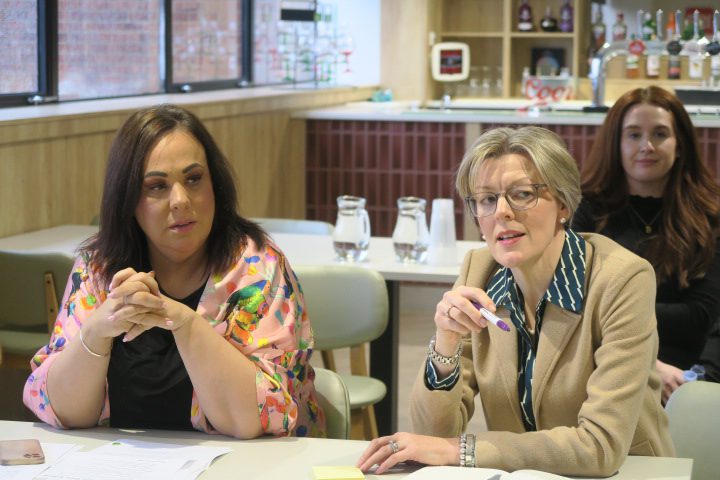
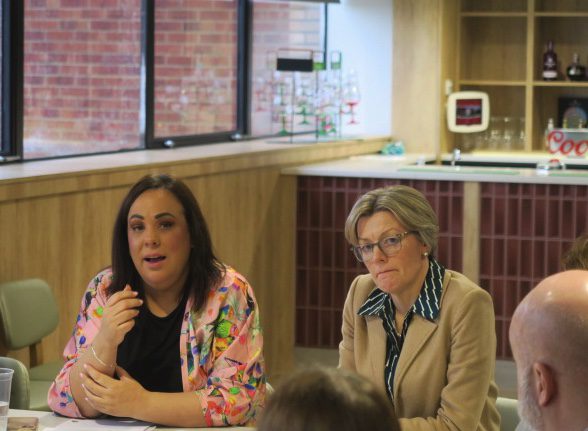
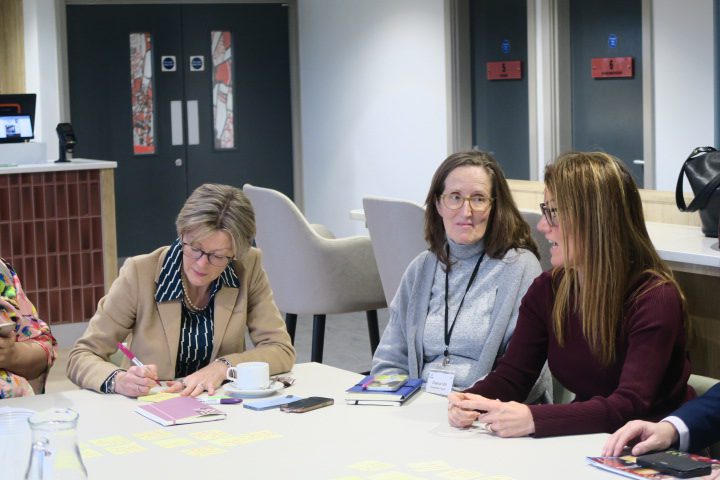
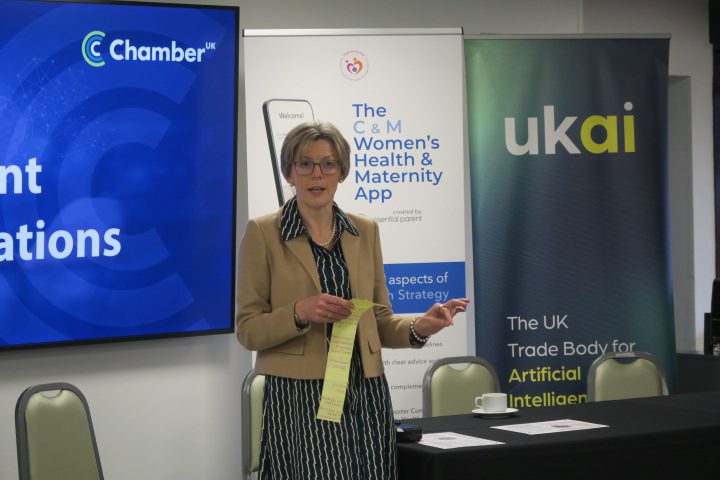
The report follows the North of England Accelerating NHS Innovation Summit Women’s Health Sprint in Barnsley, which brought together NHS leaders, regional mayors, local authorities, industry, academia, and the third sector. The Sprint was co facilitated by former Shadow Minister for Women and Equalities, and Curia Health, Care, and Life Sciences Research Group Advisory Board member, Paula Sherriff, and then Associate Director for Clinical Policy, Strategy and Individual Funding Requests at West Yorkshire Health and Care Partnership, Catherine Thompson. Catherine has since moved on from the role.
What emerges is a practical and at times uncomfortable diagnosis of the problem. Women’s health services are still too fragmented, too dependent on where someone lives, and too often shaped around the convenience of existing structures rather than the realities of women’s lives.
A System Women Have to Navigate
The report describes a health system still built around a narrow route into care. On one side, general practice, and hospital-based specialist services on the other. For many women, that means trying to get support through an overstretched GP system, waiting for a referral, then joining a queue for secondary care.
The missing piece is the space in between.
Many women’s health needs do not sit neatly in one part of the system. Heavy menstrual bleeding, menopause symptoms, pelvic pain, contraception, incontinence, fertility concerns, mental health, and long-term conditions often cut across primary care, sexual and reproductive health, community services, and gynaecology.
Yet those services are frequently commissioned, funded, and measured separately. The result is familiar to too many women – repeat appointments, unclear referral routes, long waits, inconsistent advice, and a feeling of having to push the system at every stage.
“This fragmentation is not incidental. It is designed into the system.”
This is why the report argues that fragmentation is designed into the current model. It is not just a question of pressure or demand. The architecture itself makes joined up care harder than it needs to be.
Strategy Is Welcome. Delivery Will Decide Its Value
The report lands alongside the renewed Women’s Health Strategy for England, which it welcomes as an important step forward. The strategy’s focus on women’s voices, single points of access, redesigned pathways, women’s health hubs, FemTech, menstrual health education and priority conditions such as endometriosis, fibroids, and menopause reflects much of the agenda Curia has been calling for.
That alignment matters. It suggests the national conversation has moved on from whether women’s health needs greater attention to how services should be redesigned.
But the report is also clear that national strategy will mean little without delivery machinery behind it.
The renewed strategy now needs a proper implementation plan, with named responsibilities, timelines, funding, performance measures, and accountability.
“The challenge is not identifying what works, it is all about implementing it consistently.”
Integrated care boards need clarity on what they are expected to deliver. Local systems need support to scale models that already work. Women need to see the difference in access, experience, and outcomes.
Without that, the risk is obvious – strong national language, uneven local change.
Women’s Health Hubs Show What Better Care Can Look Like
One of the report’s most useful contributions is its focus on women’s health hubs and community-based models of care.
The Oxford case study shows what can happen when contraception, gynaecology, menopause management, and sexual health support are brought together in a single community setting. The report points to reduced referrals, faster access, improved patient experience, and a more efficient use of secondary care.
The West Yorkshire case study is more mixed, and that honesty is important. Women’s Health Hubs are developing across parts of the region, but access is not yet consistent. Some localities have promising models in place. Others still have underdeveloped provision.
That makes West Yorkshire a useful example of both the opportunity and the challenge. The model works where it exists, but it has not yet become the standard offer.
The report’s conclusion highlights the blunt statement made by those who participated in the session – it is not fair to women to pilot the same ideas at infinitum. It is to implement them consistently.
The Three Shifts Women’s Health Reform Needs
The report frames women’s health reform through three shifts that mirror the wider direction of NHS policy as set out by the former Secretary of State’s three shifts: hospital to community, analogue to digital, and treatment to prevention.
“The barrier is not innovation, it is implementation.”
For women’s health, those shifts have a very practical meaning.
Hospital to community means building services closer to where women live, reducing avoidable referrals, and giving women earlier support before conditions worsen.
Analogue to digital means using technology to improve access, information, triage, and navigation, while recognising that digital tools must be inclusive and cannot replace trusted face to face care for those who need it.
Treatment to prevention means helping women understand what is normal, when to seek help, and how to access support earlier across different life stages.
This is where women’s health reform connects directly to the future of the NHS. If ministers want more care in the community, shorter waiting lists, and a stronger focus on prevention, women’s health should be one of the places where that agenda is delivered first.
Trust Has to Be Treated as Infrastructure
The report also makes a point that is too often treated as secondary: trust determines whether services work.
Many women delay seeking help because symptoms have been normalised, dismissed, or poorly explained. Heavy bleeding, pain, incontinence, menopause symptoms, and postnatal issues are still too often accepted as something women simply have to live with.
For some women, the barriers are even greater. Cultural stigma, language, low health literacy, digital exclusion, trauma, and previous poor experiences of care all affect whether someone feels able to seek support.
That is why the report calls for dignity, informed consent, improved pain management, and trauma aware practice to be embedded across women’s health services. This should not sit in a side programme or a training module that staff complete once. It should shape how pathways are designed, how appointments are handled, how procedures are explained, and how women are listened to.
The Reform Agenda Is Now Practical
The report sets out a clear set of recommendations.
The renewed life course model should become the organising framework for women’s health, from adolescence through reproductive years, maternity, menopause, and later life.
Neighbourhood women’s health services and hubs should become the default model of care, supported by commissioning and payment reform.
Single points of access should be implemented consistently for non-urgent gynaecology and women’s health referrals, with redesigned pathways for common conditions including heavy periods, menopause, and urogynaecology.
Workforce development should cover gender bias, women’s pain, communication, informed consent, cultural competence, and trauma aware practice.
National standards and transparent data should be used to reduce local variation, with patient reported experience measures and patient reported outcome measures built into key pathways.
The report also calls for targeted outreach and inclusive digital tools, particularly for women facing the greatest barriers to care.
From Report to Accountability
The most important message in this report is that women’s health reform has not been short of evidence for several years.
There are plenty of examples of better care. There are committed professionals, and community models that reduce pressure on hospitals and improve experience. There is a renewed national strategy that points in the right direction.
As with many areas of the Government’s wider health strategy, the problem is implementation.
Last year’s The Women’s Health Dividend showed why investing in women’s health makes sense for the economy. This new report shows what needs to change in the health system itself.
The next test is whether women in different parts of the country start to see the same standard of care. A woman’s access to trusted, timely and joined up support should not depend on how services happen to be arranged locally.
Women’s health has spent too long being squeezed between structures that were never designed around women’s lives. The report puts a clear challenge to government and the NHS: stop asking women to navigate fragmentation and start building services around them.
“The time for incremental change is over.”
Next Steps
Reframing Women’s Health: From Fragmentation To System Reform has been distributed to women’s health leaders in Whitehall and across the NHS. UKHLSI looks forward to working with NHS leaders across the country to deliver the system change women so desperately need.
To find out more about UK Healthcare and Life Sciences Innovation and the Women’s Health working group chaired by Paula Sherriff, please contact enquiries@ukhlsi.co.uk