
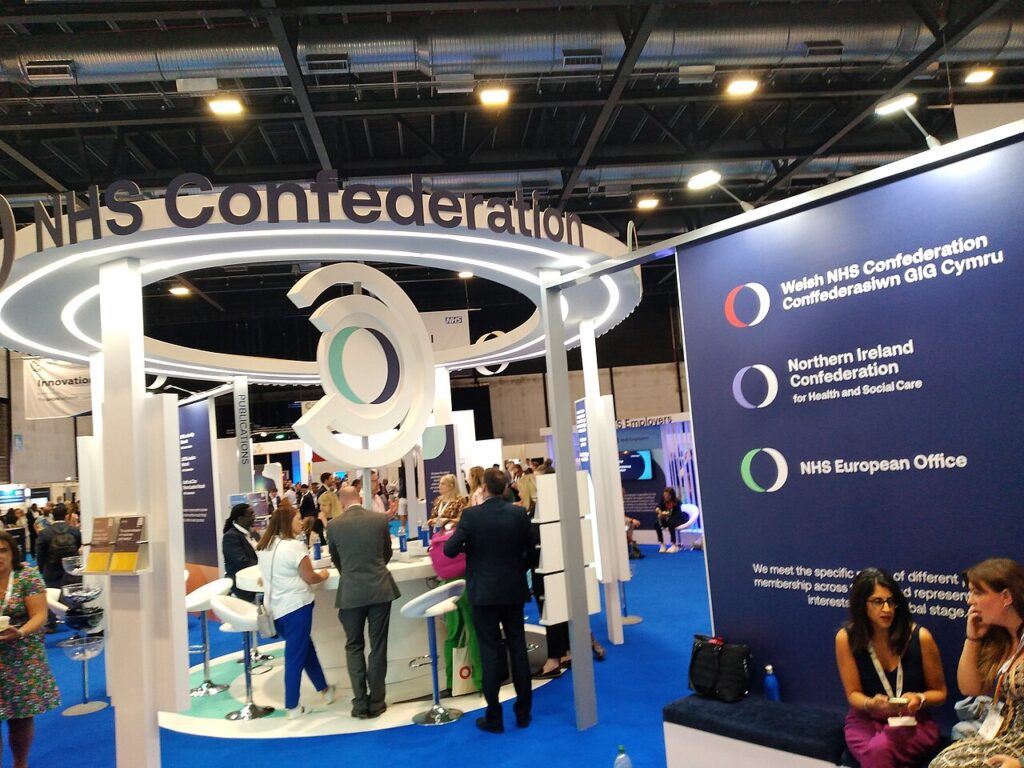
The message from NHS ConfedExpo in Manchester was clear: the NHS is being asked to recover from immediate pressures while also changing how it works for the future.
That theme ran through the speeches from the Health Secretary, NHS England, and the NHS Confederation. There was recognition of recent progress, particularly on waiting lists, ambulance performance, and access. But there was also a clear warning that the next phase will be difficult.
The NHS is still operating under tight financial limits, with a stretched workforce and rising demand. Public expectations are also high after years of poor access and long waits. The challenge now is whether the system can deliver visible improvements for patients while also shifting more care out of hospitals and into communities.
New Secretary of State Signals Continuity, not a Reset
The most politically significant speech came from James Murray, the new Secretary of State for Health and Social Care.
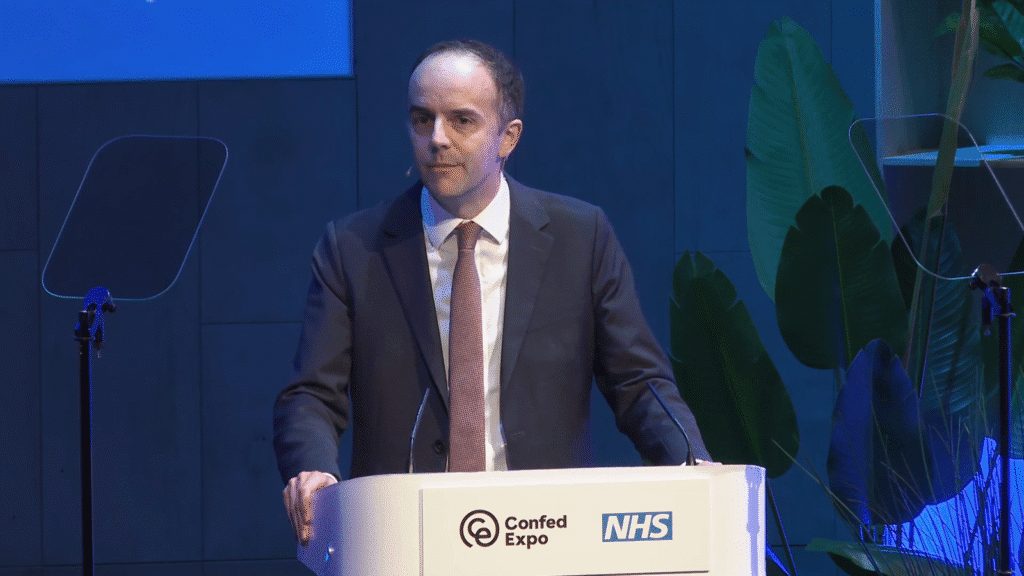
While there are questions about how long he will serve, there was obvious interest in whether his appointment would mean a change in direction. In practice, his message was continuity. He made clear that the Government’s existing priorities remain in place: cutting waiting lists, improving urgent and emergency care, expanding GP access, rebuilding dentistry, and delivering the 10 Year Health Plan.
Murray described his appointment as “not a change of course but a change of gear”. That phrase captured the tone of the speech. He was not trying to distance himself from the current agenda. Instead, he was arguing that delivery now needs to accelerate.
The policy direction remains similar to that of his predecessor: better access, shorter waits, more use of technology, and a shift away from hospital-centred care where appropriate. The difference is in how the Government is framing the reform agenda. Previous Conservative ministers often focused on productivity and getting more from the existing system. Labour is presenting reform as a wider redesign of care, built around digital tools, prevention and neighbourhood services.
Technology at the Centre of the Reform Argument
Much of Murray’s speech focused on technology and digitisation.
Drawing on his previous Treasury role, he argued that people increasingly expect public services to work with the speed and convenience they experience elsewhere. For the NHS, that means making services easier to access, reducing unnecessary delays and using technology to support staff rather than adding to their workload.
He spoke about artificial intelligence, digital access, and the need to make care more convenient for patients. The argument was not simply that technology is desirable, but that it is necessary if the NHS is to cope with rising demand.
At the same time, Murray tried to reassure NHS leaders. He acknowledged that staff and managers are already under intense pressure, and that organisational change has real consequences for people working in the system. But his message was also clear: the Government expects reform to continue.
The offer to local leaders was political backing for innovation. The expectation was that they should be prepared to take sensible risks where this improves services for patients.
NHS England Points to Fragile Progress
Chief Executive of NHS England, Sir Jim Mackey, gave a similar message from the operational side of the system.
His speech focused on the progress made over the past year, while also stressing that this progress is fragile. The central point was that NHS leaders should recognise what has been achieved, but not underestimate the difficulty of what comes next.
The NHS remains under pressure from tight budgets, workforce gaps and high demand. At the same time, patients want faster and more visible improvements. That creates a difficult position for local leaders, who are being asked to improve access, balance budgets and prepare for further reform at the same time.
The NHS Confederation response welcomed Mackey’s recognition of the work already done by staff and leaders. But it also warned that the coming months may be harder still.
Leadership, Inequality and the Risk of Reorganisation Without Change
Chair of the newly formed NHS Alliance, Lord Victor Adebowale’s opening speech struck a more urgent tone.
His central argument was that “leadership is the treatment”. He presented leadership not as a management extra, but as central to whether the NHS can recover. For Lord Adebowale, leadership means tackling inequality, supporting staff and focusing on the experience of patients rather than simply changing structures.
He warned against confusing reorganisation with real reform. The NHS has spent many years redrawing organisational boundaries, but patients can still experience gaps in care. His argument was that structural change only matters if it leads to better outcomes.
Tackling the urgent causes of inequality was one of the strongest themes in his speech. Lord Adebowale linked the future of the NHS to the inverse care law: the idea that people with the greatest need often receive the least care.
His warning was that health inequalities are not separate from NHS reform. They shape who needs care, how patients access services and whether the system is designed around need or convenience.
The NHS Cannot Simply Become a Bigger Version of Itself
Chief Executive of the NHS Alliance, Sir Ciarán Devane echoed many of these concerns.
He argued that the NHS cannot remain a larger version of its current model. Longer life expectancy, rising chronic illness and falling healthy life expectancy mean that a hospital-led system will not be sustainable in the long term.
Devane made the case for renewal if the NHS is to remain true to its founding principle: care based on need, free at the point of use.
His speech also highlighted the central tension running through the conference. There are signs of recovery, including shorter waits, improved ambulance performance and better access in some areas. But NHS leaders are also warning that 2026/27 could bring difficult decisions, including possible service closures, job losses and further pressure on staff morale.
The argument from the NHS Alliance was that reform cannot rely on goodwill alone. If the Government wants neighbourhood care and more community-based services, then national policy, funding and incentives need to support that shift.
Ambition Will Need Capacity Behind It
The Government wants to show that its NHS agenda is moving beyond crisis management and into long-term reform. The emphasis is on faster access, digital transformation, neighbourhood care and a system that is less dependent on hospitals.
The Government is asking the NHS to improve performance, balance finances, reorganise parts of the system and shift care closer to home at the same time.
That may be the right direction. But NHS leaders are warning that ambition will not be enough on its own.
The success of the Government’s health policy will depend on whether local leaders have the workforce, funding and operational headroom to turn national priorities into better care for patients. Without that capacity, the language of reform may struggle to survive contact with the pressures facing the system.
Watch our interviews at NHS ConFedExpo 2026 on our dedicated playlist below, featuring Psyomics, Sword Health, Sword Intelligence and Rt Hon Andrew Stephenson CBE.
Photo Credit: David Woolfall
You can still get a copy of our new edition of ChamberUK. Our parliamentary journal.