
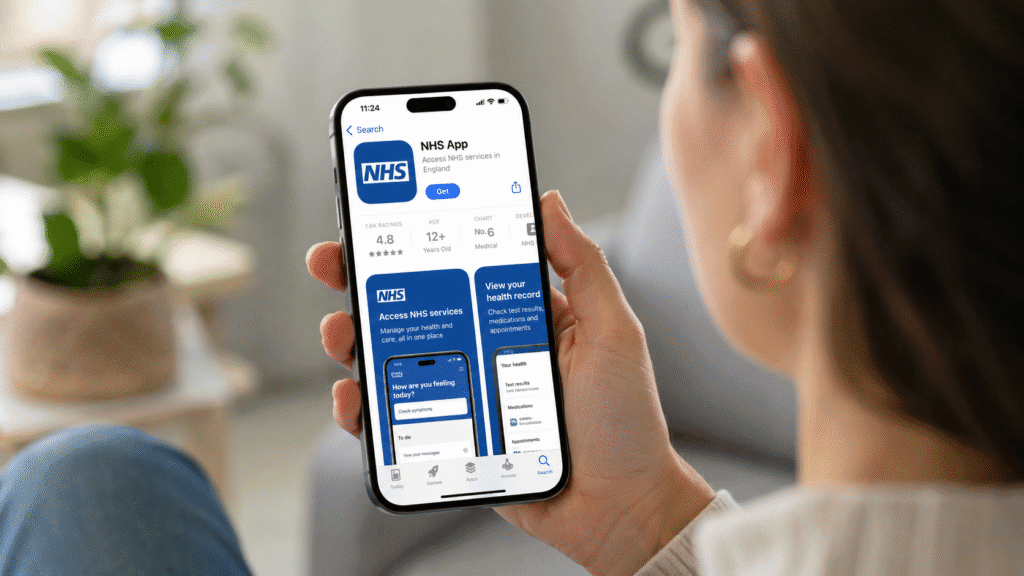
The latest NHS artificial intelligence announcement is not about replacing doctors with algorithms, Ministers argue. It is about changing how patients enter and navigate the health service.
NHS England has confirmed that AI software will be built into the NHS App to help patients in England find the most appropriate care. The tool will ask patients questions about their symptoms and then direct them towards a GP appointment, pharmacy, A&E, community service or self-care advice. It is expected to reach more than 200,000 patients over the next year and be available to all NHS App users by April 2028.
The announcement forms part of a wider £10 billion programme, funded over three years, to overhaul NHS technology, digital and data systems. NHS England says the programme is expected to deliver around half of the commitments in the Government’s 10 Year Health Plan and generate £41 billion in total benefits over the next decade.
Health and Social Care Secretary, James Murray used his appearance on Sunday with Laura Kuenssberg to draw an important line. AI, he argued, will not decide whether a patient gets to see a doctor. Instead, the aim is to modernise access, help patients get advice more quickly, and reduce pressure on the familiar 8am rush for GP appointments.
That distinction matters. Public concern about AI in healthcare often focuses on whether technology will replace professional judgement. The stronger case for this rollout is different: AI should help organise demand, improve navigation and give clinicians better information, while keeping key decisions in the hands of health professionals.
The 8am Test
For many patients, the NHS access problem is experienced through repeated phone calls, long queues and uncertainty about whether a GP, pharmacist, urgent care service or emergency department is the right place to go.
The Government’s hope is that AI triage can reduce that friction. An early trial at Wealden Ridge Medical Partnership in Sussex saw a 29% reduction in the number of people queuing on the phone for an appointment, while maintaining patient satisfaction levels.
Dr Ragu Rajan, from Wealden Ridge Medical Partnership, said the rural practice serves 23,000 patients across four sites and understands how difficult it can be for people to get through. He described the integration of AI triage into the NHS App as a way for patients to explain what they need, when they need it, and be directed to the right care first time. Crucially, he said the technology “hasn’t replaced our judgement”.
For practices, that could mean less pressure on reception teams and clinicians. For patients, it could mean avoiding the stressful process of repeatedly calling at 8am only to be told that all appointments have gone.
NHS England has also made clear that patients will continue to have the option of contacting their GP practice through traditional routes. That point will be essential to public trust. Digital access must improve the front door of the NHS, not quietly close it to people who are older, digitally excluded, anxious, disabled, or unable to use the app easily.
AI That Gives Time Back
The same principle applies to the wider rollout of AI notetaking. NHS England has announced a national expansion of tools that record conversations between patients and NHS staff, producing real-time transcriptions and clinical summaries.
A major NHS study led by Great Ormond Street Hospital found that ambient voice technology allowed clinicians to spend nearly a quarter more of their time with patients. NHS England says that, if scaled nationally to more than 11,000 A&E clinicians in England, the technology could create capacity for more than 9,000 extra A&E consultations each day.
The rollout will begin in hospital appointments not requiring an overnight stay, with tens of thousands of staff across south-west London set to benefit across St George’s, Epsom and St Helier, Croydon, and Kingston and Richmond NHS trusts. A pilot in the emergency department at St George’s Hospital in Tooting found that the technology saved clinicians an average of 47 minutes per shift, allowing each member of staff to see an additional patient every shift.
Consultant in Emergency Medicine at St George’s University Hospital NHS Foundation Trust, Dr Ahmed Mahdi said the technology can make a real difference in a fast-paced clinical environment by cutting documentation time and allowing staff to focus on patients. He also argued that it can help teams see more patients each shift while reducing pressure on staff.
Alder Hey Children’s NHS Foundation Trust and Manchester University NHS Foundation Trust are also expanding AI notetaking programmes to more than 3,000 clinicians following successful pilots.
Chief Executive of Manchester University NHS Foundation Trust, Mark Cubbon said the whole NHS is looking at how technology can support the workforce and help services run more effectively for patients. He said Manchester’s trials of ambient voice technology had shown benefits by allowing clinicians to focus more on the human interaction at the centre of healthcare, rather than on notetaking and administration. His warning was also important: these tools must be introduced responsibly, with safeguards and clinical teams closely involved in how they are used.
From App Upgrade to System Reform
Chief Executive of NHS England, Sir Jim Mackey framed the announcement as part of a major technology overhaul that could transform services. He said the NHS App AI tool should help patients reach the best service for their needs first time, whether that is a GP appointment, a pharmacy visit or advice on caring for themselves at home.
He also linked the rollout to the wider pressure on waiting lists, arguing that NHS England is prioritising improvements that can make the biggest difference while supporting local leaders to adopt them.
That implementation point is critical. The NHS does not need technology for its own sake. It needs tools that reduce repetitive administration, improve documentation, give patients clearer routes into care, and free up clinical time. Done well, AI can support staff morale, productivity and patient experience. Done badly, it can create errors, duplication and new bureaucracy.
The wider digital programme also includes NHS Online, digital support for follow-up appointments, tools to help patients manage rehabilitation for lung and heart conditions, improved cyber security, Microsoft Copilot access for more than 500,000 NHS staff, and the introduction of a Single Patient Record.
The Modernisation Bill Link
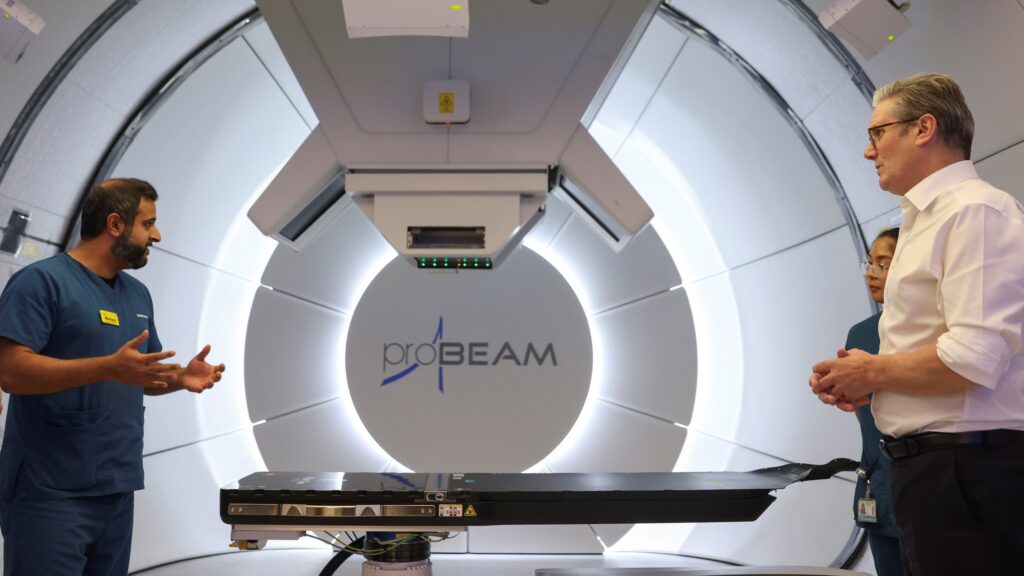
The AI triage announcement sits within the wider reform agenda behind the NHS Modernisation Bill. The Bill is expected to support major changes including the single patient record, stronger data sharing, and a reorganisation of how national and local NHS responsibilities are managed.
This matters because AI triage is only as good as the system around it. A patient may enter through the NHS App, but the value comes from what happens next: whether information moves securely, whether clinicians can access the right context, whether local services have capacity, and whether the patient experiences joined-up care.
In that sense, the new NHS App tool is a practical test of the Modernisation Bill’s promise. Who is accountable when digital systems shape patient journeys? How will safety be monitored? How will digitally excluded patients be protected? How will innovation be adopted without widening variation between local areas?
These are not reasons to reject AI. They are the conditions for using it well.
Final Thought: From Launch to Delivery
The NHS App AI triage rollout should be welcomed as a serious attempt to make access faster, simpler and more responsive. The ambition is something Curia and UK Healthcare and Life Sciences Innovation (UKHLSI) have consistently called for: technology should support patients and staff, not replace clinical judgement.
But the real measure of success will be implementation. The NHS must protect confidentiality, maintain human oversight, design for people who are not digitally confident, and ensure that digital routes into care are matched by real service capacity.
This is exactly the delivery challenge that UKHLSI has commissioned Curia to explore through its work on the implementation of the NHS Modernisation Bill. As legislation moves from Westminster debate to operational reality, the health and life sciences community has an opportunity to help shape what good implementation looks like.
UKHLSI and Curia are bringing together NHS leaders, policymakers, innovators, patient organisations and industry partners to examine the practical questions behind reform, from digital infrastructure and data governance to innovation adoption, accountability and public trust.
Organisations with insight, evidence or experience in AI-enabled care, digital access, patient data, clinical workflows, ambient voice technology, cyber security or single patient record reform are encouraged to get involved.
The NHS Modernisation Bill will shape the next phase of health reform. The task now is to ensure it works for the people who will use it, deliver it and depend on it.
To find out more about the NHS Modernisation Bill Programme, contact enquiries@ukhlsi.co.uk.