
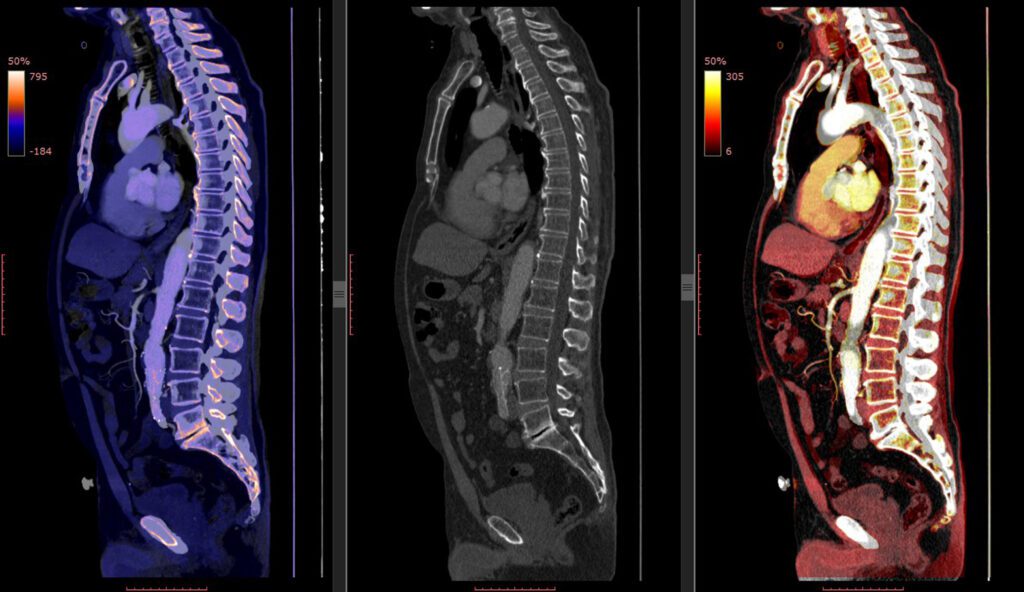
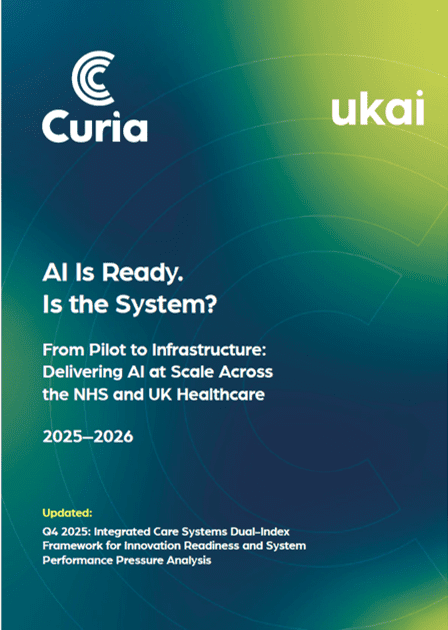
The UK stands at the edge of a healthcare revolution, driven by artificial intelligence (AI) says a new report from policy institute, Curia and the trade association for AI in the UK, UKAI.
However, while AI innovations are promising, the report says systemic barriers remain in translating these innovations into large-scale solutions across the NHS. The AI if Ready. Is the System? report, compiled by UKAI and Curia, offers a roadmap to overcome these barriers, aligning infrastructure, regulation, and investment. The recommendations outlined are not just healthcare-specific but also present significant opportunities for business growth and economic development within the life sciences sector.
The UK is renowned for its leadership in life sciences research and AI innovation. However, translating these strengths into large-scale, practical applications within the NHS remains a challenge. Despite numerous successful pilots and cutting-edge AI tools ready for deployment, systemic barriers in governance, regulation, and infrastructure are slowing their widespread adoption.
This report, a collaboration between UKAI and Curia, examines the key challenges and opportunities in scaling AI within the healthcare system, highlighting the vital need for coordinated efforts across industry, government, and healthcare providers. The findings are not just critical for healthcare reform but also for the broader economic agenda, offering businesses and policymakers a clear framework to drive growth in AI and life sciences.
Key Insights from the Report:
1. Unlocking the Potential of AI in Healthcare
AI’s potential in healthcare is undeniable, from reducing clinical workload to improving patient outcomes through predictive diagnostics and genomic medicine. However, the UK’s ambition must shift from experimenting with AI to fully integrating these innovations into healthcare infrastructures. The need for a robust digital ecosystem that allows for seamless data sharing, real-time monitoring, and scalable AI tools is urgent.
“To turn AI from a promising innovation into a healthcare revolution, we must align infrastructure, regulation, and funding. Only then can we achieve the transformative impact we need for both patients and the economy.” Rt Hon Andrew Stephenson CBE, Chair, Curia, Health, Care, and Life Sciences Research Group
“To turn AI from a promising innovation into a healthcare revolution, we must align infrastructure, regulation, and funding. Only then can we achieve the transformative impact we need for both patients and the economy.” Rt Hon Andrew Stephenson CBE, Chair, Curia, Health, Care, and Life Sciences Research Group
For businesses, AI presents a significant opportunity: by developing solutions that integrate with the NHS’s digital infrastructure, companies can position themselves as leaders in AI-driven healthcare transformation. This is especially true for startups and scaleups that can provide flexible, scalable technologies capable of addressing fragmented data systems and siloed digital environments within the NHS.
2. System Readiness: A Key Business Consideration
While AI technologies are advancing, the readiness of the healthcare system to integrate them is inconsistent. The report identifies the lack of interoperability and fragmented governance as major obstacles to AI adoption. To overcome these, the UK must treat data infrastructure and interoperability as national priorities.
At one of the Parliamentary events, host and Member of Parliament for Morecambe and Lunesdale, Lizzie Collinge MP championed the North West economy highlighting that “the UK’s ability to lead in AI-enabled healthcare depends on overcoming not just technical challenges but systemic barriers.
“By aligning AI with business and industrial strategy, we can ensure that the country remains at the forefront of healthcare innovation, driving both improved patient outcomes and economic growth”.
For businesses involved in digital infrastructure or healthcare IT solutions, there is a growing market for services that facilitate interoperability, data integration, and secure digital environments. By creating solutions that meet the NHS’s needs for unified, seamless digital systems, companies can support the transition to AI-enabled care while positioning themselves as key players in the digital health ecosystem.
3. Regulatory Agility: Balancing Innovation and Safety
Regulation plays a pivotal role in ensuring that AI tools are deployed safely within the NHS. However, as the report highlights, current frameworks are not designed to accommodate adaptive AI technologies. There is a need for a flexible, iterative regulatory approach that balances speed with safety.
“The UK’s future in AI-driven healthcare depends on collaboration across sectors. By ensuring clear governance and empowering clinicians, we can accelerate the responsible deployment of AI, enhancing both patient care and our global competitiveness.” Adama Ibrahim, UKAI, Life Sciences Advisory Board
“The UK’s future in AI-driven healthcare depends on collaboration across sectors. By ensuring clear governance and empowering clinicians, we can accelerate the responsible deployment of AI, enhancing both patient care and our global competitiveness.” Adama Ibrahim, UKAI, Life Sciences Advisory Board
For businesses in the healthcare and AI sectors, the regulatory landscape offers both challenges and opportunities. Clear and adaptive regulatory processes will enable faster deployment of AI tools, allowing businesses to innovate without being stifled by outdated regulations. This also presents an opportunity to engage with regulators to help shape the future of AI regulation in healthcare.

Strategic Opportunities for Business Growth
1. Infrastructure as a National Asset
The UK’s digital health infrastructure needs to be treated as a national asset. Investing in federated, interoperable platforms, and secure data environments (SDEs) will enable AI tools to function effectively at scale. For businesses, this presents an opportunity to partner with the NHS and government to build AI infrastructure, offering long-term growth prospects.
Moreover, AI developers can play a key role in ensuring that AI solutions are integrated into this infrastructure in a way that maximises their potential, improving both clinical outcomes and operational efficiency.
2. Aligning AI with Industrial Strategy
AI is more than just a tool for improving healthcare – it is a key driver of economic growth. The UK’s industrial strategy must align with the digital transformation of healthcare to ensure that the country remains a global leader in AI innovation. By focusing on developing AI tools that address specific NHS needs, businesses can contribute to the UK’s economic growth while improving the sustainability of the healthcare system.
The report makes it clear that responsible AI deployment within the NHS is not a trade-off between public service and economic growth. Instead, it is an opportunity to advance both, with businesses playing a key role in driving the transformation.
Companies that can navigate regulatory challenges, streamline procurement processes, and demonstrate measurable impact will be well-positioned to capitalise on this market.
3. Reimagining Prevention and Predictive Healthcare
AI-driven genomics and predictive medicine are reshaping how healthcare systems approach prevention. However, as the report highlights, the UK’s current funding models prioritise acute care over prevention, making it difficult to scale predictive tools.
For businesses in the life sciences and AI sectors, there is a clear opportunity to lead in the development of predictive models that can be integrated into existing healthcare systems. Additionally, companies can explore how to influence policy discussions around prevention funding and develop solutions that address the structural barriers in healthcare financing.
Conclusion: Moving from Innovation to Scale
The UK is well-positioned to lead the world in AI-enabled healthcare, but significant structural reforms are necessary to turn this potential into reality. By aligning infrastructure, regulation, and funding with the nation’s ambitions for AI, businesses can play a pivotal role in transforming the healthcare system while driving economic growth.
For businesses and policymakers, the challenge highlighted by this report is to work together to overcome the systemic barriers that are currently preventing AI from achieving its full potential. The opportunities for innovation, economic growth, and improving patient outcomes are immense. With the right strategy, the UK can lead the way in delivering AI at scale across healthcare systems, ensuring that innovation translates into long-term impact.