
Eleven NHS trusts have entered long-term partnerships with construction companies as the Government moves the Hospital 2.0 New Hospital Programme into its delivery phase.
Eleven partnerships confirmed
NHS trusts and major construction companies have signed 11 long-term agreements to deliver the next phase of the New Hospital Programme.
The partnerships cover hospital schemes from Manchester and Cornwall to the East of England and are intended to replace fragmented, project-by-project delivery with a more collaborative national model.
Under the new approach, trusts will continue to lead individual hospital schemes and ensure that they reflect local patient and workforce needs. However, national standards, shared expertise and long-term industry partnerships will be used to improve consistency, productivity and value for money.
The agreements mark the beginning of delivery for the first wave of the Government’s Hospital 2.0 programme.
A new approach to hospital construction
Hospital 2.0 is the New Hospital Programme’s standardised model for designing, constructing and operating NHS hospitals.
The approach combines national design standards, digital innovation and modern methods of construction. The Government argues that this will allow lessons to be shared between projects, reduce unnecessary duplication and create hospitals that are safer, more sustainable and better suited to future models of care.
The programme is also expected to create a more predictable pipeline for the construction industry, supporting investment, employment and the development of specialist skills.
Government targets procurement delays
Ministers have presented the agreements as an attempt to address longstanding delays in NHS capital projects, including complicated procurement processes that have continued even after schemes received funding and approval.
Karin Smyth, Minister of State for Health, said:
“For too long, the construction of new hospitals has been bogged down by bureaucratic procurement processes, even after full approval and funding was in place, and we’re determined to change that.
“The changes announced today are a major step forward in streamlining the procurement process. Patients can look forward to new hospitals being delivered quicker, industry can plan with certainty, and taxpayers can be assured that we are getting maximum value for their money.
“With stronger collaboration, shared learning and a boost for jobs, this further demonstrates this government’s commitment to the New Hospital Programme, providing world-class facilities for the NHS and helping the economy in the process.”
The effectiveness of the new model will ultimately depend on whether standardisation can reduce delays without limiting the ability of individual trusts to respond to local clinical requirements.
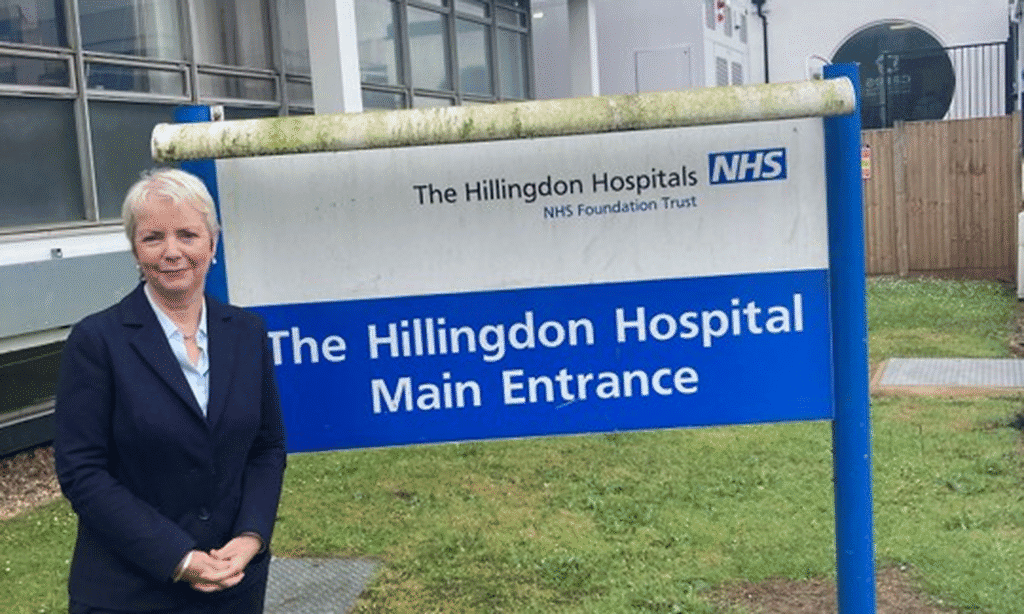
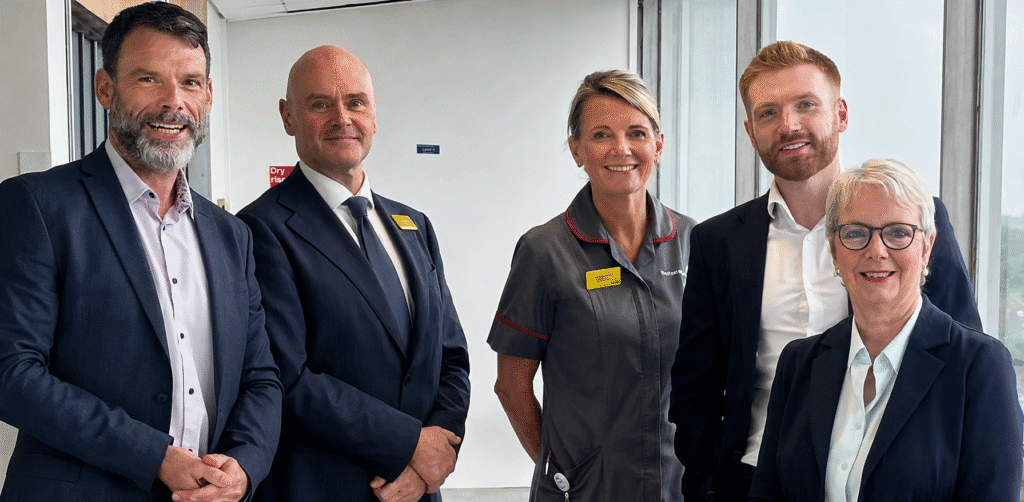
Danny Beales, Member of Parliament for Uxbridge and South Ruislip, welcomed Hillingdon Hospital’s inclusion in the first wave of the Hospital 2.0 programme as “a major step forward in delivering the £1.4 billion investment”.
National consistency with local leadership
The Hospital 2.0 Alliance will bring together the New Hospital Programme, NHS trusts and construction partners across multiple schemes.
Rather than treating each hospital as an entirely separate project, participating organisations will be expected to share knowledge, apply consistent standards and improve delivery throughout the programme.
Natalie Forrest, Chief Programme Officer for the New Hospital Programme, said:
“The Hospital 2.0 Alliance marks an important milestone for the New Hospital Programme and a new way of delivering major public infrastructure. By bringing together NHS organisations and industry as genuine partners, we’re creating a model that combines national consistency with local leadership. Together, we’ll deliver hospitals that are safer, more sustainable and designed to meet the needs of patients and staff for generations to come.”
Under the delivery model, NHS trusts will remain responsible for ensuring that new hospitals meet the needs of their communities. National standards will be used to improve consistency and value, while long-term partnerships are intended to encourage innovation and continuous improvement.
Charlotte Taylor and Paul Mustow, Senior Responsible Owners for the New Hospital Programme at the Department of Health and Social Care, said:
“The Hospital 2.0 Alliance demonstrates what can be achieved when government, the NHS and industry work together with a shared ambition. By combining national leadership with local expertise, we’re creating a more collaborative approach to delivering the next generation of NHS hospitals – one that supports innovation, delivers better value for taxpayers and leaves a lasting legacy for patients and staff.”
Putting Staff at the Heart of the NHS England New Hospital Build Programme
Independent policy institute, Curia has previously worked directly with leaders from the NHS England New Hospital Programme, NHS estates, workforce teams, and industry to examine how staff and patients can be placed at the heart of new hospital design. Its resulting report called for phased digital implementation, interoperable systems, early clinical engagement and infrastructure capable of adapting to future technology.
The new Hospital 2.0 Alliance therefore builds on issues Curia has already explored, although the test will be whether national standardisation is combined with genuine staff involvement and sufficient flexibility to meet local clinical needs.
Former Minister of State for Health at the Department of Health and Social Care, Chair of University Hospitals of Morecambe Bay NHS Foundation Trust, and Chair of policy institute Curia’s Health, Care, and Life Sciences Research Group, Rt Hon Andrew Stephenson CBE welcomed the announcement:
“It is really encouraging to see the New Hospitals Programme continue to make progress. The delivery model which will standardise hospital construction using repeatable designs and modern methods of construction, should help manage costs and avoid unnecessary complexities.
“However, as Curia’s research has shown, staff, and patient engagement at every step of the process is crucial to successful delivery.”
First-wave hospital partnerships
The 11 confirmed partnerships are:
- Airedale NHS Foundation Trust – GRAHAM
- Frimley Health NHS Foundation Trust – Sacyr UK
- Hillingdon Hospitals NHS Foundation Trust – Laing O’Rourke
- James Paget University Hospitals NHS Foundation Trust – Skanska
- Manchester University NHS Foundation Trust – Bovis Construction
- Mid Cheshire Hospitals NHS Foundation Trust, Leighton Hospital – Integrated Health Projects
- Milton Keynes University Hospital NHS Foundation Trust – Morgan Sindall Construction
- North West Anglia NHS Foundation Trust, Hinchingbrooke Hospital – Kier Construction
- Queen Elizabeth Hospital King’s Lynn NHS Foundation Trust – Skanska
- Royal Cornwall Hospitals NHS Trust – Willmott Dixon Construction
- West Suffolk NHS Foundation Trust – DRAGADOS Sociedad Anónima
Integrated Health Projects is a joint venture between VINCI Building and Sir Robert McAlpine.

The test will be delivery
The partnerships represent an important step for a programme that has faced considerable scrutiny over costs, timetables and the pace at which promised hospitals have progressed.
The Government now needs to demonstrate that the alliance model can move schemes through procurement and construction more quickly while maintaining quality, local accountability and patient involvement.
Success will not be measured by the number of agreements signed, but by whether trusts are able to deliver modern facilities that improve patient experience, support staff wellbeing and remain adaptable as healthcare changes.
Welcoming the announcement, Chief Executive of UK Healthcare and Life Sciences Innovation (UKHLSI), Jo Bekis said: “The signing of these partnerships marks an important and welcome milestone for the New Hospital Programme. It is particularly encouraging to see renewed momentum behind a national programme of hospital investment following the conclusion of previous Future Hospital initiatives. For many of us working across healthcare and infrastructure, there has been a strong desire to build on the lessons and successes of earlier programmes and continue driving transformation across the NHS.
“The Hospital 2.0 approach brings together NHS organisations, delivery partners, and industry expertise in a way that will help accelerate innovation, improve efficiency and deliver better value for taxpayers. Most importantly, it provides a clear route to creating modern, sustainable healthcare environments that support both patients and staff.
“We are delighted to see this programme revitalised and moving confidently into its delivery phase. These new partnerships demonstrate a long-term commitment to delivering quality healthcare”.
Find out more
To find out more about Curia’s work on the New Hospital Build Programme, contact Partnerships Director, Ben McDermott at ben.mcdermott@chamberuk.com
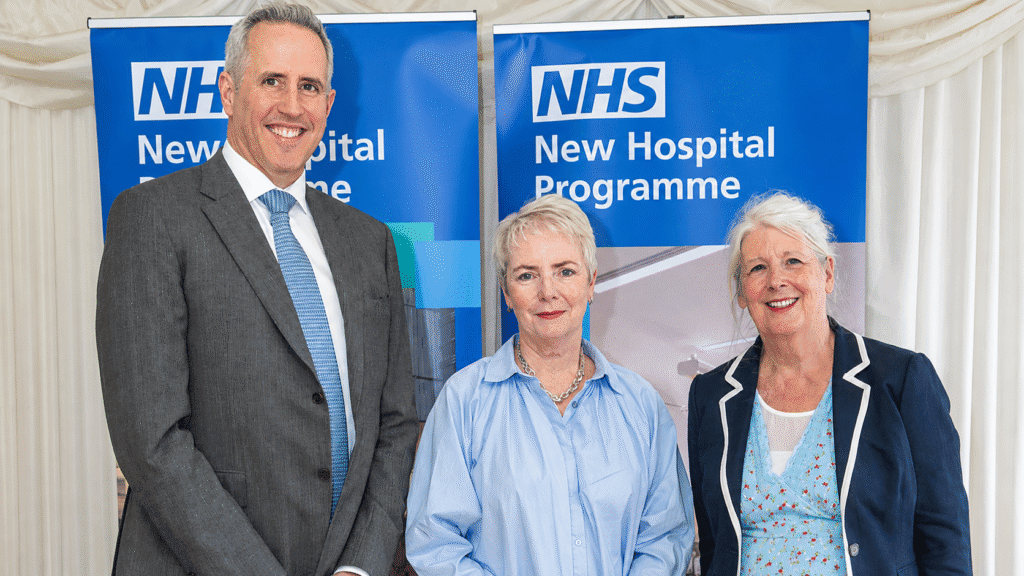
Photo: Left to right, Cathal O’Rourke, chief executive of Laing O’Rourke, Minister of State Karin Smyth, Lesley Watts, chief executive of The Hillingdon Hospitals. (Credit: The Hillingdon Hospitals NHS Foundation Trust)