Patients in Greater Manchester could gain faster access to AI-enabled medical devices and other promising healthcare technologies through a new innovation partnership between the Medicines and Healthcare products Regulatory Agency (MHRA) and Manchester University NHS Foundation Trust (MFT).
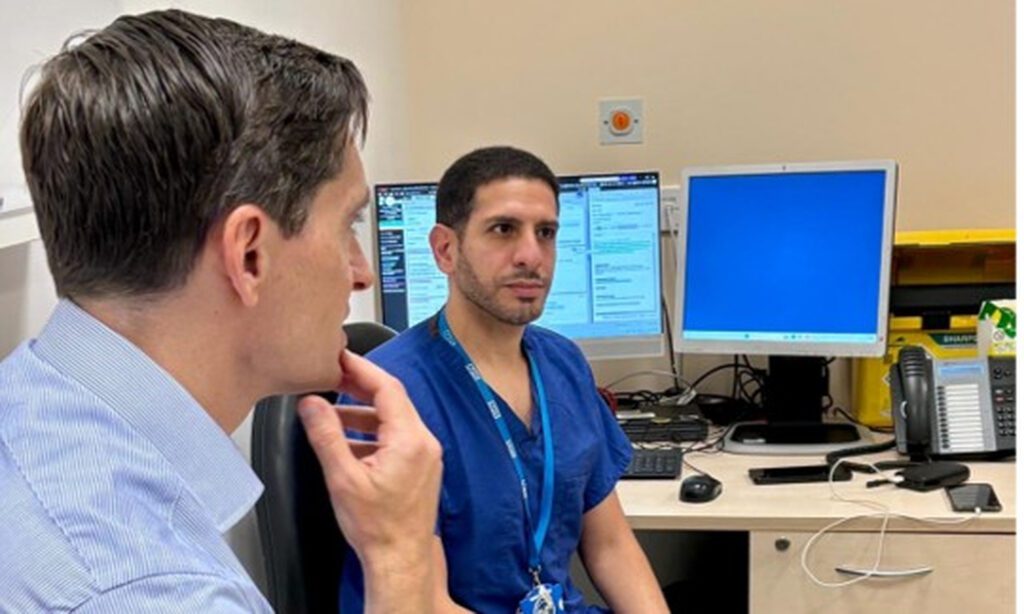
(Photo: CEO of The Medicines and Healthcare products Regulatory Agency, Lawrence Tallon met with clinicians at Manchester University NHS Foundation Trust to formalise the Innovation Sandbox partnership (Credit: Manchester University NHS Foundation Trust)
Launched on 2 September, the Manchester NHS Sandbox will allow selected technologies to be deployed and evaluated in real NHS settings under regulatory oversight.
The programme is intended to generate practical evidence about how innovations perform when used by patients and clinicians in everyday care, addressing one of the main obstacles between successful product development and widespread NHS adoption.
Its first projects are expected to include AI-enabled medical devices capable of identifying patients at greater risk of complications from long-term health conditions. By recognising risk earlier, these tools could support faster intervention, more personalised care and better use of NHS resources.

Building the evidence needed for NHS adoption
Many healthcare technologies demonstrate promise during development but face difficulties proving their effectiveness within complex clinical environments.
The Manchester Sandbox aims to bridge that gap by bringing healthcare providers, regulators, developers, researchers and patients together earlier in the evaluation process.
Technologies will be tested with appropriate safeguards and oversight, generating evidence about their safety, effectiveness and impact on patients, clinicians and NHS services.
The partnership will also examine how proportionate, lifecycle-based regulatory approaches can respond to rapidly evolving technologies, particularly AI systems that may continue to change after their initial development.
Evidence from the programme could help NHS organisations make better-informed decisions about which technologies to adopt. It should also give developers a clearer understanding of the evidence they must produce before their products can be deployed more widely.
Lessons from Manchester will be shared across the NHS, potentially creating a route for successful technologies to move from controlled local testing into broader clinical use.
Safety must remain central to innovation
Health Innovation Minister James Frith said Manchester was leading efforts to get effective new technologies to patients more quickly.
“Manchester is leading the way in getting the best new technologies into the hands of local patients faster, from AI models that can identify people at risk sooner to innovative treatments that could transform NHS care,” he said.
“But innovation must never come at the expense of safety. That is why this partnership will test out new technologies in real NHS settings but with strict oversight and guardrails, helping us to identify what works, in a carefully controlled way, and making a real difference to patients across Greater Manchester.”
MHRA Chief Executive Lawrence Tallon said the central challenge was understanding how emerging technologies operate in practice and where they can produce the greatest benefit.
“Manchester brings together the NHS, innovators, researchers and regulators to do exactly that,” he said.
“The learning from this programme could help shape how safe and effective technologies are introduced across the country, helping more patients benefit from innovation.”

A clearer route from innovation to patient care
MFT Chief Executive Mark Cubbon said patients should not have to choose between early access to innovation and confidence in its safety.
“This partnership brings together key partners earlier in the process so we can understand what works and how new technologies perform in real healthcare settings,” he said.
“By creating a clearer route from innovation to safe adoption, we can help people gain faster access to developments that have the potential to improve care, while maintaining the high standards of safety that patients rightly expect.”
The partnership strengthens Manchester’s position as a centre for healthcare research and technology. The city region combines one of the country’s largest NHS trusts with university research, digital infrastructure, health data expertise and a growing AI sector.
Mayor of Greater Manchester Bev Craig said the collaboration demonstrated how the region’s strengths in AI, health data and innovation could improve people’s lives.
“This new collaboration between MHRA and Manchester University NHS Foundation Trust will help new healthcare technologies be adopted safely and more quickly, improving access to life-changing treatments while supporting growth across our city region,” she said.
Welcoming the announcement Chair of UK Healthcare and Life Sciences Innovation’s (UKHLSI) AI Working Group and Clinical Director, Sword Intelligence, Dr Mark Ratnarajah said:
“Safe, evidence-led adoption of AI depends on more than technology alone. It requires genuine collaboration and co-design with NHS clinical and operational teams, patients and innovators from the outset. The Manchester Sandbox is an important step towards creating the real-world evidence and shared learning needed to ensure AI solutions are clinically meaningful, operationally viable and ultimately deliver better outcomes for patients.”
Manchester NHS Sandbox prepares for its next phase
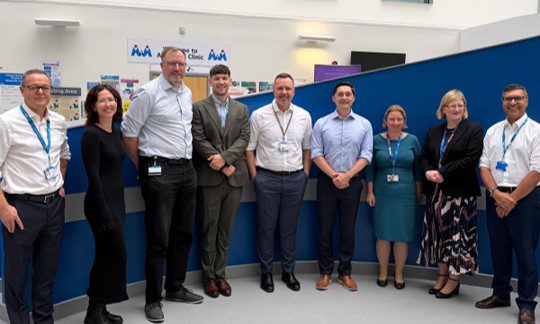
The partnership was launched at MFT’s Oxford Road Campus, one of Europe’s largest academic health campuses.
Demonstrations at the launch included wearable technologies and AI-powered ambient voice products. These systems can listen to clinical conversations, with consent and appropriate safeguards, and help produce medical notes or support clinical workflows.
MFT and the MHRA will convene a roundtable later in 2026 involving regulators, healthcare providers, technology companies, researchers, patients, and members of the public.
The roundtable will help determine future priorities and shape the next wave of projects. The MHRA also plans to invite expressions of interest from medical device developers seeking to participate in the programme’s next phase.
Speaking to Politics UK on the announcement, Chair of the AI trade association UKAI’s Healthcare and Life Sciences Working Group and President of Genomics, David Thornton said “This is a really positive initiative. The UK has an extraordinary opportunity to lead in the use of AI and new technologies for the benefit of patients.
“By bringing the NHS, the MHRA, and innovators together, this partnership will ensure greater adoption of proven innovation, and help our healthcare system continue towards earlier intervention and prevention – ultimately helping people live longer, healthier lives.”

From analogue to digital: turning successful pilots into NHS-wide change
The Manchester Sandbox represents the type of practical testing environment needed to evaluate new healthcare technologies. However, its longer-term value will depend on whether successful products can move beyond individual pilots and become part of routine NHS care.
That challenge will be examined by the UK Healthcare and Life Sciences Innovation (UKHLSI) programme as part of its work on the NHS Modernisation Bill.
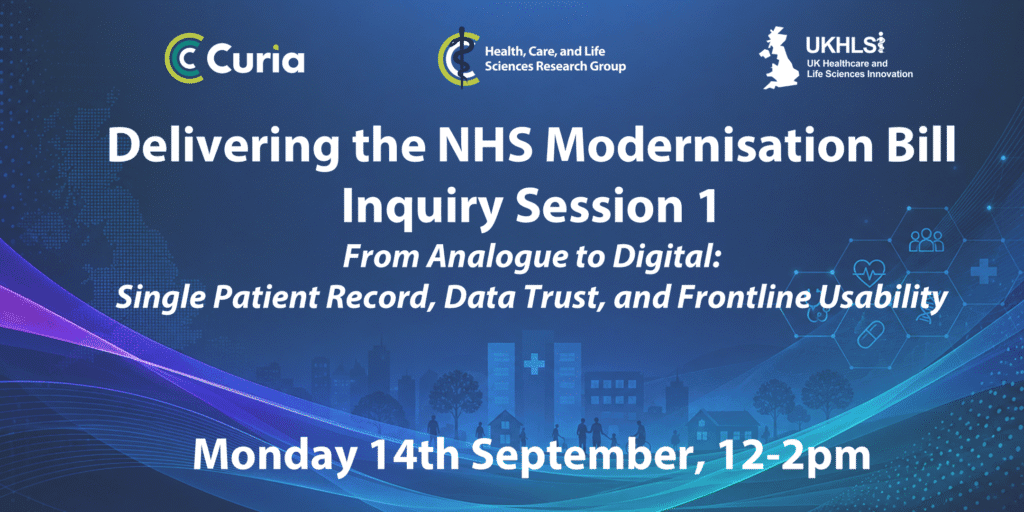
Chaired by Dr Mark Ratnarajah, the session will bring together NHS leaders, policymakers and industry experts, including confirmed participant James Freed, to consider how the health service can make the transition from fragmented and outdated systems to digitally enabled care.
The discussion will examine privacy, patient consent, cybersecurity, interoperability, accountability and public trust. It will also consider whether new technologies are genuinely usable for frontline staff across primary care, hospitals, community services and social care.
The Manchester programme may help establish whether individual technologies are safe and effective. The wider policy question is how the NHS creates the infrastructure, procurement routes, workforce capability and accountability required to adopt proven innovations consistently across the country.
Without that connection between evaluation and implementation, promising technologies risk remaining trapped in local trials. The test for the new sandbox will therefore be not only what Manchester proves, but whether the NHS can turn that evidence into safer, better and more accessible care at scale.