


Miles Bennington
Editor – Chamber UKIn what they bill as a historic council housebuilding comeback, the Government today has announced the allocation of nearly £10 billion to 33 strategic partners including councils that will build 70,000 homes over the next ten years.
The programme is targeted that 60% of these affordable homes will be for Social Rent.
These allocations are the first in the £39 billion Social and Affordable Homes Programme.
Affordable Homes: The Numbers
I must admit that I am getting housing announcement fatigue. Perhaps that is unfair to lay at the feet of the new Andy Burnham led Government but Labour have been in for two years. Their signature housing promise was to build 1.5 million homes over the Parliament, or 300,000 per year.
That is an ambitious and worthy goal.
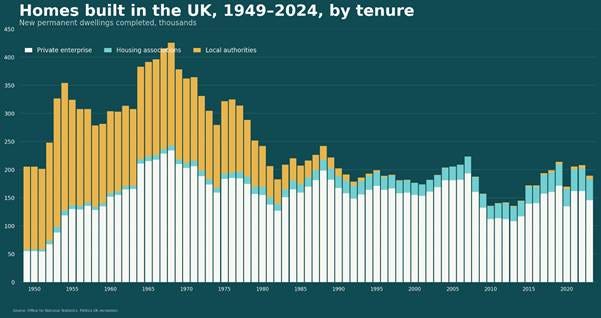
As you can see from this chart. The UK has failed to build much more than 200,000 homes per year since the 1970s.
As you may also notice, the reason is for the end of council house construction. Good news! Andy Burnham has pledged to bring back council house construction.
The bad news is that he has not specified how he will achieve this.
Labour’s Record
Currently Labour has:
· Restored mandatory local housing targets
· Rewritten The National Planning Policy Framework to require councils to build
· Targeted lower quality Green Belt areas for development as the “Grey Belt”
· Passed the Planning and Infrastructure Act 2025 to speed up planning permission
· Created the £39 billion Social and Affordable Homes Programme for 2026-36
· Extended preferential borrowing rates for council housebuilding
· Proposed seven new towns
The net result has been effectively no increase in building. If you can show me the housing boom on the below graph I would be very impressed.
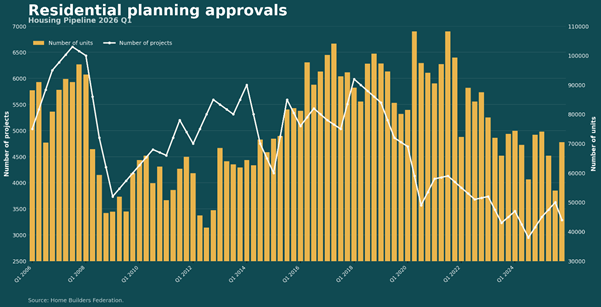
Every year that passes, the Labour target of 1.5 million homes this Parliament gets harder to hit.
Generously speaking, we build about 200,000 homes per year. To hit the target from 2024 we needed to average 300,000 homes per year. After two years of Labour Government we now have have a 200,000 home deficit. So for the remainder of the Parliament we will have to build 367,000 homes per year.
This is impossible.
Labour have allocated £39 billion to this problem. Today’s £9.6 billion allocation is for 70,000 homes over ten years assumes a per unit cost of £135,000, which feels ambitious to me, and in any case blows the target date for the 1.5 million homes out of the water.
If we were to divide £39 billion by the actual number of homes required to hit Labours target (assuming a base rate of 200,000 homes per year we know we can build), then they have allocated about £78,000 per home required.
Laughable.
Right To Buy
The problem at the heart of British housing policy is the Right To Buy. The fiendishly popular, Thatcher era policy that gives council tenants the Right To Buy their council homes at a discounted rate.
As you can see from the first graph, this 1980 policy all but did for council construction. It destroyed the incentive to build as councils could no longer hold onto expensive assets they had built or sell them for more than they cost to build. Worse, it created a policy that is great for individual council tenants but toxic to the institution of council housing.
Politically, it has been a third rail. Labour have been scared to touch it for forty years. Without effectively ending the Right To Buy, and somehow entrenching that situation so that the next Tory government doesn’t immediately undo it, then there is no incentive for councils to build.
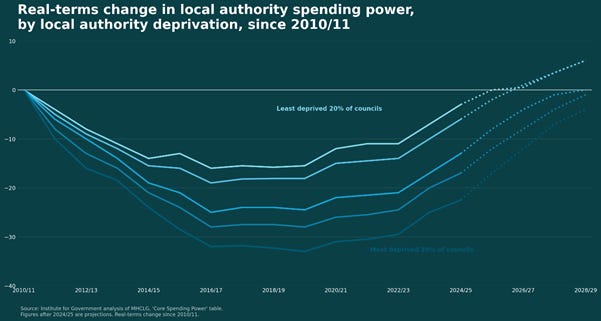
As you can see from the above, councils are only starting to recover from Coalition-era spending cuts and with an ever-increasing social care burden, they are unlikely to be in a position to bail out the Government’s housing target without financial incentives to do so.
Burnham’s Test
The housing target remains in place, Burnham has pledged to get councils building again, he has pledged to end rough sleeping by Christmas, and best of all, The Social Housing Bill was introduced in the Lords in May. It’s specific remit, to reform the Right To Buy scheme to protect social housing stock. What more could I possibly want?
Reading a summary of the Bill, it takes an axe to Right To Buy as it stands:
· New homes exempt from Right to Buy for 35 years, giving councils confidence they can retain homes they build.
· Council market-rent homes exempt from Right to Buy, allowing rental income to cross-subsidise new social housing.
· Lower Right to Buy discounts, reducing losses when council homes are sold.
· Rural homes exempt from Right to Buy, protecting stock that is difficult and expensive to replace.
· Permanent council right of first refusal, making it easier to bring former council homes back into public ownership.
This is a good thing. If this Bill can re-establish a financial incentive for councils to build, then it will be a triumph. It has currently passed Third Reading in the Lords, the question is will it survive the political scrutiny in the Commons?
So far there has been little blowback over the effective end to Right To Buy so it will be interesting to see if that remains the case when it reaches the Commons this Autumn.
If a storm is brewing, it will be a direct challenge to Burnham’s central pledges as Prime Minister, and an end to any real prospect of this Government making any headway on housing at all.