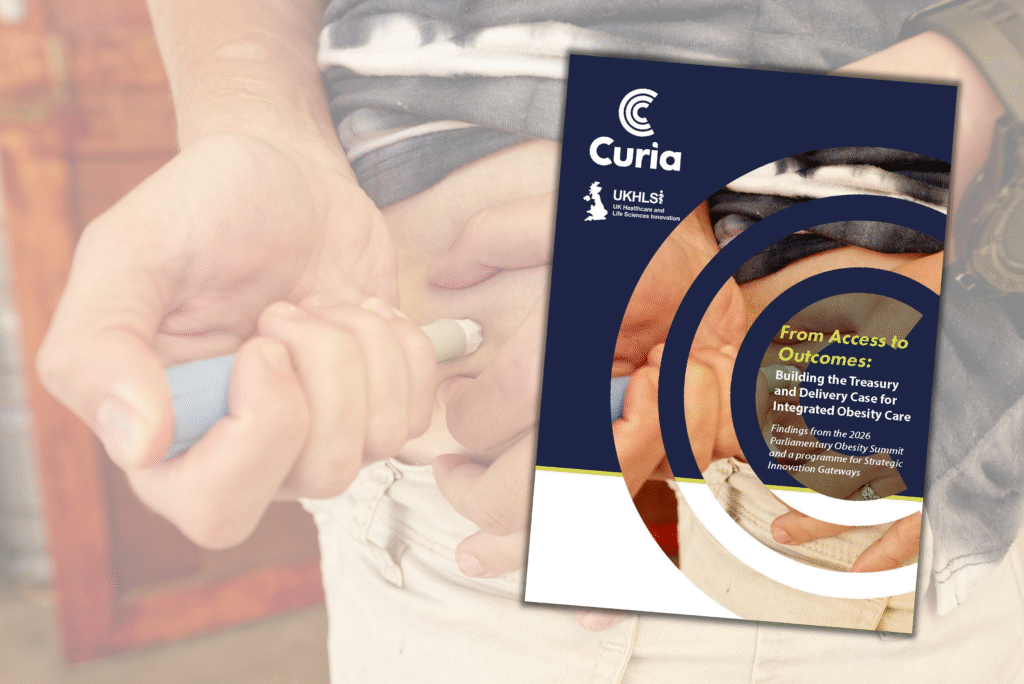
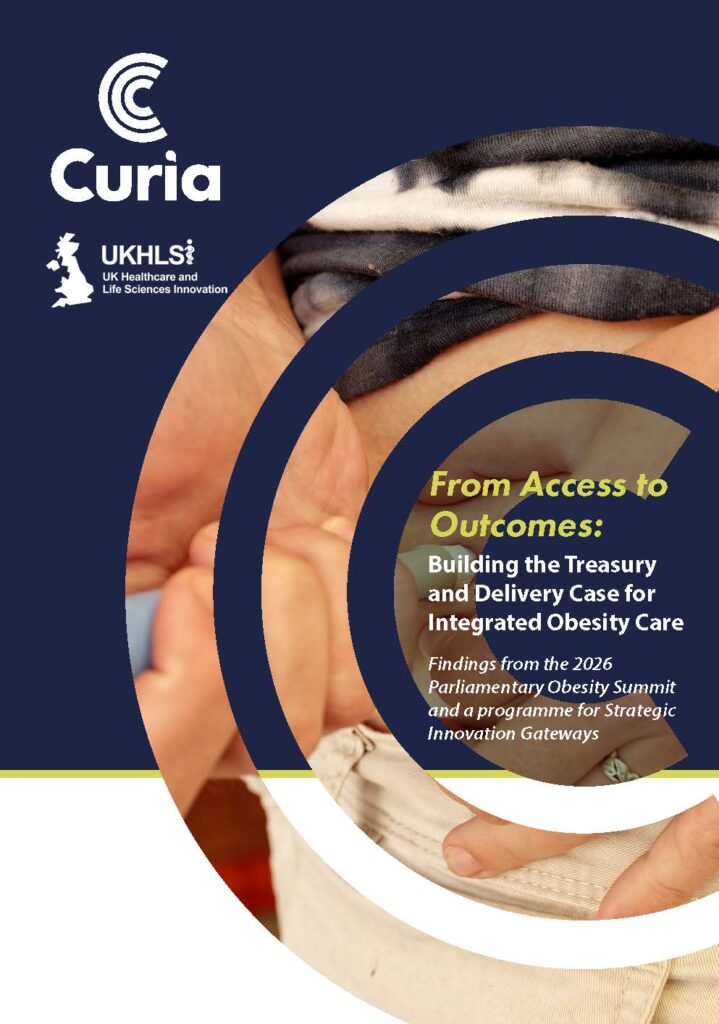
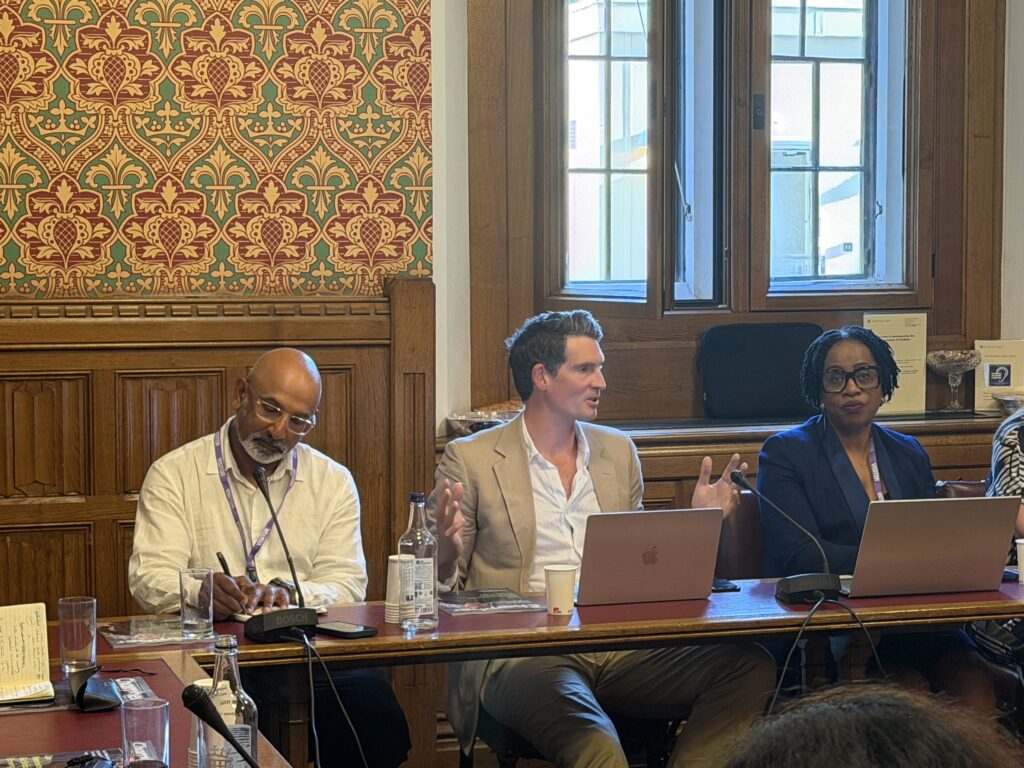
New Curia Report: Building the Case for Integrated Obesity Care
New Integrated Obesity Care report sets out plan to shift obesity treatment to long-term outcomes.
The 2026 Parliamentary Obesity Summit report calls for a shift from treatment access to long-term outcomes within Integrated Obesity Care, with a practical programme to help NHS systems design, test and evaluate integrated care.
Effective treatments for obesity are available, and national policy is moving. However, a recent Parliamentary summit and report questions whether people can access the right support at the right time, and whether services can sustain that support over the long-term.
Drawing on its 2026 Parliamentary Obesity Summit, a new report from policy institute Curia, commissioned by UK Healthcare and Life Sciences Innovation (UKHLSI), sets out how to meet that challenge. From Access to Outcomes brings together views from clinicians, NHS and local government leaders, policymakers, industry, community organisations and people with lived experience. It turns those discussions into a programme for better care and a stronger economic case for investment.
The report’s central argument is that obesity care cannot be judged by medicines costs or short-term weight change alone. Its value should be assessed through a wider set of outcomes: cardiovascular, renal, and metabolic health; service use; mental wellbeing; patient safety and trust; workforce participation; inequalities; and the long-term cost of inaction.
UKHLSI Chief Executive Jo Bekis puts the emphasis on implementation:
The summit heard that obesity is a chronic, relapsing condition, often connected to cardiovascular, renal, metabolic and mental health needs. Yet services are frequently organised in separate tiers, with different thresholds, budgets, referral routes, and data systems.
For patients, that can mean delays, repeated assessments, and gaps between services. Short-term programmes can also sit uneasily alongside a condition that may require continuing support, maintenance, and the ability to return to care when circumstances change.
The report calls for integrated pathways that bring together clinical treatment, behavioural and psychological support, digital care, and community-based help. They should be personalised to people’s needs and circumstances, with clear routes between neighbourhood teams, pharmacies, specialist services, and trusted community organisations.
That means widening the idea of where care happens. The summit heard examples of health support delivered in places such as pubs, barber shops, workplaces and community settings – reaching people who may not engage with conventional services. These partners need to be connected to safe clinical pathways and properly supported.
Dr Rani Khatib, National Specialty Adviser for Cardiovascular Disease Prevention at NHS England, summed up the principle:
“Manage people, do not manage conditions.”
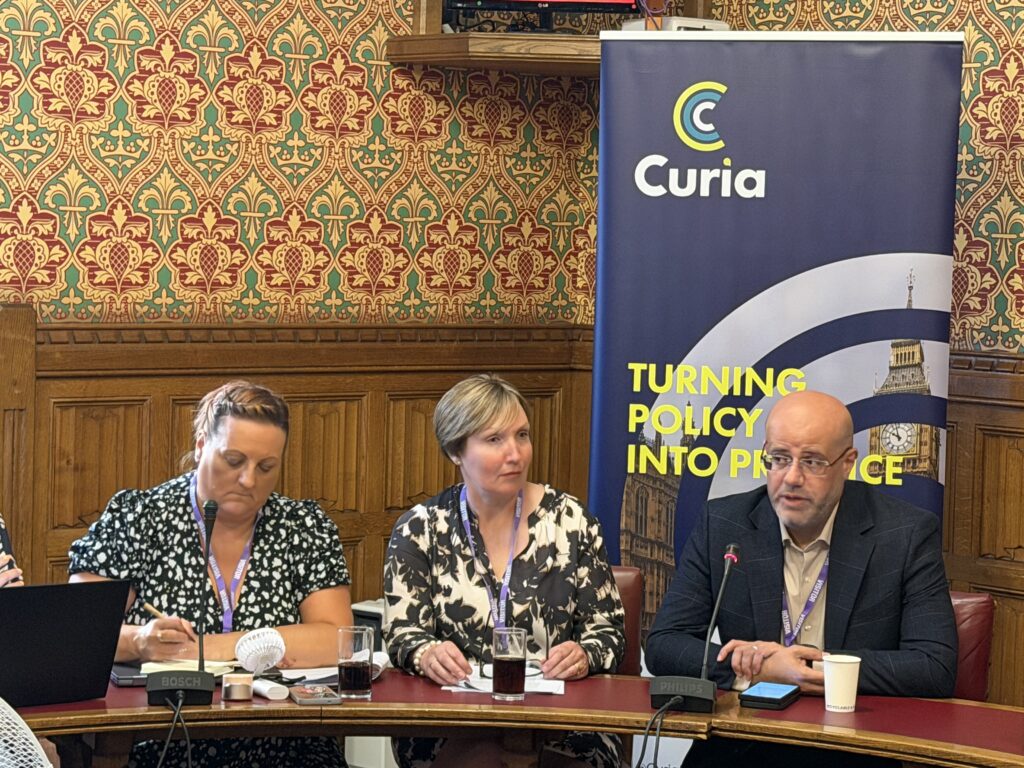
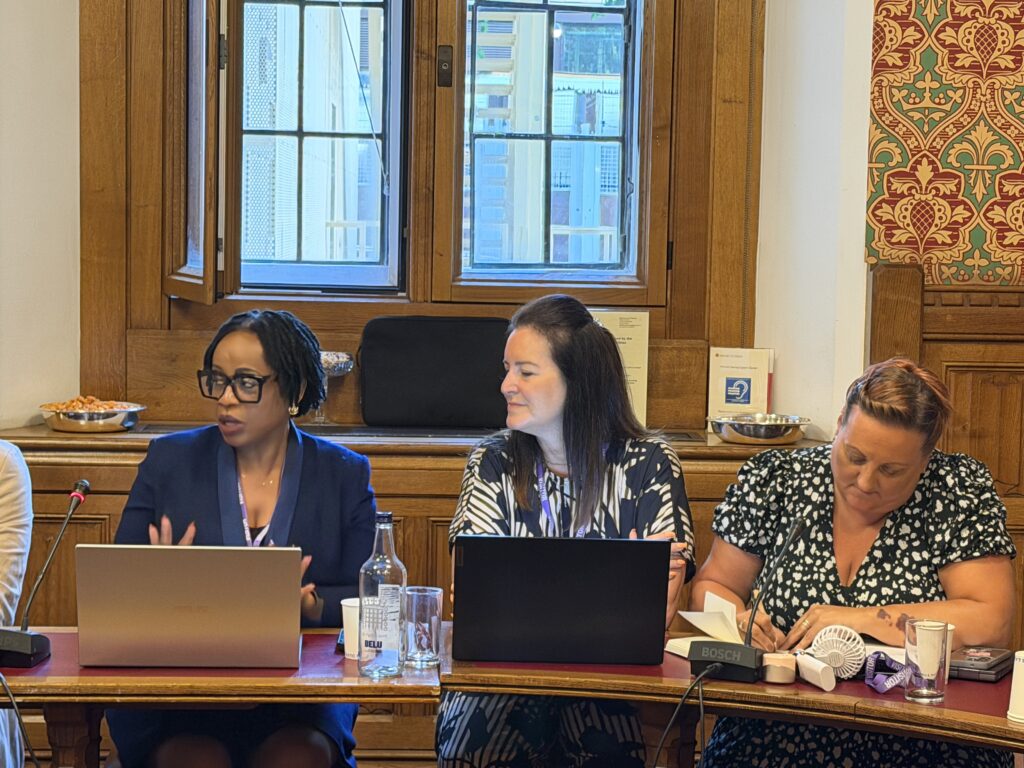
Dr Rani Khatib, National Specialty Advisor for Cardiovascular Disease Prevention at NHS England and Visiting Associate Professor at the University of Leeds, discusses the need to recognise obesity within a wider cardiovascular, renal and metabolic framework.
Trust and safety are part of effective care
The report highlights the way people experience care affects whether they seek help, engage with treatment, and return when they need further support.
Summit participants described how stigma, blame and previous difficult experiences can undermine trust before treatment even begins. The report cites the Numan State of Obesity Report 2025, which found that 68 per cent of surveyed people living with overweight or obesity had felt judged by a healthcare professional because of their weight.
“The cost of doing nothing is the human cost.”
Emm Irving, former Head of Improving Population Health, West Yorkshire Health and Care Partnership
Trauma-informed, non-stigmatising practice is therefore both an ethical responsibility and a practical part of designing effective services. The report recommends that pathways monitor whether people feel listened to, respected and safe, alongside clinical outcomes and service activity.
It also calls for maintenance and re-entry to be treated as parts of care, not signs of failure. A pathway should give people continuity and a route back to support without making them start again from the beginning.
Fabiola Bayavuge, Strategic Lead for Population Health at the Caribbean African Health Network (CAHN), highlights the importance of building trust, cultural understanding and community partnership into the design of scalable obesity pathways.
Making an honest economic case
The summit examined why investment in prevention and earlier care can be difficult to secure. Costs may fall to one organisation, while benefits emerge later or elsewhere – in fewer hospital admissions, reduced social care demand, improved workforce participation, lower sickness absence, or stronger productivity.
The report calls for a Treasury-facing case that is transparent about where value arises and when. It recommends distinguishing between cash-releasing savings, capacity freed up for other care, future costs avoided, and wider economic and social benefits. It also argues for realistic time horizons and scenario analysis, rather than promising that every intervention will immediately pay for itself.
To build that case, the report proposes a common outcomes framework covering clinical measures, service use, patient experience, treatment sustainability, workforce, and economic outcomes, equity, and delivery costs. Weight change can be one measure but should not define success on its own.
Evidence should be built through delivery. Strategic Innovation Gateways would bring local NHS systems and their partners together to assess readiness, design pathways, agree measures and evaluate what works under real-world conditions. A small number of demonstrators could help show which approaches benefit which groups, at what cost and over what timescale.
The report proposes a 12–18-month programme combining local demonstrations with national evidence, workforce learning, community partnership and policy development. Its intended outputs include a Treasury-facing economic model, a shared outcomes and evaluation framework, practical implementation guidance and recommendations for wider commissioning.
Contributors at the Summit included Dr James Harmsworth King, Chief Medical Strategy Officer at UKHLSI member Numan.
Join UKHLSI’s Obesity Working Group
The report proposes a National Obesity Working Group, bringing partners together to agree priorities, measures and a shared programme of work. The proposed format includes four virtual meetings, one or two face-to-face development events, task-and-finish priorities and an annual progress report.
UKHLSI is inviting organisations and individuals with relevant experience to get involved. This includes NHS and local government leaders, clinicians, researchers, community, and voluntary organisations, people with lived experience, and partners from life sciences and digital health.
Contributions could include helping shape priorities and outcomes, sharing evidence, supporting community and lived-experience participation, or identifying practical challenges in local delivery. The report also proposes separate routes for involvement in Gateway projects, evidence and evaluation, and workforce learning. These routes would have their own scopes and governance.
The programme is designed to protect the independence of its work. The report proposes transparent, pooled support and clear safeguards: participation or sponsorship would not confer influence over clinical decisions, recommendations or public findings, or guarantee a seat, NHS commission or supplier preference. People with lived experience and community organisations should be funded partners in co-design and evaluation, not simply consultees.
UKHLSI is now looking to build the partnerships needed to take this work forward. To discuss joining the Obesity Working Group or contributing to the Strategic Innovation Gateway programme, contact enquiries@ukhlsi.co.uk.
We use cookies on our website to give you the most relevant experience by remembering your preferences and repeat visits. By clicking “Accept All”, you consent to the use of ALL the cookies. However, you may visit "Cookie Settings" to provide a controlled consent.
This website uses cookies to improve your experience while you navigate through the website. Out of these, the cookies that are categorized as necessary are stored on your browser as they are essential for the working of basic functionalities of the website. We also use third-party cookies that help us analyze and understand how you use this website. These cookies will be stored in your browser only with your consent. You also have the option to opt-out of these cookies. But opting out of some of these cookies may affect your browsing experience.
Necessary cookies are absolutely essential for the website to function properly. These cookies ensure basic functionalities and security features of the website, anonymously.
Cookie
Duration
Description
cookielawinfo-checkbox-analytics
11 months
This cookie is set by GDPR Cookie Consent plugin. The cookie is used to store the user consent for the cookies in the category "Analytics".
cookielawinfo-checkbox-functional
11 months
The cookie is set by GDPR cookie consent to record the user consent for the cookies in the category "Functional".
cookielawinfo-checkbox-necessary
11 months
This cookie is set by GDPR Cookie Consent plugin. The cookies is used to store the user consent for the cookies in the category "Necessary".
cookielawinfo-checkbox-others
11 months
This cookie is set by GDPR Cookie Consent plugin. The cookie is used to store the user consent for the cookies in the category "Other.
cookielawinfo-checkbox-performance
11 months
This cookie is set by GDPR Cookie Consent plugin. The cookie is used to store the user consent for the cookies in the category "Performance".
viewed_cookie_policy
11 months
The cookie is set by the GDPR Cookie Consent plugin and is used to store whether or not user has consented to the use of cookies. It does not store any personal data.
Functional cookies help to perform certain functionalities like sharing the content of the website on social media platforms, collect feedbacks, and other third-party features.
Performance cookies are used to understand and analyze the key performance indexes of the website which helps in delivering a better user experience for the visitors.
Analytical cookies are used to understand how visitors interact with the website. These cookies help provide information on metrics the number of visitors, bounce rate, traffic source, etc.
Advertisement cookies are used to provide visitors with relevant ads and marketing campaigns. These cookies track visitors across websites and collect information to provide customized ads.
Other uncategorized cookies are those that are being analyzed and have not been classified into a category as yet.
Subscribe to our newsletter for your free digital copy of the journal!
Receive our latest insights, future journals as soon as they are published and get invited to our exclusive events and webinars.
We respect your privacy and will not share your email address with any third party. Your personal data will be collected and handled in accordance with our Privacy Policy.
Never miss an issue by subcribing to our newsletter!
Receive our latest insights and all future journals as soon as they are published and get invited to our exclusive events and webinars.
We respect your privacy and will not share your email address with any third party. Your personal data will be collected and handled in accordance with our Privacy Policy.
Never miss an issue by subcribing to our newsletter!
Receive our latest insights and all future journals as soon as they are published and get invited to our exclusive events and webinars.
We respect your privacy and will not share your email address with any third party. Your personal data will be collected and handled in accordance with our Privacy Policy.
Receive our latest insights as soon as they are published and get invited to our exclusive events and webinars.
We respect your privacy and will not share your email address with any third party. Your personal data will be collected and handled in accordance with our Privacy Policy.