
Partner Content: The Get Britain Growing conference was sponsored by HP. As publisher of the report, Curia retained full editorial control over the report’s content, analysis, and conclusions, and that sponsors were not involved in the decision-making process or the substance of the report.
A new Curia and UKAI report argues that Sussex can become a testbed for responsible AI growth – but only if skills, trust, leadership, and delivery are treated as regional infrastructure.
Setting out how Sussex could become a regional testbed for responsible artificial intelligence adoption, the report argues that the area has the assets to lead but lacks the coordinated delivery model needed to turn ambition into economic growth.
AI and Skills – Building Capability for Regional Growth, produced as part of the Get Britain Growing Report Sprint Three, follows a conference at the University of Sussex which brought together industry, academia, and government to explore how the South East can stimulate and sustain growth. The report focuses on the third sprint, which examined the skills, structures, confidence, and governance needed to harness AI for public value and regional economic development.

From AI ambition to delivery
The central argument of the report is that the South East does not lack innovation, ideas, or institutional assets. It has universities, businesses, investment networks, and public sector bodies that could support AI adoption at scale. The problem is that these assets are not yet sufficiently aligned.
As the report puts it, the region’s strengths “are not yet translating into coordinated AI adoption at scale.” It warns that adoption remains “uneven, risk-averse, and poorly supported by existing skills and education systems,” with fragmented initiatives and limited accountability holding back progress.
“The outputs of this Sprint offer a credible foundation for regional AI leadership that can be tested locally and scaled nationally” Tim Flagg, Chief Executive, UKAI
This is where Sussex becomes important. Rather than attempting to solve the entire South East’s AI challenge at once, the report proposes Sussex as a practical starting point: a place-based testbed where councils, universities, businesses, and communities can develop, test and refine a coordinated model.
AI literacy as a leadership capability
One of the strongest themes in the report is the need to redefine AI literacy. The discussion does not treat AI skills as simply a matter for coders, data scientists, or technology teams. Instead, the report argues that AI literacy must become a core leadership and civic capability.
Many organisations already use AI tools, but the report suggests that use is often shallow. AI is too often treated as a shortcut, search engine or writing aid, rather than as a tool for analysis, decision support, and organisational learning.
“Many people are using AI tools daily, but few are using them well” Sprint participant
This matters because low AI fluency affects procurement, governance, workforce planning, and public trust. Senior leaders who do not understand AI’s capabilities and limitations are less able to make confident decisions about adoption. In particular, public sector organisations may default to caution, informal bans or highly restrictive policies because they fear reputational, ethical, or operational risk.
The report therefore calls for mandated practical AI literacy programmes for councillors, senior officers, education leaders, and commissioners. It also recommends a Sussex-wide AI literacy framework, defining baseline literacy, advanced fluency, and leadership capability.
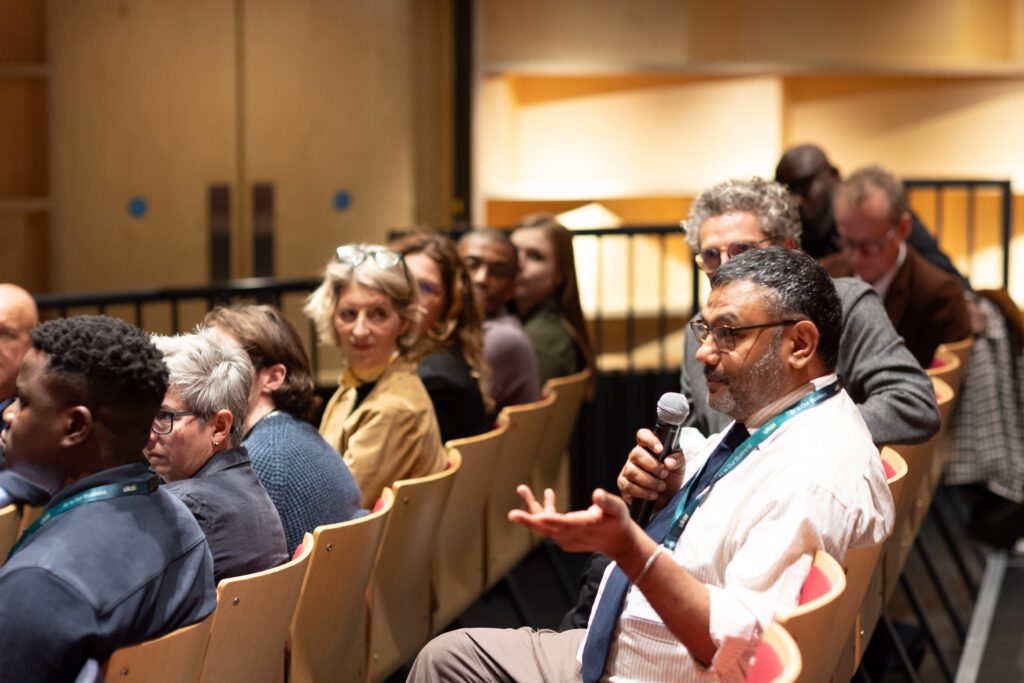
Education must move faster
The report is equally direct about the education and skills system. It argues that current models are too slow for the pace of AI-driven change, with long qualification cycles, rigid accreditation processes and weak links between education and industry.
Graduates, the report notes, are often not work-ready, while adults who need to retrain struggle to access flexible learning pathways. In response, it calls for more agile skills provision, including micro-credentials, bootcamps, stackable learning and industry-shaped curricula.
“Education and skills systems are structurally misaligned with the pace of AI change” Peter Swallow MP, Member of Parliament for Bracknell and member of the Education Select Committee
Member of Parliament for Bracknell and a member of the Education Select Committee, Peter Swallow MP makes the broader case in the report that AI does not reduce the importance of education. Instead, he argues that it changes what education is for.
“AI does not signal the end of education, but it challenges us to return to its core purpose – preparing people not for a single job, but for continuous personal and professional development.”
That framing is important. Unlike several AI and education/skills reports, the Curia and UKAI report does not argue for a narrow technical curriculum. Instead, it places problem-solving, communication, critical thinking, ethics, and adaptability alongside technical competence.

The Sussex AI Coalition
The report’s main delivery proposal is the creation of a Sussex AI Coalition. This would bring together local authorities, universities, employers, small and medium-sized enterprises, community organisations, and UKAI to coordinate activity across the region.
The coalition would be supported by a shared Sussex AI Manifesto, setting out principles for responsible and inclusive adoption. The report also proposes appointing a Regional AI Lead or Chief AI Officer equivalent to coordinate delivery and own the regional AI action plan.
The proposed implementation plan is built around four delivery pillars: governance and leadership; AI literacy and leadership capability; education, skills, and workforce alignment; and shared infrastructure, trust, and inclusion.
This structure is important because it moves the debate beyond general support for innovation. It gives the region a delivery architecture – who should convene, what should be built, what should be measured and how quickly progress should happen.
Shared infrastructure and inclusion
A further recommendation is the development of shared AI infrastructure, including a proposed Sussex GPT. The report describes this as a regional knowledge and literacy hub, designed to support policy, best practice and AI learning in a way that reflects local needs.
The report also stresses that infrastructure should not only mean technology. It should include data, standards, training, coordination, and ethical assurance. Shared infrastructure could lower barriers for SMEs, social enterprises, and public bodies, helping organisations that may not have the capacity to build AI capability alone.
“AI adoption risks deepening existing inequalities if inclusion is not designed in from the outset.” Peter Swallow MP
Inclusion is a recurring concern. The report warns that AI could deepen existing inequalities if digital exclusion is not addressed. Barriers such as poor connectivity, limited access to devices and lack of confidence could prevent communities from benefiting from AI-enabled education, employment, and public services.
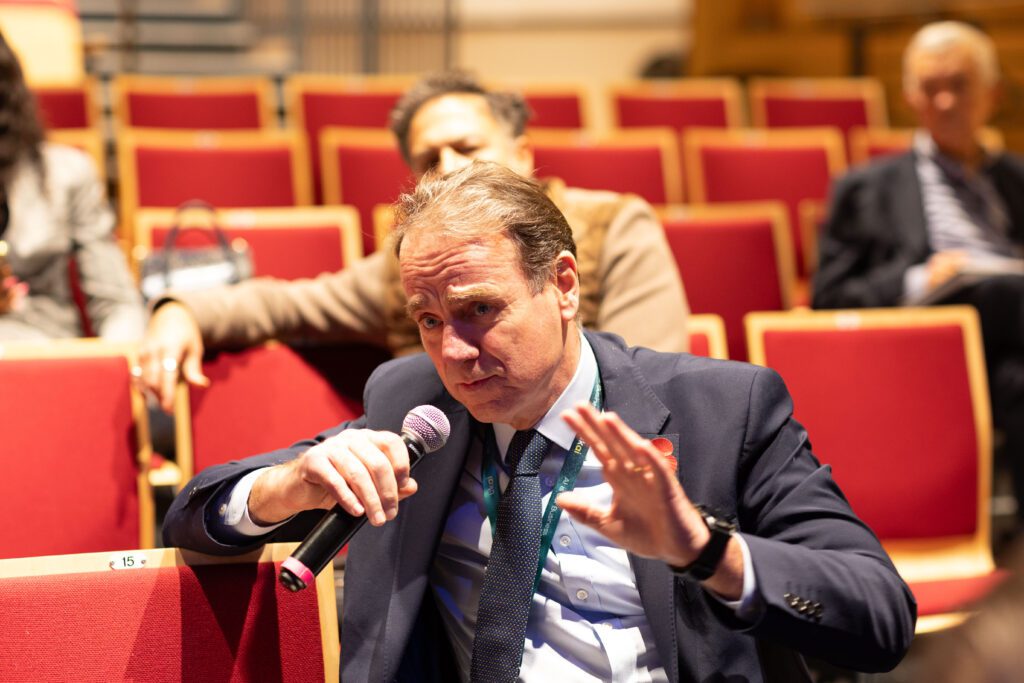
Analysis: the report’s strength is its focus on delivery
The strongest part of the report is its insistence that AI adoption is primarily not a technology problem. It is a coordination problem across various economic sectors, and across government. The report identifies the familiar pattern of strong discussions, promising ideas, and limited follow-through. By focusing on ownership, governance, and delivery, it moves the debate from aspiration to implementation.
The Sussex model is also sensible. Regional AI strategies can become too broad to act on, while individual institutional projects can remain too small to scale. Sussex offers a middle ground – large enough to bring together councils, universities, employers, and communities, but focused enough to test what works.
However, the report’s success will depend on whether the proposed coalition has real authority, resources, and accountability. A manifesto alone will not change behaviour. As with other Mayoral Combined Authority regions, a Regional AI Lead could make a difference, but only if the role has the backing of local government, employers, and education providers.
The report is right to place AI literacy at the centre of the agenda. Without confidence and understanding, adoption will either be too slow or too careless. The real opportunity is not just to train more technical specialists, but to build an AI-capable civic and business culture across the region.
Ultimately, the report argues that Sussex should not simply adopt AI. It should demonstrate how AI can be embedded responsibly into education, work, and public life. If that can be delivered, the region could offer a practical model for AI-enabled growth that other parts of the UK can learn from.
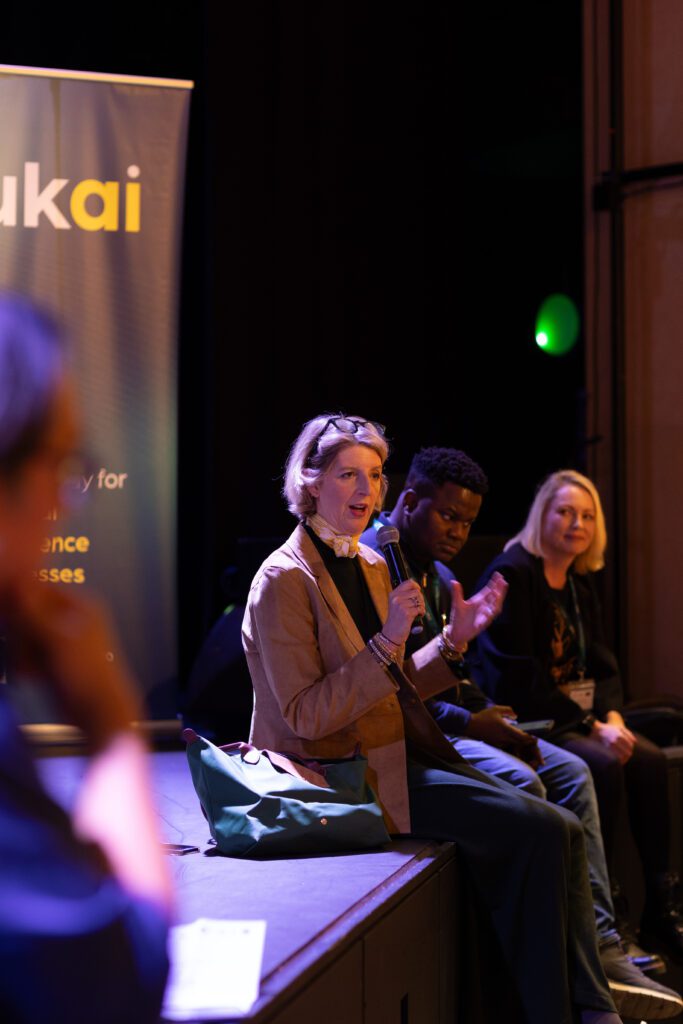
Find out more
To find out more about the 2026 Chamber UK Get Britain Growing Conference, please either visit www.chamberuk.com/events or for partnership opportunities, please contact ben.mcdermott@chamberuk.com. This conference is organised in partnership with Silverstone Communications.
To find out more about UKAI: click here.
The Get Britain Growing Conference was sponsored by HP. Find out more: click here.