

Ben Howlett
CEO, Chamber UK
More Than Potholes and Planning
Local elections are usually dismissed as secondary or peripheral events: a chance for voters to vent about bin collections, parking charges, or potholes without altering the national direction of travel.
But when a party is this unpopular, or when its leadership has attempted to redraw its political personality ahead of projected significant losses, these contests take on a far heavier significance. They become proxies for credibility, confidence, and control of a party battling to retain a shred of dignity.
This week’s local election and national Scottish Parliament and Welsh Senedd results will be read as a verdict on whether a carefully cultivated reset could ever work. In that sense, the numbers matter less than the narrative that follows them in the days ahead. What look to be significant losses for the Labour Party will define what this government is expected to deliver in the remainder of this Parliament. What matters now is how Sir Keir Starmer draws a line under disastrous results – and quickly.
Should he fail, the political heavyweight vultures are circling for his job.
A Leader Under Pressure: Authority, Anxiety, and the Circling Critics
For any party leader, local elections are an awkward test. For one whose authority rests on steadiness rather than passion, discipline rather than enthusiasm, the challenge is sharper still. Expectations have managed deliberately: by stressing these are going to be difficult election results – losing power in Wales for the first time in a century being quite an achievement – the Government hopes that the media will omit the word “shock” in front of dismal results.
Inside any large party, unease expresses itself indirectly. It appears first in tone rather than action: a harder edge to briefings, a sudden insistence on “benchmarks”, the revival of questions thought settled months earlier. No leadership collapses because of council results alone, but poor or ambiguous performances create the conditions in which internal rivals feel licensed to reposition themselves. The vultures do not wait for defeat; they gather when they sense blood in the air.
Welfare, McSweeney, Mandelson have all contributed to disappointment – but combined with some of the worst local election results in history for the Labour Party, could they force the hand of backbenchers to take rapid action.
The leader’s challenge, then, is not just to survive the night but to shape the interpretation of it. Control the story swiftly, or others will do it for you.
The Reset Question: Conviction or Calculator?
At the heart of this moment lies a deeper uncertainty about what the party now stands for. The much briefed post-local election reset has been pitched as realism: fewer emotional pledges, more managerial restraint, a conscious effort to deliver effective government. Supporters argue that voters crave seriousness after years of drama. Critics counter that caution risks draining politics of meaning.
The local election results overnight will intensify that debate. If this was any other local election night, one could easily say the danger for the Government is that it draws simplistic conclusions from complex local patterns – mistaking turnout quirks and council dynamics for sweeping national truths.
However, with a national result this disastrous for the governing party, it’s important to stress just how important national events and popularity are to the results. Like the Democrats in the US prior to the 2024 elections, do backbenchers act more decisively – as many US Democrats wished they had with Biden, and remove him earlier – or do they limp on to an almost certain electoral defeat at the next General Election?
European Alignment: The Strategic Silence Test
Nowhere is the ambiguity clearer than in the approach to relations with Europe. The leadership’s position has been one of deliberate understatement: improve cooperation where possible, rebuild trust quietly, and avoid the language that once polarised the country. It is a strategy rooted in risk avoidance rather than conversion.
As with Corbyn’s 2019 stance – which resulted in Labour’s worst electoral result in generations – the public do not respect ‘fence sitting’ on Brexit. A lack of clear position has a dreadful impact at the ballot box.
Given recent briefings, local election results will be scrutinised closely for what they appear to say about this silence. Gains in younger, urban, and university‑heavy areas for the Greens may embolden those who argue that closer alignment can be discussed more openly. Losses in other regions will strengthen the hand of those who believe the subject remains electorally toxic. Either way, the elections will influence whether Europe remains a background administrative issue or begins to re‑enter the political foreground.
Starmer is going to have to chose – is he going to go for a coalition of the left – or follow the McSweeney doctrine to pace after the centre and right. Neither shall the doth two meet.
Other Fault Lines: Public Services, Place, and Power
Beyond Europe, the results will resonate across several unresolved policy tensions. Voters’ judgments on local services inevitably bleed into assessments of national credibility. Claims of fiscal discipline sit uneasily alongside visible strain in local provision. Devolution, once heralded as a fix for regional inequality, will be tested by whether local leaders can convincingly argue that more power – not just more money – is the answer.
These elections will also expose the geographical limits of the reset. Geographically, where Labour stalls, uncomfortable questions will resurface about cultural connection and long‑term coalition‑building.
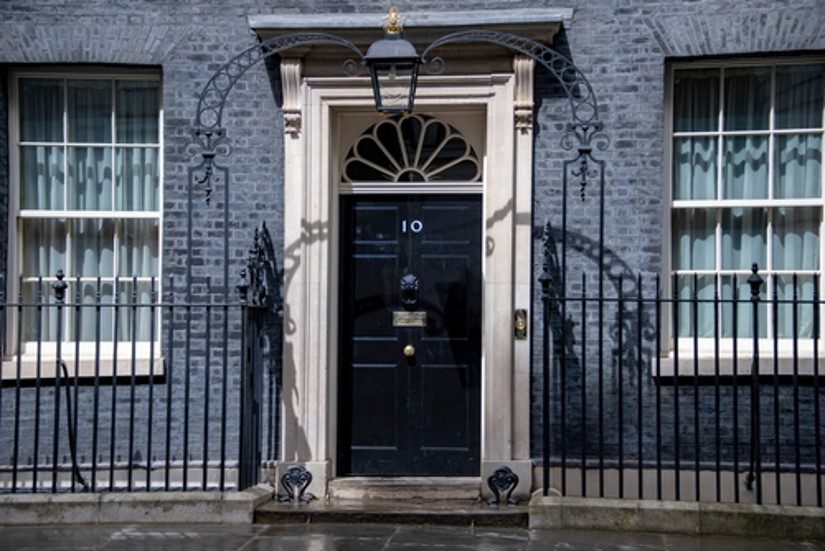
Local election results have resulted in speculation over Sir Keir Starmer’s premiership
A Verdict Deferred, But Not Avoided
Local elections rarely deliver clean verdicts, but they do establish trajectories. In 2026 the verdict will buck the trend.
For Starmer, a reset that survives contact with the electorate and his backbenchers gains authority simply by enduring. One that appears fragile invites challenge even without outright defeat.
The danger for the leadership is believing that ambiguity equals safety. In politics, unresolved questions rarely stay dormant.
If the results suggest drift rather than direction, the pressure to define – and defend – a clearer purpose will only grow. These elections may not decide the future outright, but they will narrow the space in which it can still be negotiated.