

Rt Hon Andrew Stephenson CBE
Chair of Curia’s Health, Care and Life Sciences Research Group, former Minister of State for Health, Department of Health and Social Care, and Chair,University Hospitals of Morecambe Bay NHS Foundation Trust
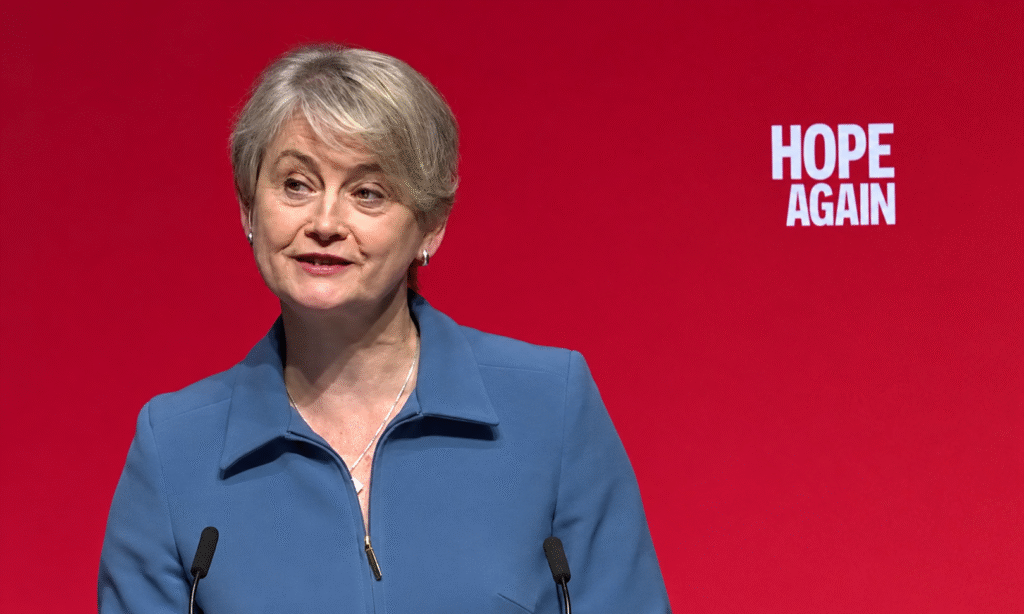
Responding to the Health and Social Care Secretary’s Labour Party Conference speech, Curia welcomes the focus on prevention, workforce development, and women’s health. He argues that clear funding, accountability, and implementation plans will determine whether the commitments improve care for patients and families.
The Secretary of State for Health and Care’s speech today set out important priorities for health and social care. Her recognition that NHS recovery depends on what happens in our communities, alongside what happens in hospitals, deserves support. As a former Health Minister, I know how much patients, families, and staff need these ambitions to translate into practical improvements.
Curia’s approach is cross-party and focused on delivery. We will welcome measures that improve outcomes, while asking the questions needed to make them work. This week’s announcements on social care by the Prime Minister, and by Yvette Cooper on maternity, early years, and domestic abuse provide opportunities for progress. However, without wishing to sound like a broken record, they also require clear funding, responsibilities, and implementation plans.
Supporting the Social Care Workforce
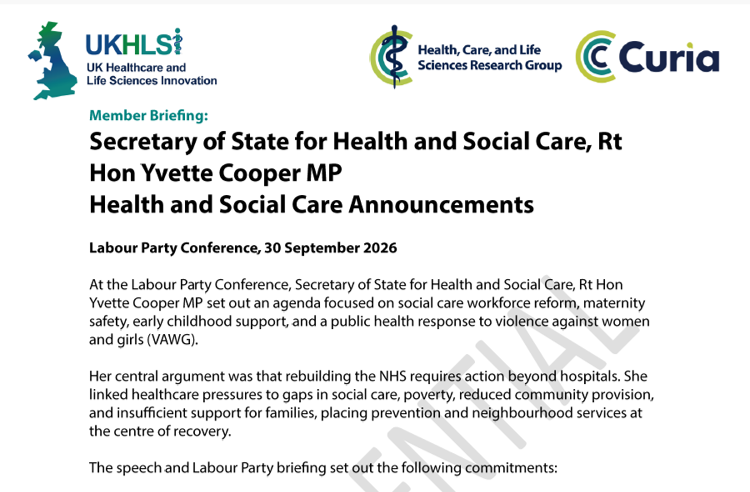
The commitment to a social care workforce plan is particularly welcome. Care workers need meaningful career pathways, specialist training and recognition of their professional contribution. Expanding academy places could help young people enter rewarding employment, provided recruitment is accompanied by support, supervision and opportunities to develop.
Fair pay and greater retirement security are worthwhile objectives. However, providers need to understand how the proposed pay agreement and collective pension scheme will be funded. The £500 million identified for the agreement’s first year must connect with commissioning arrangements that allow employers to meet their obligations sustainably. We also need clarity about subsequent years.
The proposed National Care Service raises wider questions about eligibility, accountability and affordability. Those questions cannot be deferred indefinitely.
Equally, people needing support today cannot wait for a future structure to emerge.
Improving access to care, supporting unpaid carers and enabling safe discharge must remain immediate priorities.
These are all questions we will be asking as part of our workforce session this Friday on the NHS Modernisation Bill programme.
Making Maternity Safety a System Priority
Cooper was right to place maternity safety at the centre of her agenda. New standards covering baby loss and post-pregnancy care, alongside an independent commissioner, could strengthen accountability. Their value will depend on whether concerns are heard, staff are supported and lessons lead to consistent changes in practice.
Women’s experiences must shape that work. Persistent inequalities demand attention, including the disproportionate risks facing Black mothers. Our recent Women’s Health and FemTech Summit reinforced the importance of connecting patient experience, clinical expertise and innovation. National expectations must be matched by the capacity to deliver locally.
Prevention Starts with Families and Communities
In the context of our work with South and West Yorkshire ICBs earlier this year, the expansion of health support through family hubs also deserve thought.
Parental mental health, feeding support and early relationships influence family wellbeing. Delivery should connect with health visiting and existing community services, with particular attention to families who struggle to access help. Prevention needs sustained investment and measurable outcomes.
The public health response to violence against women and girls is another significant commitment. Steps to Safety could help primary care identify abuse earlier and connect survivors with specialist services. Training must be accompanied by safe referral pathways and sufficient capacity. Survivors should receive effective support after disclosure, without encountering another waiting list.
As Curia has highlighted over many years, neighbourhood health offers a way to bring these priorities together. Local partnerships can identify unmet needs and help people remain well at home. Successful approaches require workforce capacity, appropriate information sharing and funding that supports collaboration. Evidence should guide expansion, recognising that different communities face different challenges.
Funding and Accountability Will Determine Success
Cooper also highlighted the potential of science and technology. Turning that potential into patient benefit requires clear routes for evidence generation, assurance, commissioning, and adoption.
Through Curia’s NHS Modernisation Bill programme, we are examining how reform can improve frontline delivery. Today’s speech strengthens the case for clear accountabilities, practical workforce planning, and an implementation approach that involves those delivering services.
Ahead of the Budget, government must explain how these commitments will be resourced and measured. Patients need timely care; staff need the tools to deliver it; innovators need workable routes into services. Our test will be whether these announcements make those outcomes easier to achieve across every community.

Find out more
To find out more about about Curia and UK Healthcare and Life Sciences Innovation (UKHLSI), please contact team@curiauk.com and enquiries@ukhlsi.co.uk.