
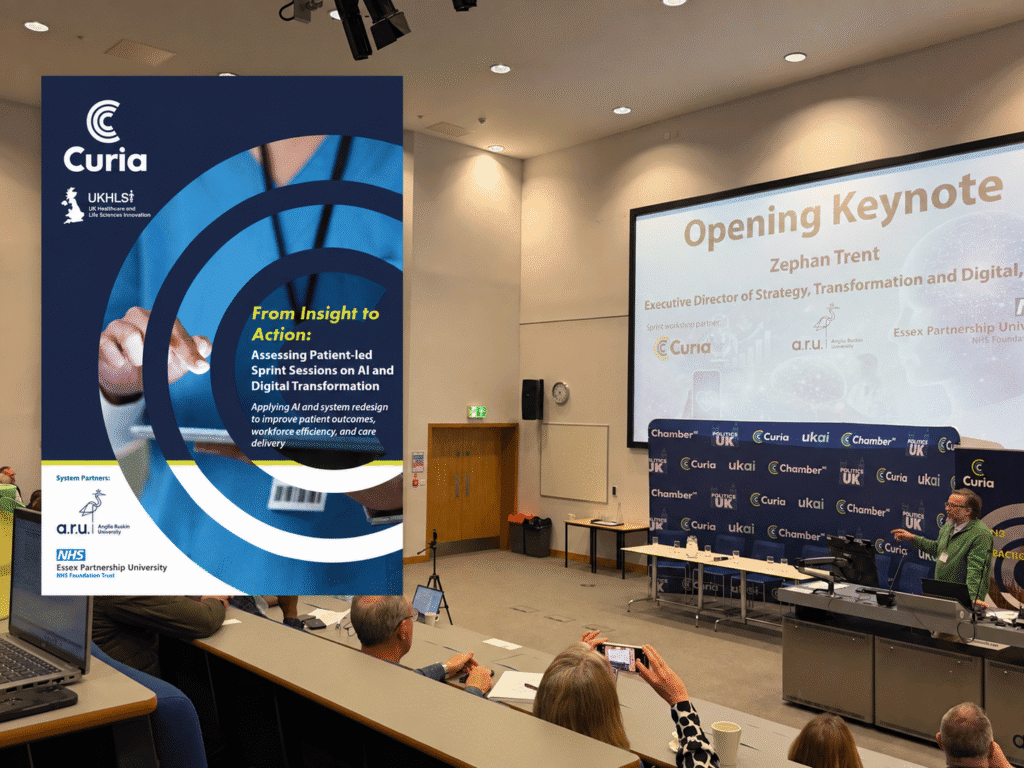
A new patient-led report from independent policy institute Curia, commissioned by UK Healthcare and Life Sciences Innovation (UKHLSI) in partnership with Essex Partnership University NHS Foundation Trust argues that AI will only transform NHS care if the health service first fixes the fragmented systems, pathways and data that sit underneath it.
Declaration: This report and conference was sponsored by Essex Partnership University NHS Foundation Trust (EPUT). The Digital Showcase saw commercial stands purchased by Psyomics, Thalamos, LIO, Care Loop, Limbic, and Mayden. One of the sprint sessions was also sponsored by Health Innovation East.
A new report drawing on Essex Partnership University NHS Foundation Trust’s (EPUT) Digital Conference has set out a practical roadmap for using artificial intelligence and digital transformation to improve patient outcomes, release workforce capacity and deliver more joined-up care.
From Insight to Action: Assessing Patient-led Sprint Sessions on AI and Digital Transformation draws on the 2026 conference, delivered in partnership with Anglia Ruskin University (ARU), as well as a series of patient-led sprint sessions designed around real-world experiences of mental health and community care.
Rather than beginning with individual technologies, the sprints asked participants to follow the experiences of fictional patient personas through the health system, identifying where delays, duplication, fragmented information, and poorly coordinated pathways affect both outcomes and patient experience. These personas were created following assessment of the priority areas for staff within the trust.
Ahead of the session, the central question asked of leaders from across the trust was: how can AI and digital innovation transform systems to improve patient outcomes while increasing operational efficiency?

transformation ambitions across both the organisation and the wider NHS.
(Left to right: CEO of Health Innovation East, Piers Ricketts, Chief Executive of UK Healthcare and Life Sciences
Innovation, Joanne Bekis, Chief Technology Officer and Deputy Chief Information Officer at EPUT, Adam Whiting,
Head of Procurement at EPUT, Matt Vinter, and Chief Executive of Psyomics, Dr Melinda Rees)
Fragmentation, not technology, is the fundamental problem
The main finding from the report was that system fragmentation remains the primary barrier to better care.
Disconnected systems, repeated handovers, and poor data sharing were identified across the patient journeys examined. The report concludes that these weaknesses contribute directly to delays, duplicated assessments, and increased patient risk.
It also finds that NHS services remain too reactive. Instead of consistently identifying deterioration and intervening early, pathways frequently respond once a patient’s needs have become more serious.
Administrative burden compounds the problem. Manual processes, documentation requirements, and inefficient workflows consume clinical capacity that could otherwise be spent with patients.
These pressures are particularly significant in mental health. The report highlights a 15 to 20-year life expectancy gap for people with serious mental illness, alongside inequalities associated with deprivation, rising demand, and increasing pressure on the workforce.
The message from the programme is therefore not that the NHS simply needs more AI. It is that technology needs to be introduced as part of wider service redesign. And this is exactly what EPUT have been championing as a trust.
AI should enable transformation – not become the transformation
The report cautions against treating AI as a standalone answer to structural problems.
Many of the barriers identified during the sprints – fragmented pathways, duplication, poor coordination, and delayed access – are organisational rather than technological. Introducing advanced tools without addressing those foundations could simply automate existing inefficiencies.
Instead, AI should support a wider transition from reactive to preventative care, enabling better use of data, earlier risk identification, and more coordinated service delivery.
That requires strong digital foundations. The report identifies interoperable patient records, high-quality accessible data, connectivity between services, and real-time information at the point of care as prerequisites for effective AI deployment.
The findings echo comments made in the report’s foreword by EPUT’s former Chief Executive Paul Scott, who described a single integrated patient record and coherent data environment as “not optional”, but essential foundations for safer and more proactive care.

From mental health triage to safer information sharing
The report includes practical case studies showing how digital solutions can address some of the problems identified during the sprints.
Psyomics’ beseen™ platform is examined as an example of redesigning the “front door” to mental health services. The technology allows patients to provide detailed biopsychosocial information before assessment, helping clinicians develop a more structured understanding of their needs and reducing the requirement for people to repeatedly tell their story.

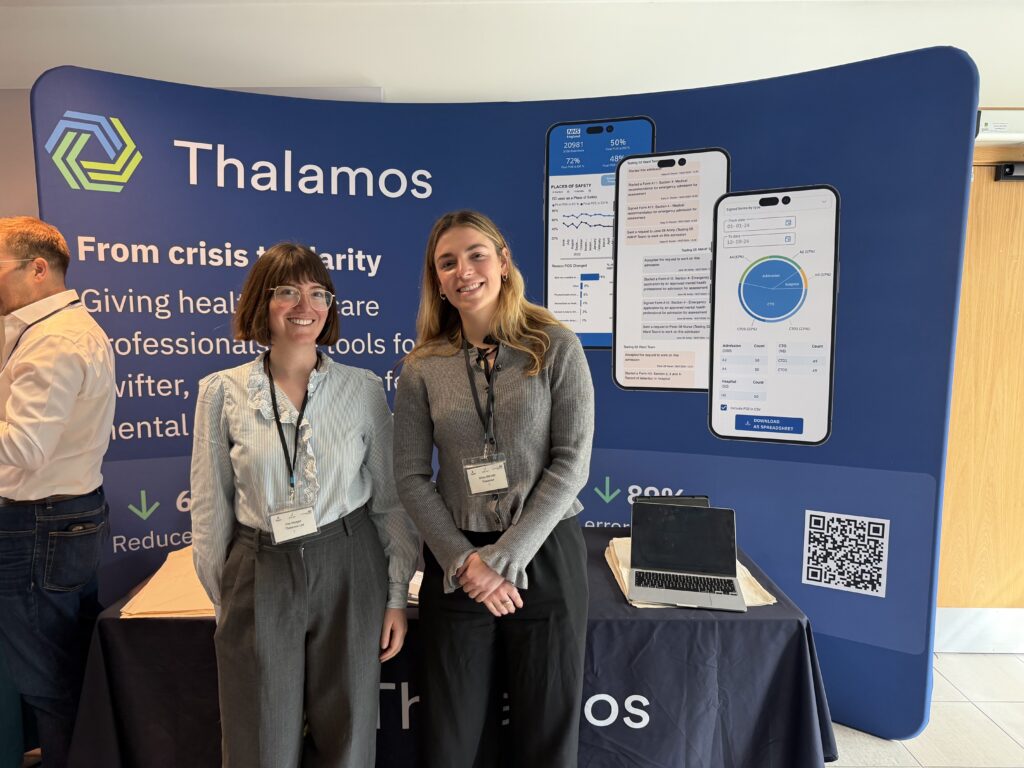
Thalamos provides another example, focused on digitising Mental Health Act processes. Patients subject to the Act can move between emergency departments, mental health services, police, ambulance services, local authorities, and independent providers, while important information remains spread between separate systems.
The report argues that structured digital workflows can improve access to statutory information, reduce manual processes and provide professionals with a more complete picture when making time-critical decisions.
Alongside the sprint sessions, UKHLSI worked with EPUT to deliver a Digital Showcase connecting NHS leaders directly with healthcare innovators.
More than 80 NHS executive directors and senior management team members from across Essex engaged with the showcase, with companies including Limbic and Mayden demonstrating technologies intended to improve patient outcomes and NHS productivity. The focus was to create routes from initial conversations towards procurement, implementation, and scalable adoption.
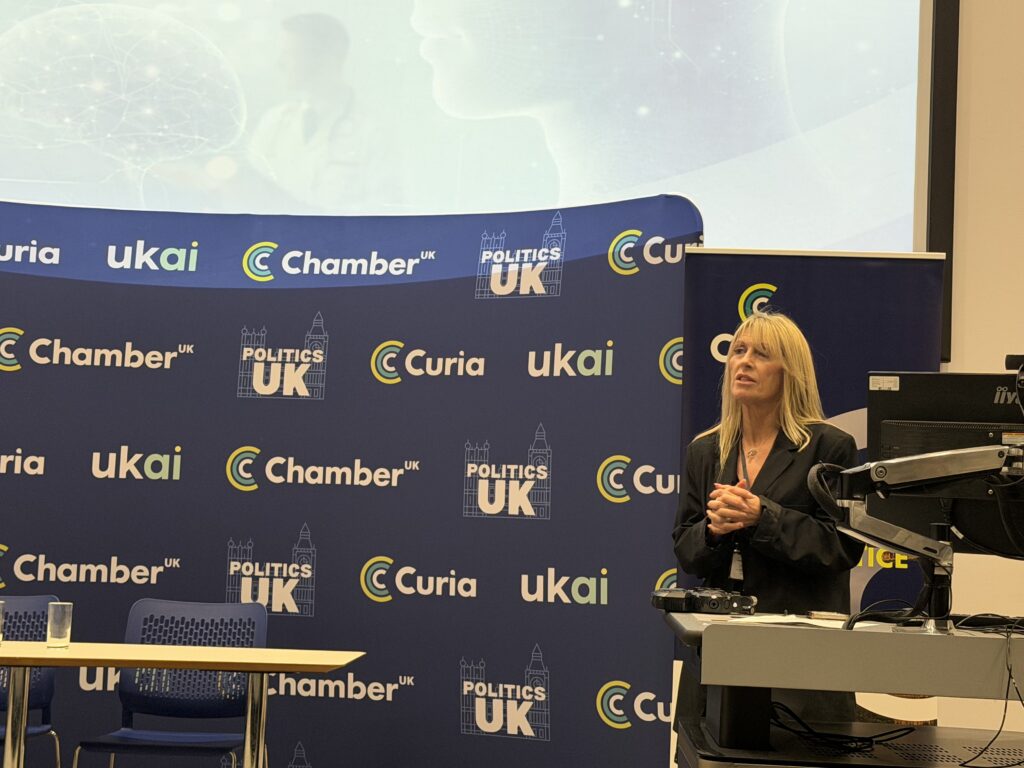
Partnership University NHS Foundation Trust thanks attendees and sets out a plan for delivering the
recommendations from the day.
NHS must move beyond ‘pilot culture’
A recurring concern throughout the report is the number of promising innovations that remain trapped in small-scale pilots.
Participants identified isolated deployments, poor integration with wider systems, and unclear routes to adoption as barriers to delivering measurable system-wide impact.
The report consequently calls for greater focus on high-impact use cases, stronger alignment between clinical, operational, and digital leaders, and implementation planning from the beginning of innovation programmes.
The ambition should shift from proving that technology can work to demonstrating that it works consistently and safely at scale.
A phased roadmap from insight to action
Significantly, the report does not stop at identifying problems.
It proposes a phased implementation roadmap for EPUT centred on five areas: system design, digital infrastructure, AI deployment, workforce, and governance. These are replicable across trusts in a similar place to EPUT.
Within the first six months, recommended actions include targeted AI-enabled triage and documentation tools, improved access to existing pathways, reduced duplication of assessments, and the beginning of workforce training.
Over six to 18 months, the ambition is to redesign patient pathways, integrate data and care coordination platforms, and expand effective AI applications.
Beyond 18 months, the report envisages a more proactive system in which health, social care, and community services are better integrated, AI routinely supports decision-making, and technology releases more staff time for direct patient care.
Crucially, this will be measured. A Sprint Impact Scorecard proposes six- and 12-month reviews covering patient experience, pathway integration, digital and AI adoption, workforce impact, and operational efficiency.
In their foreword, EPUT’s Interim Joint Chief Executives Trevor Smith and Alex Green commit the trust to carrying this programme forward, combining responsible experimentation with robust evidence, measurable outcomes and a continued focus on the experiences of patients and staff.
Final thought
The wider significance of the EPUT programme is that it shifts the AI debate away from individual products and towards the health system in which those technologies need to operate.
AI can support smarter triage, identify risks earlier, and remove administrative work. But without interoperable information, clear patient pathways, workforce confidence, and organisations prepared to change how care is delivered, its impact will remain constrained.
The report’s conclusion is therefore as much about leadership and implementation as it is about the technology itself.
For EPUT, the next test will be whether the insights generated through patients, clinicians, innovators, and system leaders translate into measurable change. For the wider NHS, the programme provides a useful model: start with the patient journey, identify where the system fails, and then determine where technology can genuinely make that journey better.
As the report concludes, the next phase must be defined by “translating insight into implementation, and ambition into measurable change at scale.”
Commercial support for the conference
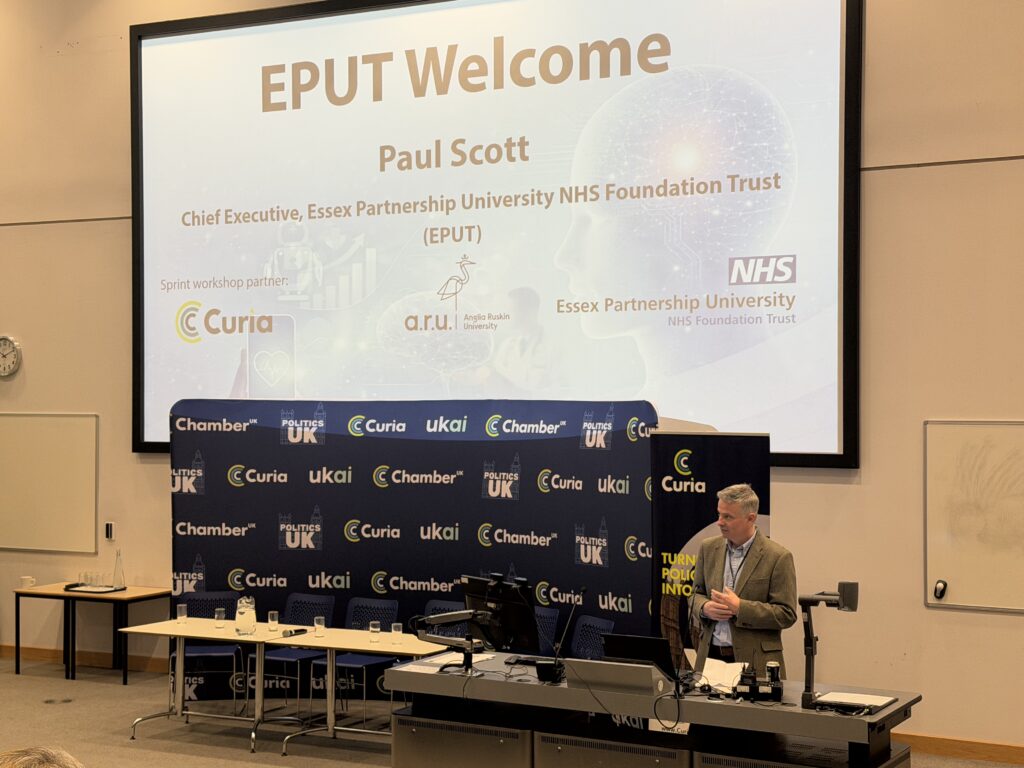
The Digital Conference: AI, Corporate Transformation and Time to Care and its patient-led sprint programme were convened and sponsored by Essex Partnership University NHS Foundation Trust in partnership with Anglia Ruskin University and Curia.
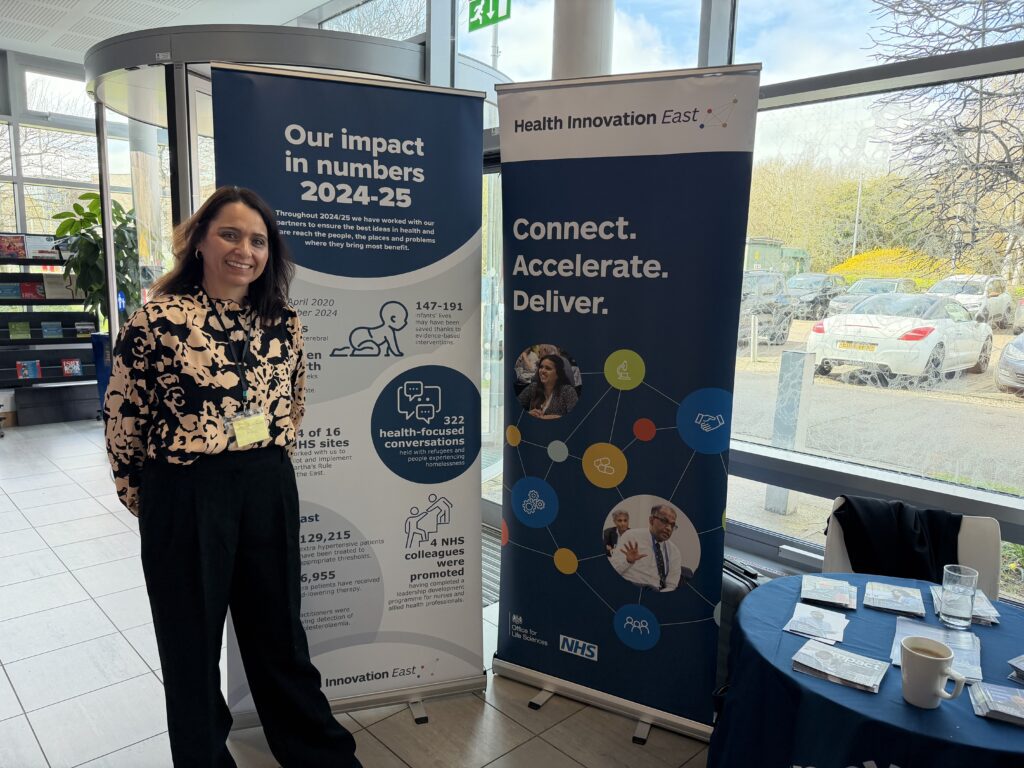
The third sprint, focused on neurodiversity, waiting lists and family strain, was sponsored by Health Innovation East. The accompanying Digital Showcase was delivered by UKHLSI, and brought technology companies into direct engagement with NHS leaders. Organisations represented through the showcase included Limbic, Mayden, Psyomics, Thalamos, and CareLoop, alongside Health Innovation East.
Participation, sponsorship or exhibition did not confer editorial control over Curia’s findings or recommendations.
To find out more about UK Healthcare and Life Sciences Innovation (UKHLSI) and Curia, contact enquiries@ukhlsi.co.uk and team@curiauk.com.