
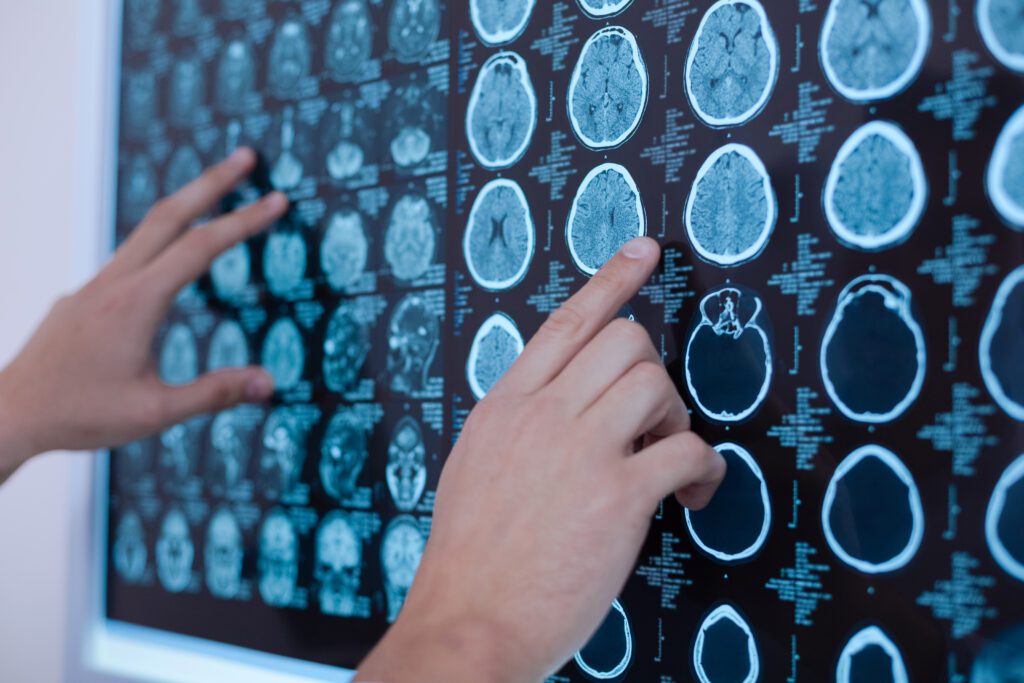
The world’s first patient to undergo AI-assisted brain surgery has successfully had a tumour removed, offering a striking demonstration of how AI could support clinicians while raising the bigger question of how the NHS takes innovations from individual trials into everyday care.
AI provides surgeons with a second pair of eyes
A world-first operation at University College London Hospitals has demonstrated how artificial intelligence could support surgeons during some of the NHS’s most complex procedures.
Rhys Hibbert, a 48-year-old father of two from Bedfordshire, underwent surgery to remove an 11mm non-cancerous tumour from his pituitary gland after it began affecting his vision.
The tumour was located close to the carotid arteries and optic nerves, making surgery particularly delicate. During the procedure, an AI system analysed the live video feed from the operation, tracked surgical instruments and highlighted where important vessels and nerves were likely to be located.
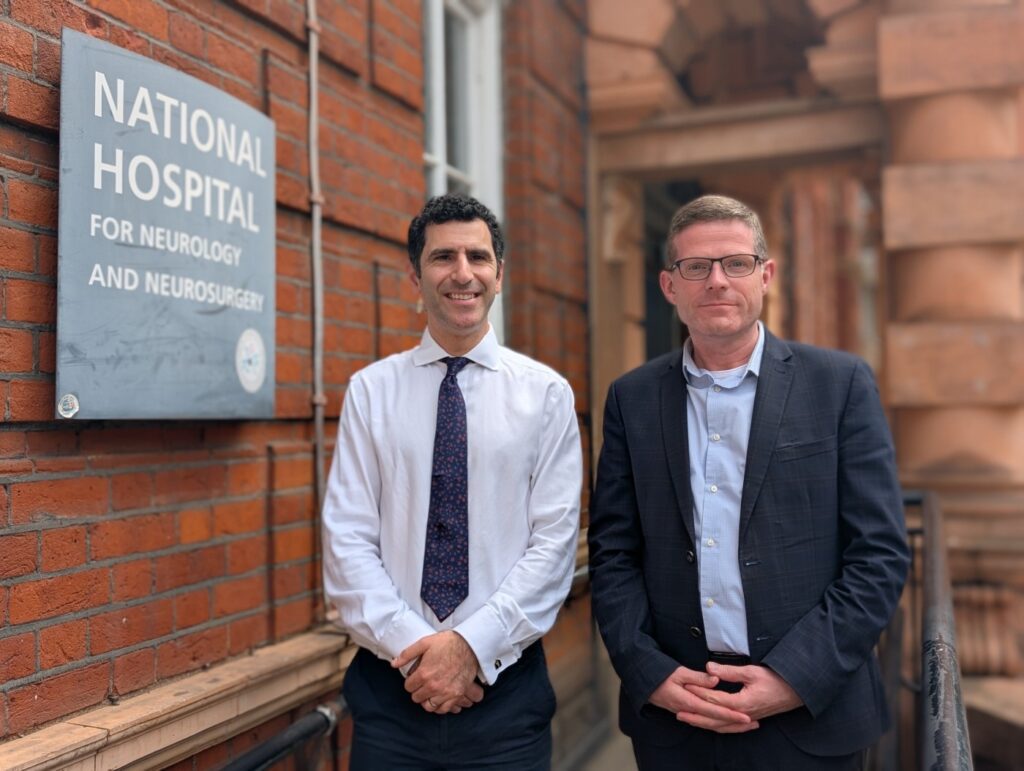
Rather than replacing clinical judgement, the technology acted as an additional source of information for the surgical team, with surgeons remaining in control throughout the operation.
Professor Hani Marcus, consultant neurosurgeon at the National Hospital for Neurology and Neurosurgery and Professor of Neurosurgery at UCL, described the technology as an expert “second pair of eyes”.
The system had been trained and evaluated using hundreds of videos of previous pituitary tumour operations, giving it exposure to more procedures than an individual surgeon is likely to perform during much of their career.
For Hibbert, the impact was immediate. After experiencing worsening peripheral vision before the operation, he reported a dramatic improvement following surgery and said the treatment had “given me my life back”.

Government backs AI with safeguards
The development comes as ministers increasingly look to artificial intelligence, digital technology and data to improve NHS productivity and patient outcomes.
Health Innovation Minister James Frith MP welcomed the breakthrough and said he was pleased Hibbert had received “life-changing surgery” through government-funded research.
He added:
“AI needs proper safeguards and we will always ensure that safety is taken seriously.
“But we will also ensure we benefit from the opportunities it brings.”
The fuller announcement from UCLH also makes clear the Government sees the procedure as an example of how AI could contribute to faster and more effective NHS care, provided innovation is accompanied by appropriate safeguards.
The research has been funded by the National Institute for Health and Care Research and Google, following years of laboratory development.
Professor Mike Lewis, National Institute for Health and Care Research (NIHR) Scientific Director for Innovation, said the development demonstrated the potential for advanced AI to support surgeons and improve patient care. He also linked the research to the Government’s wider ambition to use technology and innovation as part of its long-term plans for the health service.

AI-assisted brain surgery: the next challenge is adoption
The significance of the operation extends beyond one procedure.
The NHS is home to world-leading clinicians, researchers and technology companies, but one of the longstanding challenges for policymakers is turning successful research and individual pilots into technologies that can be adopted safely and consistently throughout the health service.
AI-assisted surgery demonstrates how clinicians and patients understand the role being played by an AI system. Yet, several questions remain – including who remains accountable for decisions? How should healthcare data be used to develop and evaluate new technologies? What standards should apply to interoperability and cybersecurity? How can new systems be introduced without adding additional complexity to already stretched frontline services?
Perhaps most importantly, how does the NHS move from proving that an innovation works to making it available to patients at scale?
A spokesperson for UKAI said:
“Rhys’ surgery is a powerful example of AI being used not to replace clinical expertise, but to give highly skilled professionals better information at the moment they need it.
“The opportunity now is to create the conditions in which technologies that demonstrate real improvements in safety, outcomes and productivity can move from research and individual pilots into responsible adoption across the NHS.
“That requires industry, clinicians, patients, regulators and policymakers to work together on issues including evidence, infrastructure, data, interoperability, procurement, and trust.”
These questions are also being examined through the UKAI Healthcare and Life Sciences Innovation (UKHLSI) Working Group, which brings together organisations interested in the development and responsible adoption of AI across healthcare and life sciences.
The group provides an opportunity for innovators and healthcare stakeholders to examine the practical barriers standing between technological capability and real-world implementation, and to contribute evidence on how policy can support safe adoption and scaling.
Welcoming the news as Chair of UK Healthcare and Life Sciences Innovation’s (UKHSLI) AI Working Group, Dr Mark Ratnarajah, Clinical Director, Sword Intelligence said:
“This world-first shows what’s possible when clinical expertise and AI work hand in hand – but the real test for the NHS is turning breakthroughs like this into everyday, trusted care at scale. That’s precisely the challenge we’ll be exploring in the NHS Modernisation Bill’s ‘From Analogue to Digital’ session next month, and it’s the gap our work at Sword Intelligence is focused on closing.”
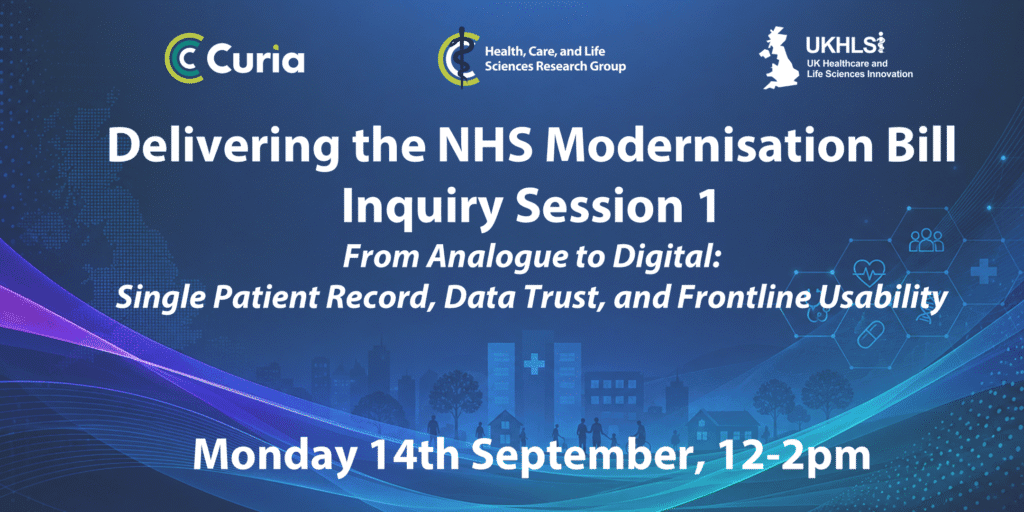
From Analogue to Digital
The same issues will be at the centre of UK Healthcare and Life Sciences Innovation’s (UKHSLI) NHS Modernisation Bill Programme.
On Monday 14 September, UKHLSI will convene its From Analogue to Digital session in Central London, examining what needs to change if digital technology, data and AI are to become embedded successfully throughout NHS services.
Chaired by Dr Mark Ratnarajah, with NHS Digital Academy among those confirmed to contribute, the session will examine privacy and consent, cybersecurity, interoperability, accountability and public trust.
It will also consider a question that can sometimes be overlooked in debates about health technology: whether new digital systems actually work for frontline professionals and patients across primary, secondary, community and social care.
The world-first operation at UCLH demonstrates what can become possible when clinical expertise, research and advanced technology come together.
The challenge for the next phase of NHS modernisation is ensuring breakthroughs such as this do not remain isolated examples of innovation, but help inform a health service capable of identifying, evaluating and adopting technologies that can improve care at scale.
To find out more about the UKAI Healthcare and Life Sciences working group, please contact benmcdermott@ukai.co and to find out more about the UK Healthcare and Life Sciences Innovation (UKHLSI) AI Working Group, please contact bmcdermott@ukhlsi.co.uk