
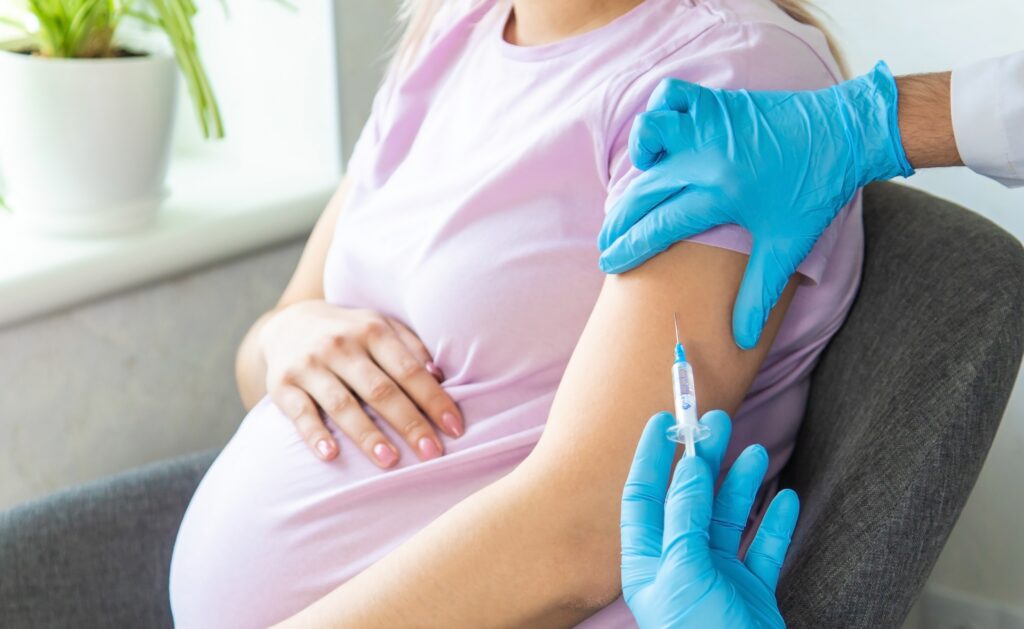
New UK Health Security Agency (UKHSA) figures show intensive care admissions among babies under six months have fallen by around 50 per cent following the first full year of the maternal RSV vaccination programme. But with uptake among pregnant women still at around 60 per cent, policy experts are calling for more targeted interventions to reach communities where vaccination rates remain lowest.
Intensive care admissions fall by half
The number of babies admitted to intensive care with respiratory syncytial virus (RSV) has fallen sharply following the introduction of the NHS maternal vaccination programme, according to new figures from the UK Health Security Agency (UKHSA).
Data published on 13 August shows that across the 20 NHS trusts participating in UKHSA’s surveillance programme, 63 infants under six months were admitted to intensive care or higher dependency units with confirmed RSV chest infections during the 2025–26 winter.
That compares with 131 admissions across the same trusts during the previous winter – a reduction of around 50 per cent.
The figures provide the first indication of the impact of a full year of the maternal RSV vaccination programme, which began in September 2024.
The vaccine is routinely offered from 28 weeks of pregnancy, allowing antibodies generated by the mother to pass through the placenta and provide protection to the baby during the first months of life, when RSV can present the greatest risk.
UKHSA has previously reported that maternal vaccination can provide more than 80 per cent protection against hospital admission for newborn babies.
Uptake remains at around 60 per cent
Despite the positive results, the latest figures also highlight the number of pregnant women who are still not receiving the vaccine.
Between March 2025 and February 2026, 61.7 per cent of women giving birth had received an RSV vaccination.
UKHSA has warned that this means many thousands of babies remain at risk of an infection which can cause severe bronchiolitis, breathing difficulties and, in the most serious cases, require intensive care.
The reduction is also being seen elsewhere in the health system. Peak weekly A&E attendances for infant bronchiolitis were lower during the latest RSV season, while the peak itself was shorter than in previous winters.
Dr Conall Watson, Immunisation Consultant at UKHSA, said the figures demonstrated that the vaccine was already preventing serious illness, while urging pregnant women who have not yet been vaccinated to contact their maternity service or GP.
Health and Social Care Secretary Yvette Cooper said maternity and child health must be “at the heart of our NHS”, adding that the Government wanted to see the vaccine effectively rolled out across the country.
The next challenge: reaching the remaining 40 per cent
For policymakers, the figures create a new question. If the programme is already delivering significant reductions in serious illness at current uptake levels, how much further could those benefits be extended by reaching the women and communities that the existing system is not reaching?
Curia has previously developed proposals for a Vaccination Infant and Maternity Scale Up Programme, designed around targeted interventions in communities with lower vaccine uptake.
The proposed approach would work with NHS trusts, integrated care systems, local authorities, GP surgeries, maternity services, child health clinics and family hubs to identify barriers to vaccination and test locally tailored approaches. It also proposed using community engagement, multilingual information and frontline healthcare professionals to address cultural, socio-economic and practical barriers to uptake.
Rather than relying solely on a national communications campaign, the programme envisaged working directly with local health systems to understand why particular groups were not taking up vaccination and developing interventions around those findings.
Caroline Temmink, NHS director of vaccinations, said:
“Today’s analysis is fantastic news, thanks to NHS staff dozens of new-borns have potentially avoided being admitted to intensive care after their mother received her RSV jab during pregnancy – the vaccine is highly effective at protecting babies from experiencing RSV related complications in the first few months of their life.
“Although RSV spreads most in winter, this virus poses a risk all year round, so if you’re more than 28 weeks pregnant, we would encourage you to speak with your local maternity service or GP practice to find out how you and your newborn can get protected.”
From National Success to Targeted Local Action
Speaking to Politics UK following the publication of the latest UKHSA figures, policy institute Curia’s Chief Executive Ben Howlett welcomed the impact of the vaccination programme but argued that the remaining uptake gap now requires greater attention.
“The halving of intensive care admissions demonstrates just how effective the maternal RSV vaccination programme can be, and the Government and NHS should rightly be encouraged by these results. But with uptake still only around 60 per cent, there remains a significant opportunity to protect many more babies.
“The next challenge is ensuring that the programme reaches those communities where uptake remains lowest. Curia has already developed a targeted model bringing together local health systems, maternity services, GPs, and community organisations to understand the barriers to vaccination and deliver interventions that work for individual communities.
“We have written to the former Secretary of State offering to work with government on this and have yet to receive a response. In light of today’s evidence, we would urge the Department of Health and Social Care and UKHSA to work with us to explore how targeted local interventions could help close the remaining uptake gap and ensure the benefits of this programme are felt by families in every part of the country.”
Working with UK Healthcare and Life Sciences Innovation (UKHLSI)’s member, Essential Parent, Curia’s previous model proposed measuring changes in vaccination rates against baseline data alongside parent engagement, healthcare professional participation and wider public health outcomes, allowing successful approaches to be identified before wider rollout.

From national success to targeted delivery
The latest results represent a significant public health success. Fewer babies requiring intensive care means fewer families experiencing severe illness and potentially less pressure on NHS services during the winter months.
But the figures also underline the importance of implementation.
With close to four in ten women giving birth still not vaccinated against RSV, the next stage of the programme may increasingly be about understanding the reasons behind that variation – whether they relate to awareness, access, confidence, language, local service design or engagement with healthcare services.
The evidence published by UKHSA suggests the intervention itself works. The policy challenge now is ensuring that protection reaches more of the families who could benefit from it.
Find out more
To find out more about Curia’s work on increasing the vaccine uptake rate and work of UK Healthcare and Life Sciences Innovation (UKHLSI) to bring new innovators into the healthcare system, please contact enquiries@ukhlsi.co.uk or team@curiauk.com