
The Liberal Democrats have warned Prime Minister, Andy Burnham that reforms to NHS oversight risk creating a “bonfire of patient safety” and part of the Health Bill reforms, as concerns grow over the future of Healthwatch, independent safety investigations and protections for NHS staff who raise concerns.
The intervention comes ahead of the Health Bill’s Report Stage and Third Reading in the House of Commons, currently scheduled for 7 September 2026. The legislation would abolish NHS England, redistribute functions across the Department of Health and Social Care and Integrated Care Boards (ICBs), enable the creation of a Single Patient Record and make significant changes to the patient safety and accountability landscape.
The warnings come ahead of UK Healthcare and Life Sciences Innovation’s (UKHLSI) NHS Modernisation Bill inquiry sessions in the Autumn. Delivered by policy institute, Curia, the sessions are designed to bring the views of NHS leaders together with industry, charities, industry, academia, and the independent sector.
Liberal Democrats warn of a ‘catastrophic step backward’
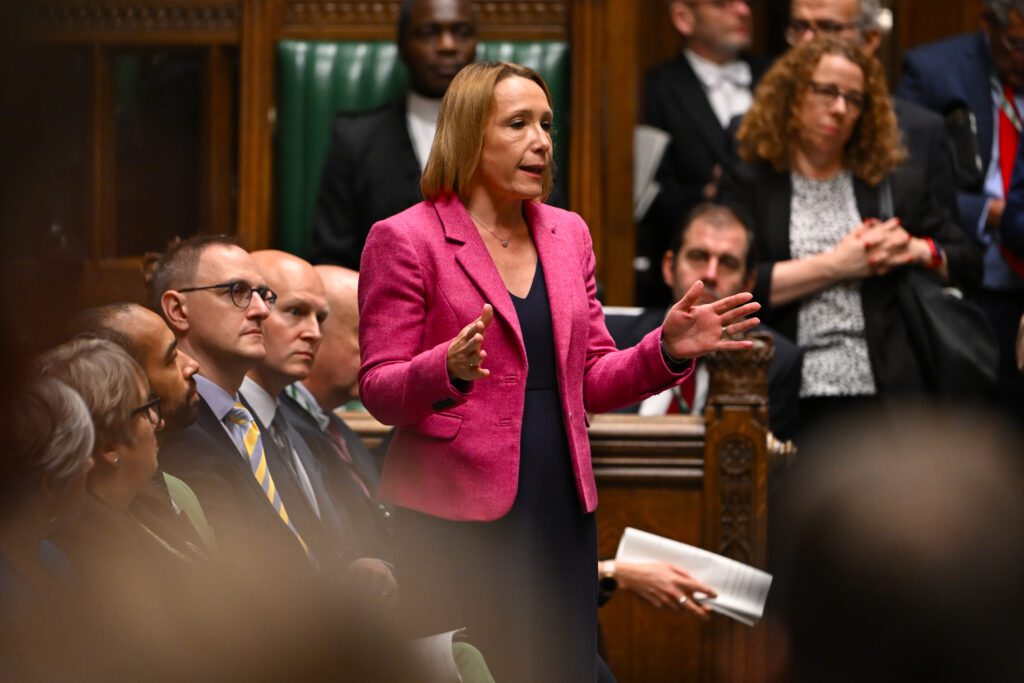
Liberal Democrat Health Spokesperson, Helen Morgan MP has accused the Government of “catastrophic misjudgement”, arguing that proposed changes risk dismantling protections introduced in response to previous NHS scandals.
The party is particularly concerned about proposals affecting the Care Quality Commission (CQC), the Health Services Safety Investigations Body (HSSIB) and Healthwatch.
The Liberal Democrats argue that the Bill would remove the NHS’s duty to cooperate with the CQC in providing key safety information, end the current independent structure of HSSIB and close local Healthwatch organisations.
The party has tabled amendments designed to reverse the changes and has said it will continue its opposition when the legislation reaches the House of Lords.
Morgan said:
“Decades of tragic NHS scandals – from Mid Staffs to Morecambe Bay to Shrewsbury and Telford – prove our health service needs accountability at the heart of its DNA. Yet Labour’s Health Bill guts hard-won safety measures and lets the NHS mark its own homework.
“This is a catastrophic step backward. Many of the protections and organisations being abolished or neutered came in following the scandals that erupted during Andy Burnham’s tenure as Health Secretary. He promised lasting change and to listen, but is now overseeing the greatest backward step in patient safety in a generation.
“Andy Burnham must urgently put an end to this, and fix the Health Bill so that modernising the NHS doesn’t come at the expense of accountability, transparency or patient safety.”
The Liberal Democrats have also pointed to the 403 “never events” recorded in the NHS in England between April 2025 and March 2026 as evidence of the continuing importance of robust patient safety systems.
Without a majority in the House of Lords, the Government will need to make compromises that will enable the Bill to successfully pass.
Questions over independent investigation
One of the most contested provisions concerns the proposed transfer of HSSIB functions to the CQC.
HSSIB currently operates independently and provides “safe space” protections intended to allow staff to participate openly in investigations without information automatically being disclosed for other purposes.
The Liberal Democrats argue that moving these functions into the regulator risks weakening that separation. The party has also highlighted CQC evidence warning that changes to the existing duty to cooperate “could inhibit our ability to receive the information [the CQC] needs to keep people who use services safe”.
These concerns echo those previously raised by Rt Hon Andrew Stephenson CBE, former Health Minister and Chair of Curia’s Health, Care and Life Sciences Research Group.
Writing for Politics UK in June, Stephenson argued that transferring HSSIB’s functions into the CQC risks blurring the boundary between learning-focused investigation and regulation. His central argument was that “Safe, honest learning depends on trust.”
He also warned that the abolition of Healthwatch required careful scrutiny to ensure independent patient challenge was not replaced simply by internal NHS feedback mechanisms.
What happens to the patient voice?
Healthwatch England and more than 150 local Healthwatch organisations are also set to be abolished under the reforms.
Their responsibilities would instead be distributed between ICBs and local authorities, bringing the collection and response to patient feedback closer to organisations responsible for commissioning and delivering services.
The Government argues that patient engagement should be a core responsibility of the NHS rather than something delegated to an arm’s-length organisation.
Then-Health and Care Secretary, Wes Streeting set out that position earlier this year:
“There are many decent people working at Healthwatch who care, but the job of listening to patients can’t be farmed out to an arm’s length body.
“It must be core business for the NHS. That is why we’re taking it back in-house and I won’t back down on that either.”
However, critics question whether organisations responsible for services can simultaneously provide the degree of independent challenge currently offered by Healthwatch.
The Local Government Association has previously described the abolition of Healthwatch as a “significant step back” in accountability, warning:
“Without an independent, locally rooted voice to challenge and represent communities, there is a risk of duplication and gaps in accountability.”
The Liberal Democrats have also cited Sir Robert Francis KC, who led the Mid Staffordshire NHS Foundation Trust Public Inquiry. Speaking about Healthwatch in 2022, Francis said the organisation had “proved its worth to [the] Department and the system”, adding that patient voices “often hold the key to knowledge about what is going wrong and what changes should be made”.
Government insists protections will remain
The Department of Health and Social Care has rejected suggestions that the reforms will weaken protections for staff or patients.
A DHSC spokesperson said the NHS Modernisation Bill “explicitly preserves safe space provisions and staff will continue to be protected”.
They added:
“The reforms we are introducing will give patients a stronger, clearer voice at the heart of health and social care.”
The Government’s case is that simplifying the current patient safety landscape will reduce bureaucracy, make accountability clearer and ultimately improve safety. Its published impact assessments cover the abolition of Healthwatch, the transfer of HSSIB functions into the CQC and changes to the CQC’s statutory powers.
The political question facing Parliament will therefore increasingly be what safeguards will be introduced to replace pre-existing arrangements and whether they are strong enough to command the confidence of patients and NHS staff.
From legislation to implementation
That question sits at the heart of work now being undertaken by UK Healthcare and Life Sciences Innovation (UKHLSI).
Following its member webinar on the NHS Modernisation Bill, UKHLSI has commissioned independent policy institute Curia to convene a programme of thematic evidence sessions examining how the legislation can work in practice.
The programme is intended to move the debate beyond whether individual NHS organisations should be retained or abolished and towards the practical consequences for patients, clinicians, NHS leaders, local government and innovators.
The work is anchored around the Government’s three major shifts for NHS reform – hospital to community, analogue to digital and sickness to prevention – alongside a dedicated examination of the workforce, leadership, regulatory and productivity conditions required to make those changes work.
Patient voice is explicitly being treated as a cross-cutting implementation test throughout the programme, including the need for independent challenge, involvement in service design and evidence that feedback results in action.
Autumn evidence programme
The programme will bring together parliamentarians, NHS leaders, clinicians, local government, patients, innovators and policy specialists across five sessions:
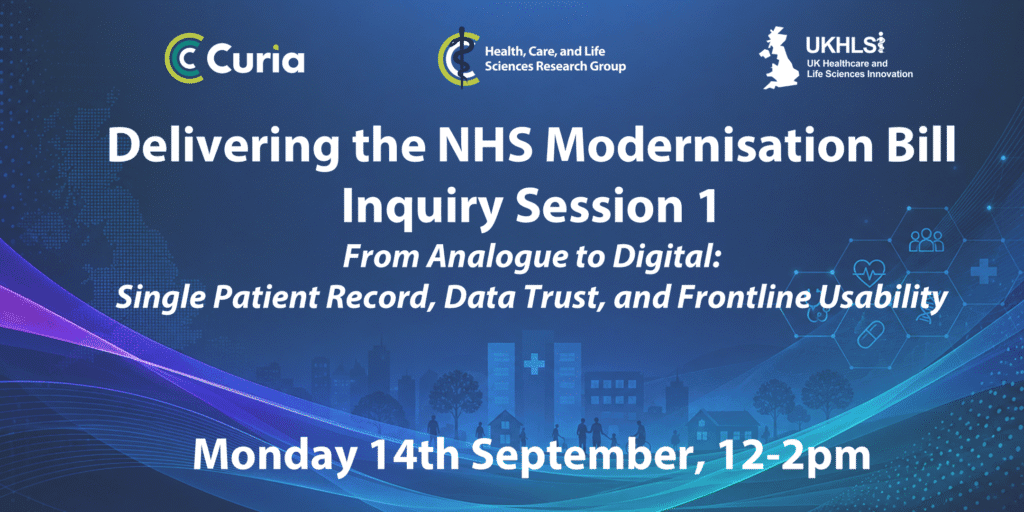
- 14 September – From Analogue to Digital: Single Patient Record, data trust, sovereignty, resilience and frontline usability.
- 25 September – From Hospital to Community and Hospital to Home: Devolution, social care, discharge, national standards and neighbourhood health.
- 2 October – From Reorganisation to Delivery: Workforce, culture, regulation, leadership and productivity.
- 6 November – From Sickness to Prevention: Population health, wider determinants and innovation adoption.
- 10 November – From Legislation to Implementation: A final member evidence and parliamentary recommendations session bringing the findings together.
Each session will test where changes require amendments to primary legislation, where regulations or national guidance are needed, and where the answer lies in local operational action rather than further legislation.
The final output will be a member recommendations paper for parliamentarians, setting out practical proposals covering legislative amendment, implementation, accountability, workforce and resources, local and national responsibilities, burden reduction, patient trust, innovation adoption and measurable outcomes.

Get involved
For UKHLSI and Curia, the growing political disagreement over patient safety reinforces the importance of testing the legislation against what happens in practice.
Previous Curia analysis has argued that NHS reform should ultimately be judged by whether it produces safer, faster and more joined-up patient care – not simply whether Whitehall structures look simpler after the legislation passes.
As Parliament prepares to return to the Health Bill in September, the debate over Healthwatch, HSSIB and independent scrutiny is therefore likely to form part of a much wider question: how can the NHS modernise without weakening the mechanisms designed to identify failure, protect staff who speak up and ensure patients retain an independent voice?
UKHLSI and Curia are inviting members, NHS organisations, local government, patient representatives, workforce bodies, innovators and other stakeholders to contribute evidence and practical case studies to the programme.
To contribute evidence, discuss participation in the autumn roundtables or find out more about the NHS Modernisation Bill programme, contact the UKHLSI team at enquiries@ukhlsi.co.uk or call 020 3488 3612.