

The Government has announced a £343 million expansion of Community Mental Health Services provision across England, including 100 new community mental health centres and 59 dedicated mental health emergency departments.
Ministers have described the programme as the biggest redesign of mental health services in a generation, with the first facilities expected to open from autumn 2026 and further sites following from March 2027.
The community centres will offer walk-in support without requiring a referral, while the new emergency departments will provide specialist, same-day care for people experiencing a mental health crisis who are medically fit and do not require treatment in a general A&E department.
The programme is intended to address a longstanding problem within mental healthcare: too many people struggling to access support until their condition has deteriorated to the point of crisis.
Earlier help within local communities
Demand for mental health services has risen sharply, particularly among children and young people. Around one in five people experiences a common mental health condition each year, yet many patients and families report long waits, fragmented pathways and difficulty identifying where to turn for help.
The new Community Mental Health Services centres are intended to bring clinical and wider support services together under one roof. NHS teams will work alongside GPs, local authorities, voluntary organisations and families, with links to services addressing housing, employment and other factors that can affect mental health and recovery.
Some centres will be based in newly constructed facilities, while others will operate from converted banks, libraries and other high-street or community buildings.
The Government said the centres would be positioned within the neighbourhoods they serve and designed to provide welcoming, accessible environments with a less clinical appearance.
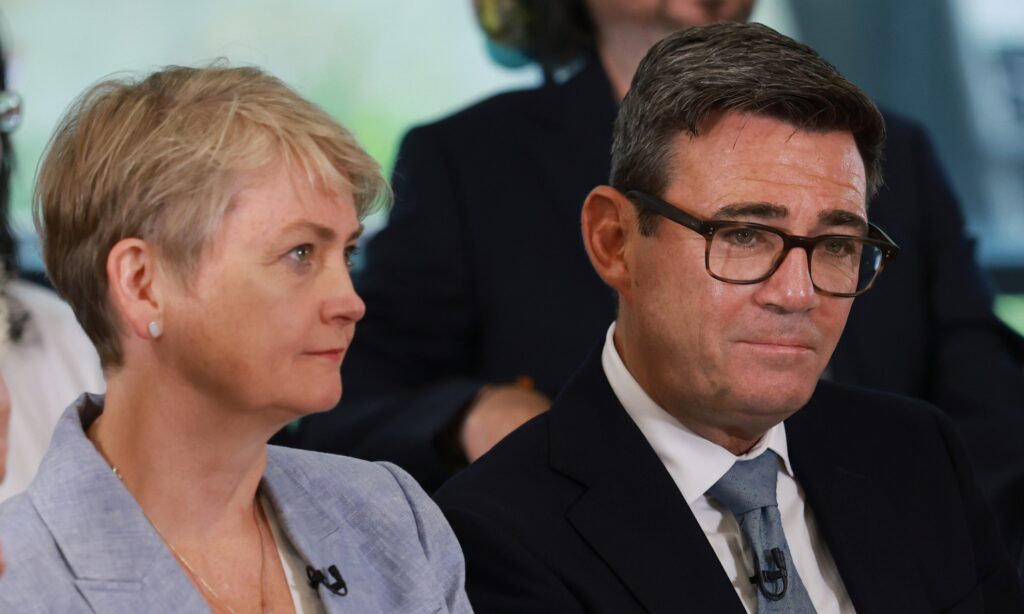
Prime Minister Andy Burnham said:
“Nobody should be left to struggle with their mental health alone. But every day, thousands of people are waiting months for help, then finding the only door open to them is a busy A&E.
“These new centres will be a lifeline for so many. They will bring NHS services closer to home, making it easier to get support before problems get worse, and ensuring those in crisis get the right care in the right place.
“On the steps of Downing Street, I said we would build a country that acts sooner when people need help. Today is just the start of making that a reality.”
Dedicated alternatives to general A&E departments
Alongside the community centres, 59 dedicated mental health emergency departments will be introduced to provide specialist support for people experiencing an acute crisis.
The departments will be located alongside existing emergency services and work closely with ambulance and police teams. They are intended to provide calmer, therapeutic settings in which patients can be assessed and connected quickly with the most appropriate ongoing support.
This could include inpatient treatment, home-based care or referral into local community services.
The programme will more than double the number of dedicated mental health emergency departments in England, increasing the total from 23 to 82.
Health and Social Care Secretary, Yvette Cooper said:
“Too many people are only getting mental health support when they reach crisis point, after struggling for far too long to get the help they need.
“These new community mental health centres will help people get support earlier and closer to home, making it easier to get the right care before problems escalate. And when someone does need urgent help, new mental health emergency departments will be able to make sure they are seen quickly by specialist teams in the right setting.
“This is how we can turn the tide on mental ill health – preventing more people from reaching crisis, cutting waits for care and building an NHS which is there for everyone when they need it.”
Connecting clinical care with wider support
The neighbourhood model reflects growing recognition that effective mental healthcare cannot be delivered by clinical services in isolation.
Poor housing, debt, unemployment, insecure work, family pressures and social isolation can all contribute to deteriorating mental health or make recovery more difficult. The Government therefore intends the centres to connect NHS provision more closely with councils, employers, schools, voluntary organisations and community services.
Dr Nick Broughton, National Priority Programme Director for Mental Health, Learning Disability and Neurodevelopmental Conditions, said:
“Across the country, NHS teams are already working to provide mental health support closer to where people live, alongside specialist care for those who need more urgent help.
“The rollout of more community mental health centres and dedicated mental health emergency departments will build on this work, strengthening both early support in the community and care for people in crisis, while helping services work together more effectively around people’s needs.”
The programme will form part of the Government’s forthcoming mental health strategy, which is expected to consider the responsibilities of organisations beyond the NHS in supporting good mental health.
The strategy will also be informed by Professor Peter Fonagy’s independent review into the prevalence of, and support available for, mental health conditions, ADHD and autism.
Dr Melinda Rees, Chief Executive of Psyomics, said the expansion would also need to be matched by investment in the digital infrastructure and clinical tools needed to support effective decision-making: “The Government’s commitment to expanding community mental health services is an important opportunity to improve how and where people access support.
“However, increasing capacity alone will not be enough. If we want better outcomes, services must be equipped with the digital infrastructure, clinical decision support and pathway intelligence that help clinicians make the right decisions from the very first interaction. Investment in neighbourhood services must go hand in hand with investment in the technology that enables people to receive the right care, at the right time, wherever they live.”
Alongside investment in individual services, ensuring information can move safely and effectively between different parts of the health and care system will be critical.
Zoe Seager, Chief Client Officer at Thalamos, said:
“It’s genuinely encouraging to see the new Prime Minister put mental health at the centre of his agenda, and the open-access neighbourhood centres deserve real recognition. Years of work by many people went into establishing this model.
“But every one of these 159 sites will need to work with services that don’t report into the same structures or run the same systems: ambulance crews, GPs, local authorities and other NHS trusts.
“That’s where good intentions on paper have historically come unstuck, not through lack of goodwill, but because people risk having their details lost the moment they cross from one service’s system into another’s.
“Getting that connective tissue right, so that what one organisation knows travels with the patient rather than staying behind, will matter as much to whether this investment lands as the funding or the workforce will.”
Mental health charities welcome preventative approach
Mental health organisations have welcomed the direction of the reforms, particularly the focus on earlier intervention and easier access to local support.
Brian Dow, Deputy Chief Executive at Rethink Mental Illness, said:
“Everyone should be able to access mental health support in their local community, when and where they need it.
“The expansion of neighbourhood mental health centres is a vital step towards making this a reality, building on the promising results of existing pilot sites.
“By bringing together treatment and wider support services under one roof, these centres can transform experiences of care, helping people to access support earlier and preventing them from reaching crisis point.”
Mark Rowland, Chief Executive at the Mental Health Foundation, highlighted the importance of integrating healthcare with services addressing the wider causes of poor mental health.
He said:
“Many of the drivers of poor mental health are issues like problem debt, unemployment, and living in insecure, poor-quality housing. Addressing these concerns helps prevent poor mental health and makes recovery more successful.
“By bringing together services in community hubs, the NHS and other services can take an earlier and holistic approach to mental health. Easy access to joined-up, same-day support will make it simpler for people to navigate between different services. It will allow people to get help sooner, stopping poor mental health and other challenges they face from getting worse.”
Tom Pollard, Head of Policy, Public Affairs and Campaigns at Mind, said:
“This is a promising step towards more people getting the mental health support they need, when they need it. Too often, we hear from people struggling to access overstretched services whose mental health worsens because of this.
“These plans signal a much-needed shift towards a neighbourhood approach, with preventative, open-access mental health support rooted in communities and integrated with other local services. If fully realised, this could transform the quality and accessibility of mental health support. We hope to see the government build on these principles in the upcoming mental health strategy.”
Children and young people must remain central
The announcement comes amid sustained concern about the mental health of children and young people and the pressure placed on specialist services.
The Government believes earlier intervention could help more children remain engaged in education, while also helping adults stay in or return to employment.
However, delivery will need to ensure that the new centres are equipped to respond appropriately to the different needs of children, young people and their families.
Lynn Perry, Chief Executive at Barnardo’s, said:
“The mental health of far too many children and young people is at crisis point. We urgently need to shift focus from response to prevention – helping children and young people get the support they need before reaching crisis point.
“That’s why we welcome the rollout of new mental health centres that are embedded into the neighbourhoods that need them, and hope that the needs of children and young people are placed right at the heart.
“This is an important step towards giving every child and young person the opportunity to grow up healthier, happier and able to thrive, with support that improves outcomes for life.”
Clearer pathways for people with bipolar disorder
Bipolar UK also welcomed the proposed expansion, while emphasising the need for clearly defined pathways and condition-specific support.
Rosie Phillips, Deputy CEO at Bipolar UK, said:
“The lack of a clear pathway to support for people with bipolar has cost jobs, relationships and, in some cases, lives. Expanding community mental health services is a welcome step towards helping people before they reach crisis point. But, for those who do, it’s reassuring to see more therapeutic alternatives to A&E being prioritised.
“For bipolar, preventative care means faster diagnosis, regular medication reviews, and better access to talking therapies and peer support. If these new services can deliver that, they could be a game changer for people with bipolar and those who love them.”
Joined-up care must not compromise quality
The Royal College of Psychiatrists welcomed the renewed investment but cautioned that new services must build on existing evidence and avoid creating additional fragmentation.
Professor Subodh Dave, President of the Royal College of Psychiatrists, said:
“We welcome this recommitment to investing in mental health services, which has the potential to help more people access support earlier and closer to home. To maximise its impact, it will be important to build on past learnings and ensure these new services deliver genuinely joined-up care for patients, without compromising quality.
“New neighbourhood services and same-day emergency care pathways should simplify access to support by reducing repeated assessments and fragmented care. Mental health is a key component of neighbourhood healthcare, and this model must be developed to meet the needs of people with severe mental illness, as this will help to ensure they receive the right care at the right time.”
Steve Gilbert OBE, Chair of the UK Healthcare and Life Sciences Innovation (UKHLSI) Mental Health Working Group and former Vice Chair Independent Mental Health Act Review, welcomed the direction of the reforms but said the success of the programme would depend on whether access and outcomes improve consistently across communities:
“This is a genuinely welcome announcement, and one many of us have pushed for. Getting help earlier and closer to home should never depend on where you live, and that is precisely the variation our Working Group exists to close. The real test will be delivery: 159 centres phased over eighteen months need funding, workforce and standards to land consistently everywhere, not just where systems are readiest to move first.
“Variation is not only geographic. People with severe mental illness, and people from Black and racialised communities, too often face the longest waits and the poorest experience of care. I would encourage government to track parity of access and outcomes across all these dimensions as sites open, alongside simply counting doors opened.”
National rollout across England
The programme will be delivered in multiple waves across every English region.
Of the first 159 facilities, 57 are expected to be newly built, while 102 will involve the conversion of existing sites.
A total of £156 million has been allocated to NHS trusts for the first 59 mental health emergency departments, with £187 million allocated for the 100 community mental health centres.
Planned locations include Greater Manchester, Cheshire and Merseyside, Lancashire and South Cumbria, Birmingham, Sheffield, Newcastle, London, Oxfordshire, Buckinghamshire, Hampshire, Cornwall, Devon and other areas across England.
The South East proposals include a mental health emergency department at the John Radcliffe Hospital in Oxford, alongside community mental health centres in Oxfordshire, Buckinghamshire and Slough.
Final locations remain subject to design, procurement and business-case approval.

Final thought: From national announcement to measurable local change

Steve Gilbert OBE
Chair of the UK Healthcare and Life Sciences Innovation (UKHLSI) Mental Health Working Group, and former Vice Chair Independent Mental Health Act ReviewSteve Gilbert has been appointed as new chair of the UK Healthcare and Life Sciences Innovation working group on Mental Health. With a proven track record in advocating on behalf of people with lived experience, he will take forwards a programme for change in the interests of improving outcomes.
UK Healthcare and Life Sciences Innovation welcomes the intention to move mental healthcare away from delayed crisis intervention and towards earlier, neighbourhood-based support.
The scale of the announcement is significant, but the success of the programme will ultimately be determined by implementation rather than the number of facilities announced.
The new centres must not become another layer through which people are required to navigate. They should provide genuinely open and understandable access, clear clinical responsibility and effective routes into specialist, community, primary care and voluntary-sector support.
That will require more than buildings. It will depend on having the workforce, leadership, funding, governance and information-sharing arrangements necessary to provide safe and consistent care.
The UKHLSI Mental Health Working Group has been established to help translate national reform into practical delivery across the NHS. Bringing together mental health trusts, Integrated Care Systems, national policymakers, Parliament and selected partners, it is focused on implementation, digital and data readiness, workforce capability, early-adopter learning and place-based delivery.
Several issues will require sustained scrutiny as the programme develops.
First, the Government and NHS will need to define what people can expect when they enter a community mental health centre, including opening hours, clinical thresholds, safeguarding arrangements and access to follow-up care.
Second, the new emergency departments must be integrated effectively with ambulance services, police, general A&E departments, crisis teams and inpatient provision. Simply relocating a crisis without creating a reliable onward pathway would not resolve the underlying fragmentation.
Third, workforce planning will be essential. New facilities will require appropriately trained professionals at a time when many existing mental health services already face recruitment, retention and capacity pressures.
Fourth, services must be designed around the needs of different populations. Children and young people, people with severe mental illness, neurodivergent people, minority communities and those experiencing homelessness, unemployment or insecure housing may require different forms of engagement and support.

Finally, progress should be measured through outcomes rather than activity alone. The key tests will include whether people receive support earlier, whether waiting times and repeated assessments fall, whether fewer people reach crisis point and whether patients experience better continuity of care.
Early sites should therefore operate as a national learning network, sharing evidence on what works and identifying barriers before the model is expanded further.
The announcement provides an opportunity to build a mental health system that intervenes sooner, works across organisational boundaries and treats people within their communities. Turning that ambition into measurable improvement will require transparent accountability, sustained investment and close collaboration between the NHS, local government, voluntary organisations, patients, families and communities.
To find out more about the activities, work plan and programme of the UK Healthcare and Life Sciences Innovation (UKHLSI) mental health working group, contact enquiries@ukhlsi.co.uk
Body image: Anthony Parkes