
With even Donald Trump accusing oil giants of making “too much money”, BP’s surging profits have intensified pressure on Chancellor John Healey to widen the windfall tax at the Budget.
BP’s highest quarterly profit since 2022 has placed the taxation of energy companies firmly back on the political agenda, less than three months before Chancellor John Healey delivers his first Budget.
The oil and gas company reported an underlying profit of $5.73 billion, or around £4.26 billion, between April and June 2026. This was more than double the $2.35 billion recorded during the equivalent period last year, with higher oil and gas prices, trading and refining margins strengthening its results.
Healey, who became Chancellor on 20 July, will present the Government’s Budget on 28 October. He has promised to remain within the fiscal rules inherited from Rachel Reeves, while Prime Minister, Andy Burnham has acknowledged that meeting spending commitments may require the Government to “ask for a little more” in taxation.
Against that backdrop, BP’s results will inevitably invite questions over whether the energy sector could be asked to contribute more.
Crisis-driven profits strengthen the political case
BP’s increased earnings largely reflect a rise in global commodity prices following disruption to energy supplies during the conflict involving Iran. Brent crude averaged approximately $97 a barrel during the second quarter, compared with $67 a year earlier, according to Reuters.
Shell has also reported a sharp rise in earnings, while other major international oil companies have benefited from disruption to global supplies.
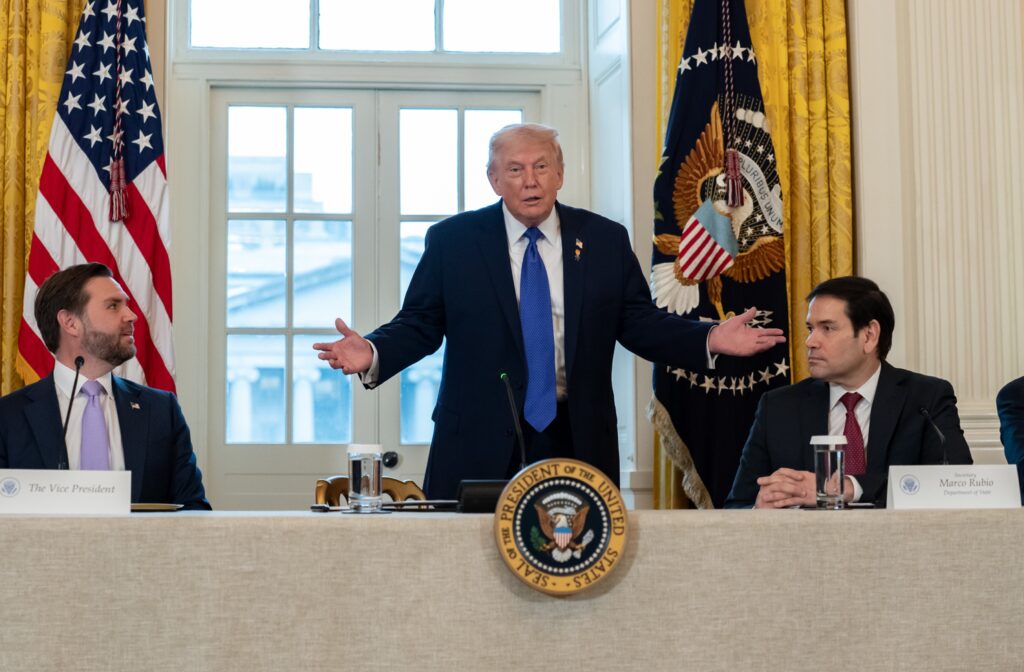
Even US President Donald Trump, normally a vocal supporter of lower corporate taxation and deregulation, criticised American oil companies for profiting excessively from the crisis.
He said:
“I don’t like it, and I should be the last one to say because I’m a big free enterprise guy.
“They ought to give some of that back to the public, and they better cut the retail price, the consumer price.”
For Healey, the political attraction of further action is clear. Households and businesses face higher fuel and energy costs, while companies selling oil and gas report billions of pounds in additional earnings. A carefully framed levy could allow the Chancellor to raise revenue while arguing that the burden is falling on exceptional, crisis-driven gains rather than ordinary workers.
Britain already has a windfall tax
The Energy Profits Levy applies to profits from oil and gas production in the UK and on the UK Continental Shelf. Its rate stands at 38%, taking the headline tax rate on upstream oil and gas activities to 78%, and it is scheduled to continue until March 2030 unless the existing price mechanism ends it earlier.
The Government has also published plans for a permanent Oil and Gas Revenue Levy to replace the existing regime. The proposed levy would apply during periods of unusually high prices, charging 35% on oil and gas sales revenue above specified thresholds. It would apply only after the Energy Profits Levy ends and only to companies producing oil and gas in the UK or on the UK Continental Shelf.
This means Healey’s forthcoming decision is more likely to concern whether the current regime should be extended, tightened, or broadened.
BP’s global profits create a taxation problem
One complication is that BP’s $5.73 billion figure represents earnings from its global business.
The existing UK levy applies only to profits from extracting oil and gas domestically. It does not automatically capture BP’s earnings from international production, refining, commodity trading, or other overseas operations.
That distinction matters because a dramatic increase in BP’s group-level profits does not necessarily produce a proportionate increase in UK windfall-tax receipts.
A broader windfall-tax on the worldwide profits of UK-headquartered energy companies would be far more complicated. The Treasury would need to consider existing corporation-tax rules, international agreements, where profits were generated, and the risk that companies could relocate activities or restructure their tax affairs.
Healey could instead choose a narrower adjustment, such as changing the levy’s thresholds, closing allowances, or introducing a supplementary charge connected specifically to exceptional price-driven returns.
Campaigners demand a stronger response
Environmental and anti-poverty campaigners argue that the Government should act more aggressively.
Greenpeace’s Angharad Hopkinson said BP’s results showed that “corporate gains have become entirely divorced from the public good”.
She welcomed the company’s decision to sell its North Sea operations but added:
“Prolonging this parasitic relationship by trying to squeeze the last few drops of expensive oil out of the North Sea is sheer folly.”
Simon Francis, co-ordinator of the End Fuel Poverty Coalition, said oil companies had “banked more billions from a crisis that has created real hardship for millions of households”.
He added:
“The lesson is not to hand yet more tax breaks to an industry posting billions in profit every quarter, but to use Windfall Tax receipts to clear the record energy debt households built up during the crisis.”
That proposal could appeal to a government already presenting itself as focused on household finances. Burnham has announced that VAT on domestic electricity bills will be removed from 1 October, with the policy funded through the cancellation of the Digital ID programme.
Using additional energy-sector receipts to reduce household debt or fund further bill support would reinforce that cost-of-living message.
Investment concerns may limit the Chancellor’s options
The opposing argument is that repeated windfall tax changes could discourage investment in domestic production, weaken energy security and accelerate companies’ withdrawal from the North Sea.
BP has already announced plans to sell its North Sea business, potentially ending six decades of production in the region. Industry representatives and political figures in Scotland have argued that the existing fiscal regime has made the basin less competitive.
BP chief executive Meg O’Neill has stressed that the company must prioritise commercial returns:
“We have to focus on the assets with the strongest potential to deliver competitive returns and long-term value.”
Speaking to the BBC, Investment Director at AJ Bell, Russ Mould said the company could not assume that favourable oil and gas prices would continue indefinitely:
“O’Neill will be aware she cannot rely on oil and gas prices remaining this high indefinitely.
“She needs to make sure it can prosper even when the backdrop is less helpful.”
The Treasury will therefore have to weigh the immediate revenue and political benefits of a tougher levy against the danger of reducing long-term investment and future tax receipts.
What could Healey do at the Budget?
There is not yet confirmation that the Chancellor intends to announce an additional energy windfall tax on 28 October.
However, the political and fiscal pressures make it highly likely that the taxation of exceptional energy profits will at least be reviewed before the Budget. This is an inference from Healey’s limited fiscal room, the Government’s cost-of-living priorities and the renewed increase in company earnings, rather than a confirmed Treasury plan.
A completely new levy on BP’s worldwide profits appears less straightforward. More plausible options include adjusting the existing Energy Profits Levy, bringing forward elements of its permanent successor, revisiting price thresholds or linking additional receipts to household energy support.
The Chancellor’s decision will ultimately reveal how the new Government intends to balance three competing priorities: raising revenue, protecting consumers, and maintaining investment in Britain’s energy sector.
BP’s results have ensured that Healey will face pressure to act. Whether that results in a new windfall tax, a tougher version of the existing levy or no immediate change will be one of the most closely watched questions ahead of his first Budget.

You can still get a copy of our new edition of ChamberUK. Our parliamentary journal.
Photo Credit: Official White House Photo by Emily J. Higgins