
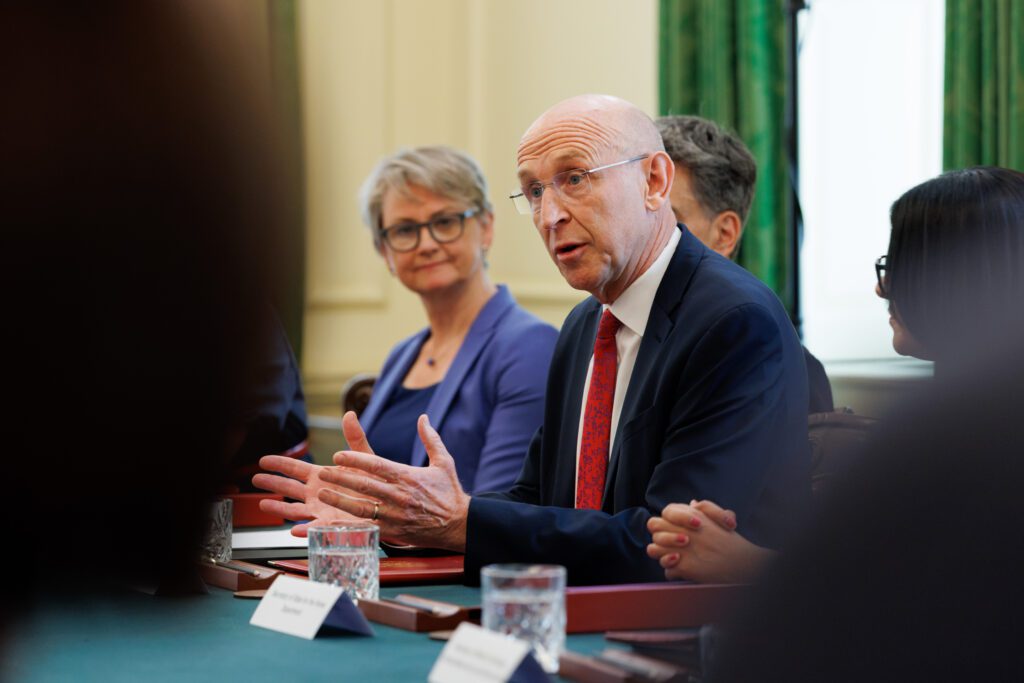
Some of the UK’s largest pension providers are exploring the creation of a new tech fund worth more than £1 billion to back high-growth British science and technology companies.
The proposed UK Scale-up Fund is intended to address one of the most persistent weaknesses in Britain’s innovation economy: the country has a strong record of creating promising companies but often lacks the domestic capital needed to help them expand internationally.
Under the plans, pension providers would pool investment through a new vehicle targeting successful UK businesses seeking to commercialise technologies, increase production and create skilled jobs. The fund would also seek to generate competitive long-term returns for pension schemes and their members.
The British Business Bank is working with the pension providers on the fund’s development and intends to invest alongside the consortium. The Office for Investment is also supporting the work, while a market engagement process to identify a potential fund manager is expected to begin shortly.
Closing Britain’s scale-up funding gap
The announcement reflects growing concern that British businesses frequently depend on overseas investors once they reach the scale-up stage.
Although the UK has one of the world’s largest venture capital markets, ministers argue that too few British pension savings are invested in the domestic companies capable of producing significant long-term growth.
Chancellor of the Exchequer John Healey acknowledged this challenge directly, arguing that Britain creates successful companies but does not do enough to grow them using British capital or retain the profits they generate.
The Chancellor said the Government wanted the UK to become “the best place in the world both to start and scale a business”, with investment, employment and skills distributed across every region. He described the proposed £1 billion tech fund as an opportunity to direct more British money into British scale-ups while improving potential returns for pension savers.
That distinction will be central to the fund’s credibility. Pension schemes are not public development agencies and remain responsible for protecting the interests of their members. The Government’s argument is therefore not simply that pension capital should support national economic priorities, but that successful British scale-ups could represent attractive commercial investments in their own right.
Burnham links pension investment with reindustrialisation
Prime Minister Andy Burnham presented the initiative as a “vote of confidence in British business, British talent and British ambition”.
His comments placed the fund firmly within the Government’s wider economic programme, particularly its emphasis on reindustrialisation and creating high-value employment outside the established investment centres of London and the South East.
Burnham said the tech fund could help deliver “good growth in every postcode” by connecting pension investment with the entrepreneurs and technologies capable of creating future industries. He argued that the model could produce stronger returns for savers while giving more British businesses a reason to start, expand and remain in the UK.
The Government will, however, need to demonstrate that the tech fund can genuinely reach innovative companies across the country. Regional economic benefits will depend not only on the location of the businesses receiving investment but also on whether that capital supports local supply chains, research partnerships and skilled employment.
Government wants successful companies to remain British
Business, Innovation, Science and Trade Secretary Jonathan Reynolds said the UK’s existing strengths in science and technology needed to be matched by a stronger environment for commercial growth.
He described the pension providers’ involvement as an important expression of confidence in UK innovation, arguing that institutional investment could help more promising businesses “start, scale and succeed” domestically.
Reynolds also said pension savers should be able to share in the success of the companies their capital helps to build. His message that Britain is “open for business, open to investment” reflects the Government’s wider attempt to position science, technology and innovation at the centre of its economic strategy.
The proposed tech fund would not guarantee that every supported business remains headquartered or owned in Britain. However, access to larger pools of domestic capital could reduce the pressure on founders to seek overseas funding or sell their businesses earlier than planned.
Pension providers emphasise commercial returns
The organisations involved have consistently presented the proposal as an investment opportunity rather than a concession to government policy.
Andy Bord, Chief Executive Officer of Railpen, said the primary responsibility remained delivering strong long-term outcomes for scheme members. However, he argued that the UK’s innovation economy offered a potentially compelling destination for “disciplined, patient capital”.
Bord said the tech fund could help ambitious companies with global potential build their futures in the UK, while providing attractive returns and contributing to a stronger economy for pension members to retire into. Railpen has also played a role in shaping the proposed initiative.
That emphasis on patient capital is significant. Science and technology businesses, particularly those developing advanced manufacturing, life sciences or infrastructure technologies, can require substantial investment over long periods before generating reliable commercial returns.
Traditional investment structures may not always offer the time or scale required to support that development.
Nest sees alignment between investment and growth
Ian Cornelius, Chief Executive Officer of Nest, similarly argued that pension capital could support economic growth without compromising its obligations to savers.
Nest invests on behalf of more than 14 million members, giving its participation considerable weight. Cornelius said the UK had a strong history of nurturing world-leading science and technology companies, but successful businesses still needed access to funding as they expanded.
He said there could be a “strong alignment” between securing attractive long-term results for pension members and supporting innovation, employment and economic growth.
The scale of Nest’s membership also raises questions about how the risks and potential benefits of investing in growth companies will be communicated to savers. Scale-up investment can deliver substantial returns, but it can also be less liquid and more uncertain than established public markets.
Collaboration intended to create investment at scale
The proposed vehicle is based on the principle that pension institutions can access opportunities collectively that may be difficult to pursue individually.
Chris Rule, Chief Executive Officer of Local Pensions Partnership Investments, said Britain was already a global centre for innovation and entrepreneurship, but that many growing companies remained unable to obtain the funding required to reach their potential.
He said the cross-industry initiative could allow pension funds to generate sustainable long-term returns while backing the next generation of British companies.
Rule argued that collaboration would be central to the fund’s prospects, drawing on the experience of the Local Government Pension Scheme, where institutions have increasingly combined resources to achieve greater scale and improve investment outcomes.
Pooling capital could also help pension investors undertake the specialist due diligence needed to assess science and technology businesses, where commercial prospects may depend on complex intellectual property, regulation and emerging markets.
Welcoming the announcement, Chief Executive of UKAI, Tim Flagg said “UKAI welcomes the announcement of a new UK Scale-up Fund. Access to scale-up funding has been one of the biggest barriers holding back British tech, and unlocking pension capital at this scale is exactly what’s needed to encourage more UK companies to stay, grow and build sovereign capability here at home.
“This didn’t happen overnight. It reflects years of work by many people across government, industry and the pension sector, and they deserve real credit for getting it done.
“The next step now is public sector reform. If we want taxpayer money to actively support the growth of Britain’s AI businesses, the Government needs to make it far easier for the public sector to buy British. Capital unlocks growth, but procurement is what turns that growth into sovereign capability.”

Local government pensions could support domestic growth
Richard Law-Deeks, Chief Executive Officer of LGPS Central, said the fund could provide a practical route for long-term Local Government Pension Scheme capital to support British entrepreneurs and growing companies.
He stressed that every investment decision must begin with the responsibility to deliver strong long-term outcomes for partner funds and scheme members.
However, Law-Deeks said the proposed structure could bring institutional investors together at sufficient scale and give them access to opportunities that might be difficult to secure independently.
Rachel Elwell, Chief Executive Officer of Border to Coast, also pointed to the role pension capital could play in backing high-quality UK investments. She said the organisation was proud to participate in an initiative designed to help more “home-grown innovative businesses” expand.
Elwell argued that combining investment scale with collaboration, discipline and a strong pipeline of credible opportunities could benefit savers while helping British companies compete internationally.
The quality of that investment pipeline will be decisive. A tech fund of more than £1 billion will need access to a sufficiently large group of companies capable of absorbing substantial investment without lowering commercial standards.
British Business Bank seeks a stronger funding ecosystem with tech fund
The British Business Bank’s involvement is intended to provide additional investment expertise and connect the tech fund with the wider market for growth capital.
Leandros Kalisperas, Chief Investment Officer at the British Business Bank, described the announcement as an important milestone in strengthening the UK’s “capital formation ecosystem”.
He said bringing pension investment together with ambitious growth companies could create a “virtuous cycle”, supporting innovation, attracting further private capital and generating long-term value for pension savers.
The British Business Bank’s intention to invest alongside the pension consortium may also help attract additional institutions by demonstrating public backing for the vehicle. However, the final amount, structure and allocation of any government-supported investment have not yet been confirmed.
Jo Bekis, Chief Executive of UK Healthcare and Life Sciences Innovation (UKHLSI) and Digital 4 Health UK (part of the Digital 4 Health Worldwide) who works closely with the British Business Bank said:
“This announcement represents one of the most exciting opportunities we have seen in recent years to connect long-term pension investment with the extraordinary innovation emerging across the UK. The concept of unlocking pension capital to support high-growth science, technology, and health businesses has been a recurring theme in discussions we have held with innovators, investors and policymakers, including roundtable conversations with Sir Chris Bryant earlier this year during a exploration visit to Madrid and the British embassy Madrid and at open innovation days where innovators pitched for investment.
“For many of the pioneering companies we work alongside, access to scale-up capital has often been the missing piece of the puzzle. The proposed UK Scale-up Fund has the potential not only to generate strong returns for pension savers but also to accelerate the commercialisation of British innovation, create skilled jobs and ensure that more world-class companies can start, scale and succeed here in the UK.”

Ambition must now be converted into investment
The announcement represents an agreement to explore the creation of the UK Scale-up Tech Fund, rather than confirmation that £1 billion has already been committed or invested.
Important details remain unresolved, including the identity of the fund manager, its investment criteria, sectoral priorities, fee structure and expected launch date.
The consortium will also have to balance several potentially competing objectives: generating returns for pension members, investing in innovative UK companies, supporting regional growth and demonstrating that commercial decisions are protected from political interference.
Nevertheless, the involvement of major pension providers, the British Business Bank and the Office for Investment means the proposal has substantial institutional support.
Should the tech fund proceed, its success will be judged not by the size of its initial announcement but by whether it can help promising British companies become global businesses without requiring them to leave the UK to find the investment they need.
Find out more
To find out more about UKAI visit: www.ukai.co and to find out more about UK Healthcare and Life Sciences Innovation (UKHLSI) visit: www.ukhlsi.co.uk
(Photo: Lauren Hurley/No 10 Downing Street)