
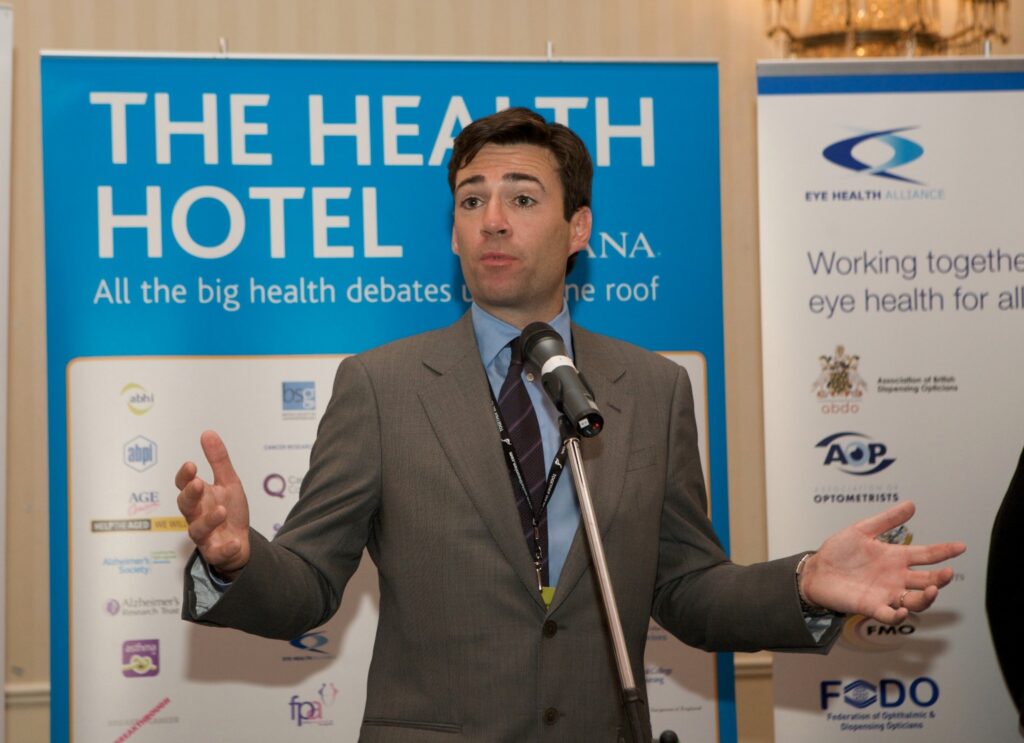
For the last two decades, the social care sector has been the target, or potential target of reforms championed by UK Prime Ministers. When he was last in Government in 2009, the now Prime Minister Andy Burnham was proposing possible reforms to the sector.
Despite repeated interventions from senior politicians however, the sector remains stubbornly unreformed. Given the Prime Minister’s warning over the weekend that the NHS “collapse under the weight of trying to care for people who’ve really not needed to end up in the NHS system” and his pledge to use “whatever political capital I have” to fix the social care system, this article explores whether he’s biting off more than he can chew.
Long Time Coming
The need for social care reform arguably dates back to 1948, and the National Assistance Act, which allowed for the creation of the NHS. Social care was not included in services that would be provided by the NHS instead being left to local government.
Since then our ageing population and medical advances that mean more of us survive into old age have led to a steady increase in the cost of social care. At the same time, since 2010, the budgets of local authorities have been cut as their (statutory) social care responsibilities continue to increase.
Social Care Reform: Political Trap
Social care acts almost as a trap for politicians. Providing social care is financially expensive, and effects only a small subset of voters at any given time, (though it will effect most of us at some point). The obvious way to fund social care is via an inheritance tax, which according to a YouGov poll conducted in March, is opposed by a majority of voters. Analysis of this poll is interesting, showing that to fund social care, voters would prefer to feel the effects of a moderate increase in tax themselves rather than face a tax on savings after they die.
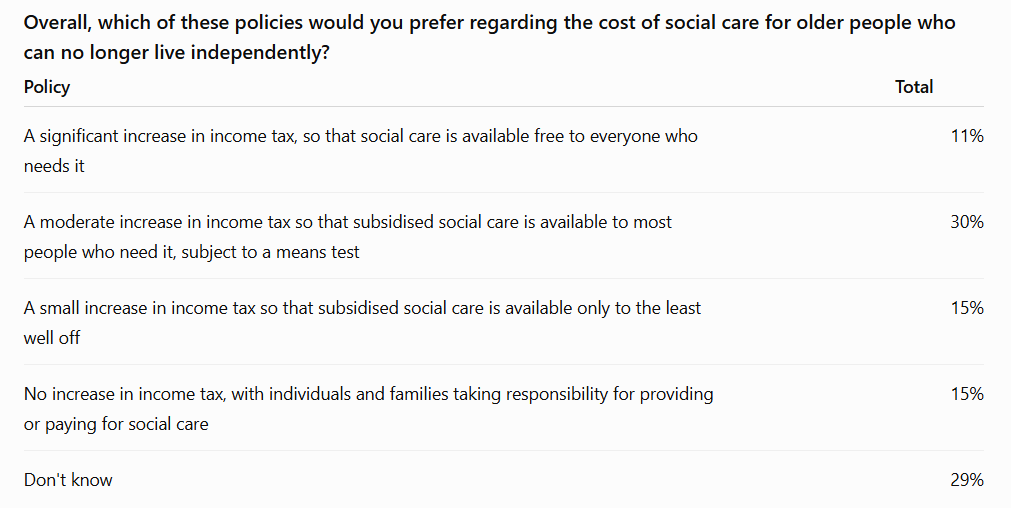
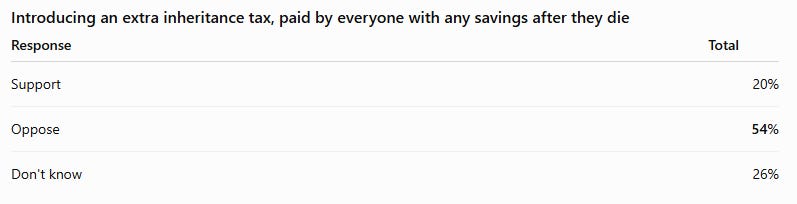
The policy outcome however of bending to voter’s preferences would be an increase in the cost of living and the importance of inheriting wealth. Hardly Labour Party objectives.
Political Graveyard
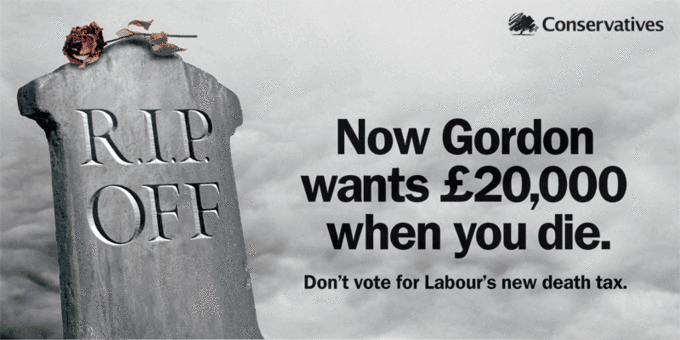
In 2009, as Health Secretary, Burnham proposed a National Care Service funded by a compulsory inheritance levy, proposed as a progressive deduction of roughly £20,000 from people’s estates after death. This was an attempt to bring priority to social care whle preventing people from having to sell their houses during their lifetime. However, the campaign later became branded by the Conservatives as the “death tax”, in part due to the option for deferred payment after the person’s death. This aggressive rebranding of the campaign flipped public perception, arguing that such a reform would strip grieving families of their inheritance, which this ultimately led to the stalling of the policy.
In the early 2010s, Andrew Lansley who became Health Secretary in the coalition Government, introduced the Care Act 2014 which aimed to introduce a lifetime limit on personal care costs. This was originally capped at £72,000, but was indefinitely delayed by the Conservative Government. In 2024, the Government cancelled active caps on care costs, rendering this objective of the Act nothing but a drawn-out defeat. Additionally, there was significant pushback from local authorities, and the Local Government Association warned that this Act was demanding resources that could not be provided, as well as stacking up huge administrative burdens.
In 2017, Theresa May offered a new plan to make people who were receiving care at home to be liable for their own costs until their assets dropped to £100,000. While there was an attempt to consider inheritance and retaining family real estate through the idea of deferred payment after death, the campaign was also brought to a grinding halt after facing similar backlash to Andy Burnham’s previous proposal. Critics, this time in the Labour Party, labelled the policy a “dementia tax”, arguing that those with long-term conditions such as dementia could be forced to watch their assets dwindle to £100,000 , whereas those who suffered a sudden, fatal death could pass on their wealth without consequence. The public outrage caused Conservative popularity to drop sharply, forcing Theresa May to hold a haphazard press conference introducing a cost cap that had not been included in the original manifesto. The poor handling of the situation arguably cost her a parliamentary majority, and the policy was permanently discarded.
Boris Johnson was yet another politician to try and salvage the dire state of social care by introducing an £86,000 lifetime care cap funded directly by a 1.25% Health and Social Care levy, raised through National Insurance. Considering this broke a fundamental 2019 pledge to not raise National Insurance, the concept of creating a sizeable tax on working families was immediately out of the question. In late 2022, Chancellor Kwasi Kwarteng repealed the entire Health and Social Care Levy Act in order to bring about promised tax cuts. Without a means for funding, the cap was indefinitely delayed and eventually scrapped entirely.
Final Thought
Burnham seems eager to wade back into social care reform, stating just yesterday that the NHS will “collapse” without it, but political precedent is not good.
Social care has been a struggle for people and politicians alike, with a report carried out in 2026 by Dan Wellings highlighting the truth that despite widespread dissatisfaction with the current system, there is little public pressure pushing for reform. It seems only those directly affected truly understand the implications that poor social care will have on British society.
Sharon Lowrie, Chief Executive of Be Caring, the largest employee-owned social care provider, highlights the importance of Burnham’s work for their cause:
“There is a huge opportunity to truly value the social care workforce, creating meaningful careers for young people while enabling more people to remain independent and out of hospital. That not only improves people’s quality of life but also allows the NHS to focus on delivering the care it is there to provide.
As an employee-owned organisation, we’d encourage Andy Burnham and his team to build on what is already working across the sector. At Be Caring, we’ve demonstrated what can be achieved with existing resources by working collaboratively with our partners and investing in our workforce. When care workers are valued, supported and empowered, they deliver better outcomes for the people and communities they serve.
We welcome the opportunity to work together to help shape a social care system that delivers better outcomes for everyone.”
But, for the majority of political figures, tackling social care has often been high risk and low reward. So, with Burnham continuing to reiterate the importance of social reform, the UK is left in trepidation as to whether he can pull this off, or become just the latest Prime Minister to flame out over this issue.
Politics UK is the home of UK political news.
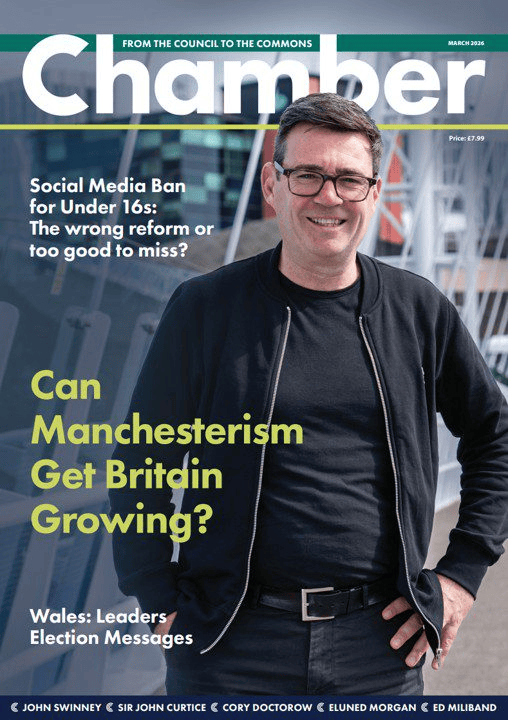
You can still get a copy of our new edition of ChamberUK. Our parliamentary journal.