
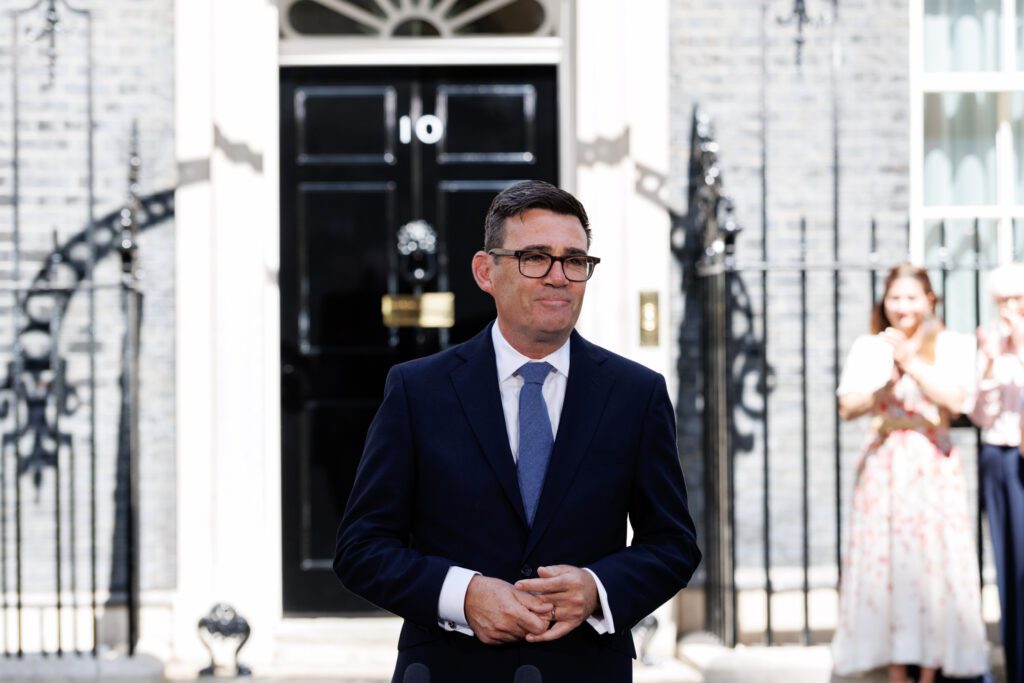
A group of prominent UK millionaires has urged Prime Minister Andy Burnham to increase taxes on people whose income is generated primarily through accumulated wealth rather than employment.
In an open letter organised by campaign group Patriotic Millionaires, 120 signatories said they could afford to contribute more and argued that higher taxes on the wealthiest could help create a fairer society.
The letter draws a distinction between people who earn their income through employment and those whose wealth produces substantial investment returns.
“We’re not talking about higher taxes on those who get up and go to work for their income every day, but on the very richest whose income is derived from the wealth they hold,” the signatories said.
Those backing the letter include former England footballer and broadcaster Gary Lineker, musician and producer Brian Eno, film director Richard Curtis and Ian Gregg, the former managing director of Greggs and son of the bakery chain’s founder.
A 2% wealth tax proposal
Patriotic Millionaires supports the introduction of a 2% annual tax on personal wealth above £10 million.
The group argues that the revenue generated could be used to invest in public services, infrastructure and economic development, particularly outside the wealthiest parts of the country.
Its letter calls for what it describes as a “devolution of wealth and power” away from the richest individuals and towards communities and regions across the UK.
“Millionaires are a patriotic bunch,” the letter states. “We love this country and we want it to succeed.”
It adds that significant investment capital remains available within private wealth and could be mobilised to support national renewal.
The campaign group also says that its own polling suggests a majority of millionaires would support paying more tax.

Pressure on Burnham’s tax agenda
The intervention comes during the first week of Andy Burnham’s premiership, as the new Government begins to outline its economic and fiscal priorities.
Burnham did not rule out introducing a wealth tax when asked about the issue before becoming Prime Minister. He suggested that the Government might, at some stage, have to ask those with the broadest shoulders to contribute more.
The letter is therefore likely to add pressure on Downing Street and the Treasury to clarify whether wealth taxation will form part of the Government’s wider economic programme.
Any move would be politically contentious. Conservative leader Kemi Badenoch responded by saying that Lineker and other wealthy individuals were free to make voluntary payments to the Treasury.
The Government already operates a donation facility through which individuals can voluntarily give money, shares or other assets to the state.
However, supporters of a wealth tax argue that voluntary contributions are not a substitute for systematic reform. Their case is that a statutory levy would create a predictable revenue stream and ensure that the burden was shared consistently among those with very high levels of wealth.
The wider political debate
The renewed call reflects a broader debate about how Britain funds public services and economic renewal at a time of pressure on household finances and government spending.
Supporters of higher wealth taxes argue that the tax system places too much emphasis on income from work while treating accumulated wealth more favourably. Opponents warn that such measures could encourage capital flight, reduce investment or prove difficult to administer.
For Burnham, the question will be whether a wealth tax can be designed in a way that raises meaningful revenue without undermining business confidence or creating significant avoidance opportunities.
The letter also links taxation with devolution, suggesting that money raised from the wealthiest should be reinvested in communities across every region.
As the new Government develops its economic agenda, the debate is likely to focus not only on whether the richest should pay more, but also on how any additional revenue would be used and whether it could produce visible improvements in public services, productivity and regional growth.
Photo: Lauren Hurley/No 10 Downing Street