

A targeted treatment for prostate cancer can provide long-term cancer control while substantially reducing the risk of life-changing side effects, according to the largest study of its kind.
Researchers from Imperial College London and Imperial College Healthcare NHS Trust followed 3,477 men who received focal therapy at 14 UK hospitals between 2004 and 2024.
Ten years after treatment, only two men in the study had died from prostate cancer. Researchers said this extremely low mortality rate was comparable with outcomes following prostate removal surgery or radiotherapy.
Focal therapy was also associated with a five-fold lower risk of side effects including urinary incontinence, erectile dysfunction and rectal problems. The findings, published in European Urology, could strengthen calls for focal therapy to become a routine first-line treatment option for suitable NHS patients.
Targeting the cancer while preserving healthy tissue
Focal therapy destroys only the cancerous areas of the prostate, rather than treating or removing the whole gland.
The treatment can use high-intensity focused ultrasound, known as HIFU, to heat and destroy cancerous tissue. Alternatively, cryotherapy can freeze the affected area.
Because focal therapy avoids much of the healthy prostate tissue, it reduces damage to the surrounding nerves and muscles responsible for urinary and sexual function.
By comparison, radical prostatectomy involves removing the prostate, while conventional radiotherapy treats the whole gland. Both are effective treatments but can cause long-term urinary incontinence and erectile dysfunction.
These treatment-related harms are among the reasons the UK National Screening Committee has previously advised against introducing universal prostate cancer screening.

Long-term results across higher-risk patients
Nine in ten men included in the study had intermediate or high-risk prostate cancer, meaning their cancer required treatment rather than active monitoring alone.
After ten years, just 0.1 per cent of participants had died from prostate cancer and three per cent had experienced cancer spreading beyond the prostate. Researchers said these rates were similar to those reported following surgery or radiotherapy.
One in three men needed some form of further treatment. Some chose surgery or radiotherapy even though another focal therapy procedure may have remained possible.
Among men who underwent a second focal therapy treatment, only one in ten subsequently needed prostatectomy or radiotherapy because of persistent cancer.
By comparison, researchers said between 15 and 30 per cent of men with similar levels of prostate cancer risk experience recurrence following surgery or radiotherapy.
Dr Alexander Light, NIHR Doctoral Fellow at Imperial College London and Urology Registrar at Imperial College Healthcare NHS Trust, said:
“The results of our study are really encouraging. Ten years on, only two men in the study had died from their prostate cancer and many men have benefited from the treatment, including men with more aggressive disease who would traditionally have been told focal therapy wasn’t an option for them.”
Up to 15,000 men could benefit each year
Prostate cancer is the most common cancer among men in the UK, with more than 60,000 diagnoses each year.
Researchers estimate that between half and two-thirds of localised prostate cancers could be suitable for focal therapy, representing as many as 15,000 men annually.
However, only around 1,000 men currently receive the treatment each year.
Professor Hashim Ahmed, Consultant Urologist and Chair of Urology at Imperial College London and Imperial College Healthcare NHS Trust, said the research provided compelling evidence for wider availability.
“This is the largest and longest running study demonstrating that focal therapy delivers excellent long-term cancer control across a broad range of patients. It makes a compelling case for more centres to offer this treatment, and I am pleased to see the government make a firm commitment of capital funding to support it.”
Professor Ahmed, who also leads the TRANSFORM prostate cancer screening study, added:
“Right now, only about 1,000 men per year have the treatment, when up to 15,000 men could – and are either not told about it, or do not have local access.”

Calls for updated NICE clinical guidance
Focal therapy can already be provided under the NICE HealthTech programme, provided clinicians routinely collect and report patient outcomes through national registries.
However, it is not yet routinely recommended as a first-line option within the main NICE prostate cancer clinical guidelines. This has contributed to considerable variation in whether patients are told about the treatment or referred to a specialist centre.
Dr Taimur Shah, Consultant Urologist and Associate Professor at Imperial College London and Imperial College Healthcare NHS Trust, said the new findings provided the long-term evidence clinicians and patients had been waiting for.
“We hope these results will help update the main NICE clinical guidelines so that focal therapy is routinely offered as a first-line choice to men.”
He added that men who wanted to understand whether focal therapy might be appropriate should ask their urologist about referral to a specialist centre offering the treatment.
Government funding to expand focal therapy
The Government has announced up to £2.8 million in capital funding to expand focal therapy provision alongside the TRANSFORM prostate cancer screening trial.
TRANSFORM, funded by the National Institute for Health and Care Research and Prostate Cancer UK, is examining how targeted screening could be introduced while reducing the harms associated with prostate cancer diagnosis and treatment.
Health Innovation and Safety Minister, Preet Kaur Gill said:
“Everyone deserves access to the best possible treatment, and this government is determined to make that a reality. This study is a powerful demonstration of what focal therapy can achieve.”
She said the investment would support the expansion of the TRANSFORM trial and give more men access to focal therapy through prostate cancer screening.
Changing clinical practice and patient conversations
Patient groups have welcomed the findings, arguing that men should not have to choose between controlling their cancer and protecting their long-term quality of life.
Paul Sayer, Founder of the charity Prost8 UK and a focal therapy patient, said:
“For too long, many men have believed they had to choose between curing their cancer and preserving the quality of their lives. This study shows that, for many patients, that simply isn’t true.”
He called for all suitable men to be routinely informed about focal therapy, regardless of where they live.
“This research shouldn’t just change clinical practice – it should change conversations in every consulting room across the UK. Every man deserves to know all of his appropriate treatment options before making one of the biggest decisions of his life.”
Amy Rylance, Director of Health Services, Equity and Improvement at Prostate Cancer UK, said the findings could also strengthen the case for a future national screening programme.
“Side effects can be devastating, and this is the first long-term study that shows many men could avoid them without increasing the risk their cancer could return.”
She added that reducing the harms associated with treatment could make it more likely that screening could eventually be offered to all men.
Dr. David Hahn, Vice President of Medical Affairs and Interventional Solutions said:
“For many men diagnosed with localised prostate cancer, quality-of-life considerations are an important part of treatment decision-making. Continued investment in research, service development, and evidence generation is essential to ensure patients and clinicians have the information they need to make informed choices. We welcome the ongoing efforts to evaluate how innovative treatment approaches can be appropriately integrated within the NHS to benefit patients and healthcare systems alike,” said Dr. David Hahn, Vice President of Medical Affairs and Interventional Solutions
Former Minister of State for Health, Rt Hon Andrew Stephenson CBE and Chair of Curia’s Health, Care, and Life Sciences Research Group Chair:
“This is hugely encouraging news for men with prostate cancer and for the wider NHS. The long-term evidence shows that focal therapy can deliver excellent cancer control while significantly reducing the risk of life-changing side effects. The priority now must be to turn that evidence into equitable access.
“Through the Strategic Innovation Gateway commissioned by UK Healthcare and Life Sciences Innovation, Curia will work with clinicians, commissioners, patients and policymakers to help develop the practical pathways needed to support wider adoption across the NHS.”
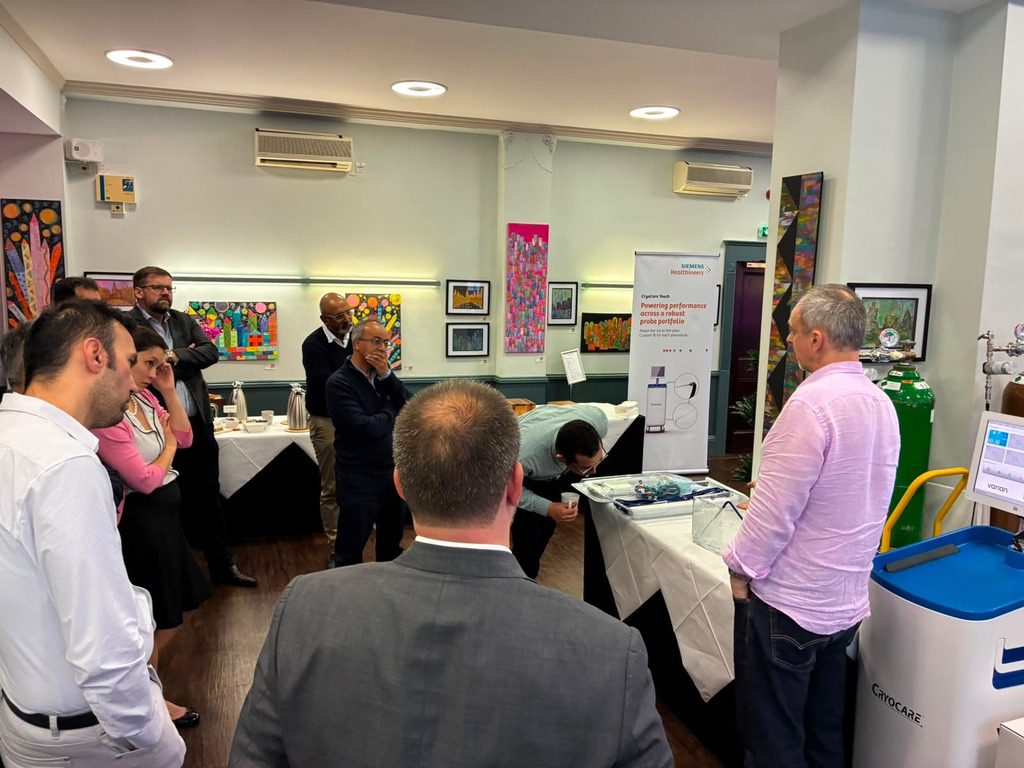
UKHLSI commissions Strategic Innovation Gateway
While the research strengthens the clinical evidence supporting focal therapy, wider NHS access will also depend on practical commissioning arrangements, clinical pathways and implementation support.
UK Healthcare and Life Sciences Innovation (UKHLSI) has commissioned a Strategic Innovation Gateway for commissioning and scaling minimally invasive prostate services across the NHS.
Jo Bekis, Chief Executive of UKHLSI, welcomed the news:
“The introduction of Siemens Healthineers’ focal prostate cancer technology marks an important advancement in precision cancer care. By combining high-quality imaging with targeted treatment approaches, this innovation has the potential to help clinicians make more confident decisions and deliver more personalised care for patients, while supporting improved outcomes and quality of life.”
The programme will begin with an innovation sprint and stakeholder workshop. This will examine the barriers to adoption and support the development of a commissioning pathway, economic and system-value assessment, benefits case, and implementation plan.
A detailed NHS case study will then be produced, alongside a practical commissioning guide and digital showcase demonstrating how minimally invasive prostate services can be introduced and replicated.
The final phase will include a national policy report, engagement across NHS and integrated care system networks, and a parliamentary or national launch event.
The Gateway is intended to address the gap between successful clinical research and routine NHS practice, ensuring evidence is translated into workable pathways for commissioners, providers and patients.
From evidence to equitable access
The study provides some of the strongest evidence, yet that focal therapy can control prostate cancer while protecting quality of life for many suitable patients.
However, evidence alone will not eliminate regional variation in access.
Wider adoption will require updated national guidance, investment in specialist centres, trained clinical teams and commissioning models that allow NHS organisations to incorporate focal therapy into routine prostate cancer pathways.
The combination of new long-term clinical evidence, government investment and the UKHLSI Strategic Innovation Gateway presents an opportunity to move focal therapy beyond a limited number of specialist centres.
For thousands of men each year, the test will be whether the NHS can now turn that opportunity into consistent access, informed patient choice and better long-term outcomes.
Find out more
To find out more about the Strategic Innovation Gateway, please contact enquiries@ukhlsi.co.uk.

You can still get a copy of our new edition of ChamberUK. Our parliamentary journal.