
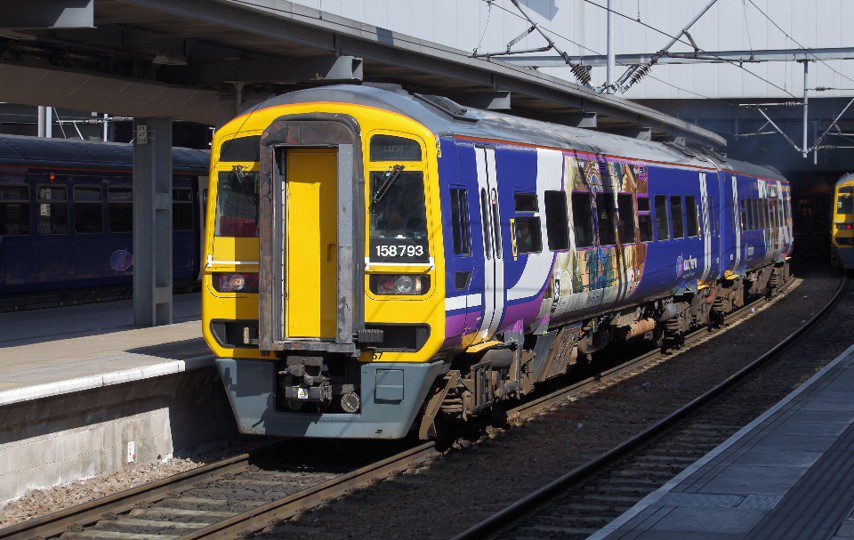
A highly critical report published this week by the Public Accounts Committee (PAC) has cast fresh doubt over the Government’s ability to deliver Northern Powerhouse Rail (NPR), warning that the programme remains in its infancy despite more than a decade of political promises.
The cross-party committee concludes that there is “considerable uncertainty” surrounding the project’s scope, governance and affordability. It questions whether the Department for Transport can deliver the full programme within its £45 billion funding cap imposed by the Treasury and expresses concern that key decisions, including the exact route, delivery model and funding arrangements, have yet to be made. More than twelve years after ministers first pledged to transform rail connectivity across northern England, MPs say the programme remains “at an early stage despite more than 12 years of planning.”
The report arrives at a pivotal moment for the project. Following Labour’s publication of a new Northern Growth Strategy earlier this year, ministers have sought to reset the programme and present it as a cornerstone of long-term economic growth. The PAC’s findings, however, suggest that many of the structural questions that have delayed progress remain unresolved.
Northern Powerhouse Rail: The Story So Far
Northern Powerhouse Rail has undergone repeated reinvention since George Osborne, then Chancellor in the Coalition Government, unveiled the Northern Powerhouse vision in June 2014. The concept centred on creating fast east-west rail links between the North’s major cities to improve productivity and rebalance the UK economy. Over the following years, Transport for the North developed increasingly detailed business cases, culminating in proposals for an entirely new high-speed network connecting Liverpool, Manchester, Bradford, Leeds, Sheffield, Hull and Newcastle.
Political backing continued to evolve. Boris Johnson reaffirmed support for a new Manchester-Leeds high-speed railway in 2019, but progress remained closely tied to decisions about HS2. That relationship proved decisive in 2021, when the Government’s Integrated Rail Plan significantly reduced the original ambition, replacing much of the proposed new railway with upgrades to existing lines. Northern leaders such as the shadow transport secretary, Jim McMahon MP, described the decision as a betrayal, while supporters argued it represented a more affordable approach.
Matters shifted again in October 2023 when Rishi Sunak cancelled HS2’s Manchester extension. Ministers insisted Northern Powerhouse Rail would survive under the Network North programme, including £12 billion earmarked for improving connections between Liverpool and Manchester, but uncertainty over the overall scheme persisted.
Since Labour entered government in July 2024, Northern Powerhouse Rail has again been reshaped. Ministers repeatedly promised that updated plans would be published “soon”, but announcements slipped throughout 2025 amid reviews of scope, sequencing and funding. Regional leaders continued lobbying for the full scheme, while the newly established Liverpool-Manchester Railway Board developed alternative proposals alongside Whitehall’s work.
In January 2026, the Government finally published its outline plan, restructuring the programme into three phases, confirming £1.5 billion for initial planning and development work, and setting early priorities including electrification around Leeds. The PAC welcomes the renewed ambition but notes that major decisions on routes, procurement and delivery remain outstanding.
The Spectre of HS2
Throughout the report, comparisons with HS2 are unavoidable.
The PAC warns that governance arrangements for Northern Powerhouse Rail risk repeating mistakes made on Britain’s largest infrastructure project. It notes that “the lack of robust governance in the early stages of HS2 which led to all the problems from which it has still not recovered so far.”
Cost control is another recurring concern. MPs question how HM Treasury established a £45 billion funding cap before the project has been fully designed or costed, while also highlighting the Department for Transport’s poor record on estimating rail infrastructure costs. The committee points to HS2 Ltd’s involvement in preparing cost estimates for parts of Northern Powerhouse Rail and says the Department has yet to demonstrate a convincing plan for managing spending or deciding what would be removed from the programme if costs increase.
The report also finds that lessons from HS2 have only been partially embedded. While officials have adopted a more cautious approach by delaying delivery model decisions and allowing more time for design work before construction begins, the Government Internal Audit Agency found that lessons are not being applied consistently across the Department.
Final Thought
Northern Powerhouse Rail is now entering its third distinct political era. Since 2014, successive governments have announced new visions, revised previous plans, cancelled linked projects, introduced alternative governance structures and reset delivery timetables. The result is that, twelve years on, Britain is still discussing how to build a railway that has yet to move beyond planning.
The PAC’s report raises a broader question than Northern Powerhouse Rail alone. Whether the issue is funding certainty, institutional memory, procurement or cross-party continuity, the UK’s record on delivering long-term infrastructure has become increasingly difficult to defend.
Will Andy Burnham’s “Manchesterism” end this cycle of planning and review? Can the Treasury be satisfied by cutting these mega-projects into more modest steps and implementing the first steps immediately? Perhaps huge announcements are less effective than boring upgrades such as the Transpennine Route Upgrade?
What’s for certain is that today’s 12 year olds deserve to see some rail improvements before they retire.
You can still get a copy of our new edition of ChamberUK. Our parliamentary journal.
Photo Credit: Matt Buck