
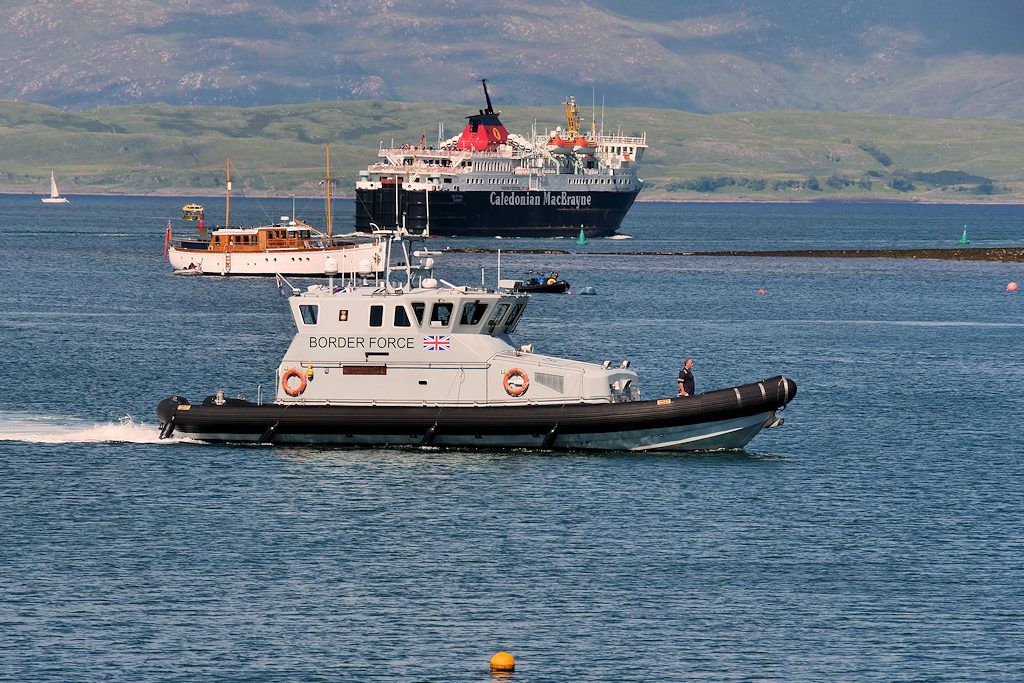
Immigration and small boat arrivals remain one of the most politically significant issues in Britain. According to YouGov’s latest polling, 49% of the public rank immigration among the three most important issues facing the country. The debate has become increasingly polarised, with Reform UK leader Nigel Farage describing small boat crossings in 2025 as “an invasion” and arguing that “young men illegally break into our country.”
Against this backdrop, today the Government has announced a new expansion of cooperation with French authorities aimed at reducing Channel crossings. Under a new UK-France agreement, two specialist French police units comprising 125 officers and reservists have been deployed to Northern France to disrupt launch attempts and target people-smuggling networks. The initiative forms part of a wider package that includes enhanced surveillance, intelligence sharing and increased funding for French enforcement operations.
Small Boat Arrivals Since Brexit
The issue of small boat arrivals has become closely linked to Britain’s post-Brexit immigration arrangements.
Before leaving the European Union, the UK participated in the Dublin Regulation system, which allowed asylum seekers to be returned to the first EU country in which they were registered. Following Brexit, the UK ceased to be part of that framework. The loss of these return arrangements created an incentive for migrants to reach Britain by irregular routes.
The Government has centred its response around Prime Minister Keir Starmer’s pledge to “smash the gangs” responsible for facilitating Channel crossings. Efforts have focused on international law enforcement cooperation, disrupting smuggling networks and increasing removals.
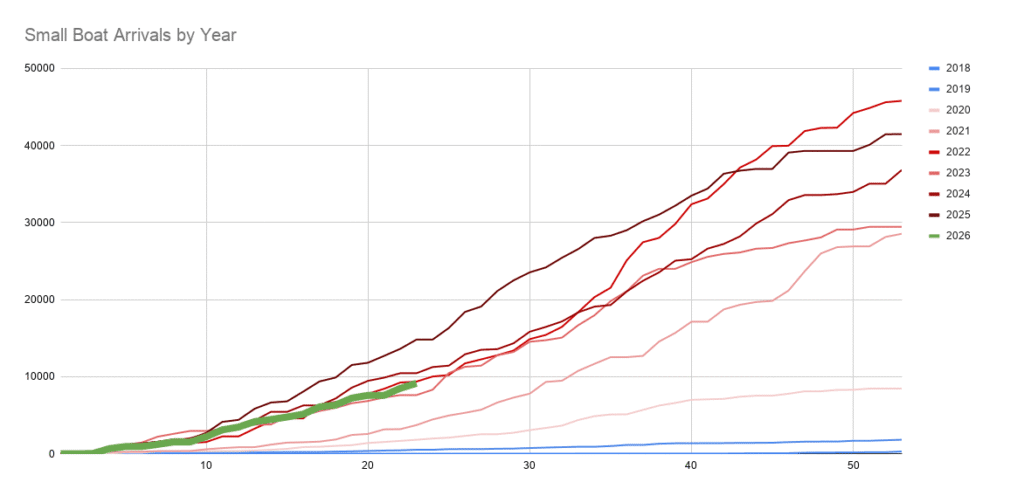
The data suggests some progress, although arrivals remain historically high. The above chart shows cumulative annual small boat arrivals rising sharply after 2020. While both 2024 and 2025 recorded fewer arrivals than the peak year of 2022, total crossings remain far above the levels seen before Brexit. Annual arrivals that numbered in the hundreds during 2018 and 2019 have become measured in tens of thousands during the 2020s.
Government figures released alongside this week’s announcement state that nearly 70,000 people have been removed from the UK since the 2024 election, while disruption activity against smuggling gangs has increased substantially. Ministers argue that enhanced cooperation with France has already prevented thousands of crossing attempts.
Calls for a Different Approach
The political debate extends beyond enforcement.
Yesterday, Leader of the Liberal Democrats Ed Davey renewed calls for closer integration with Europe, including rejoining the Single Market and restoring participation in arrangements similar to the Dublin system.
Speaking to Politics UK, Daisey Cooper, Deputy Leader of the Liberal Democrats said:
“It was the Conservatives and Nigel Farage who plunged our immigration system into chaos by ripping up our returns agreement with EU countries. That’s why people are coming across the Channel in small boats.
Our new partnership with Europe would bring more control to Britain’s borders by giving us a returns agreement with every EU country, stopping dangerous small boat crossings by ending the pull factor created by the Conservatives and Farage.”
The proposal reflects a broader argument that effective border management requires formal cooperation with European partners rather than relying primarily on enforcement measures.
The International Refugee System
The current asylum system is rooted in the aftermath of the Second World War.
The United Nations adopted the Refugee Convention in 1951. The agreement emerged partly from lessons learned during the 1930s and 1940s, when many people fleeing persecution, including Jewish refugees escaping Nazi Germany, struggled to find countries willing to admit them.
The Convention established the principle that individuals should be able to seek protection from persecution and should not be returned to places where they face serious danger. It also limited the ability of states to refuse consideration of asylum claims solely through numerical caps or quotas.
Over time, governments seeking to reduce irregular migration have increasingly focused on preventing asylum seekers from reaching their territory in the first place, through visa requirements, carrier sanctions, offshore processing proposals and strengthened border controls.
Systemic Contradictions
This tension between border enforcement and asylum rights now sits at the centre of political debates across Europe and North America. In Britain, some right-wing politicians have argued that the UK should consider withdrawing from or reforming international legal frameworks such as the European Convention on Human Rights and related agreements. Supporters of these proposals argue that they would provide greater control over immigration policy, while opponents contend that such frameworks remain important safeguards for refugees and human rights.
As small boat crossings continue to dominate public debate, the challenge facing policymakers remains balancing border security, international obligations and public confidence in the immigration system. The latest UK-France agreement represents the Government’s latest attempt to address one part of that challenge, but the longer-term debate over how Britain manages asylum and migration is unlikely to disappear.
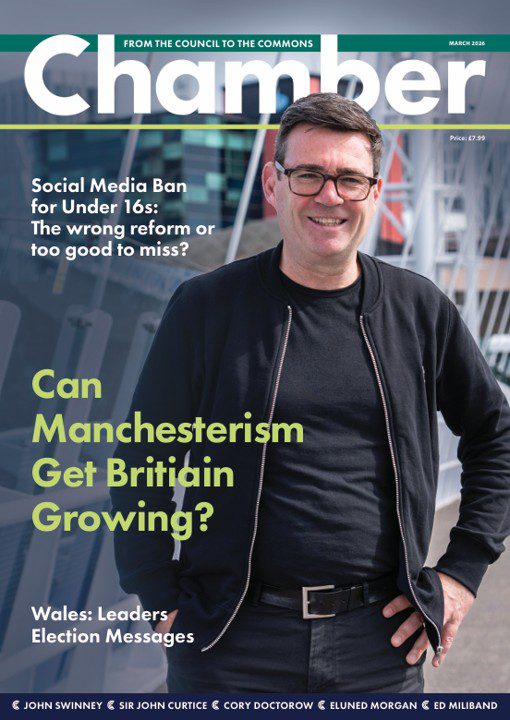
You can still get a copy of our new edition of ChamberUK. Our parliamentary journal.
Photo Credit: David Dixon