
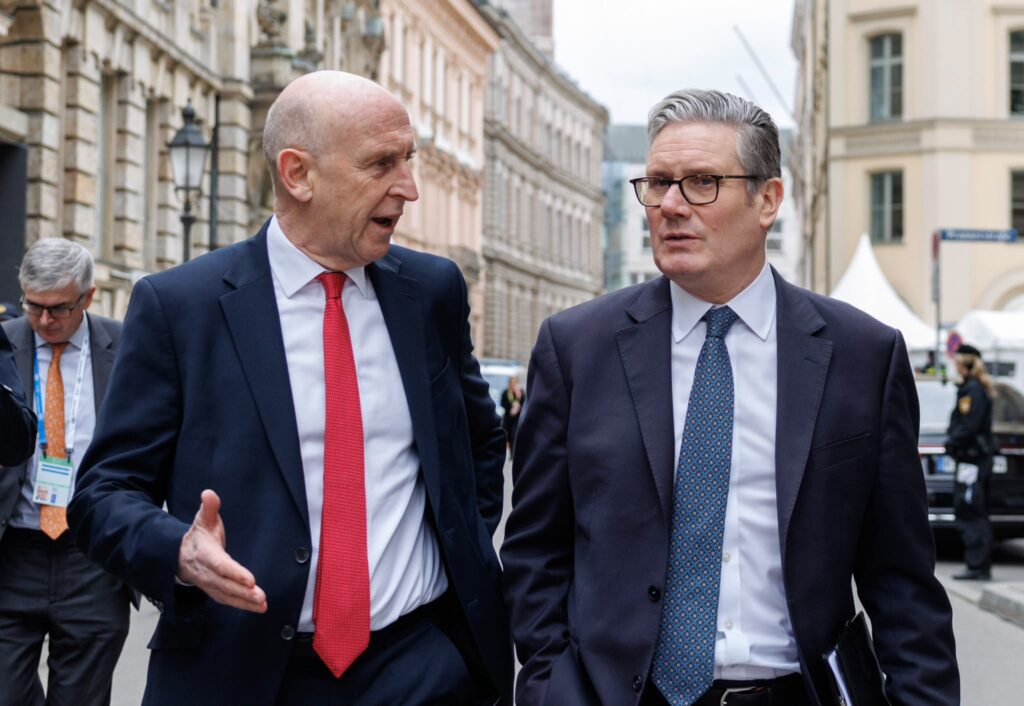
In a carefully worded letter published on Thursday, Healey describes his decision to resign as one made with “great regret and reluctance”, underscoring deep concern over the Government’s direction.
The letter reads as a stark warning about the UK’s defence position. Healey lays out a record of achievements under the Government: increased defence spending, strengthened alliances, major export deals, and the publication of a Strategic Defence Review. Yet the tone is brutal when addressing funding.
At the heart of the disagreement is the long-delayed Defence Investment Plan (DIP). Healey argues that the financial settlement agreed by the Treasury “falls short of what is required for defence and the country at this dangerous time.” He says funding increases are, in his view, backloaded, while immediate operational pressures demand urgent investment.
His conclusion is that by remaining in post he would have to accept decisions that could reduce military readiness and “increase the risk to personnel on operations.”
Mounting Pressure on the Prime Minister
The timing of the resignation is politically challenging for the Prime Minister.
The Prime Minister is preparing to attend the G7 summit on Monday, where he is expected to meet with US President, Donald Trump. Such meetings typically require a strong and stable domestic footing, particularly on defence and international security. Starmer was already under pressure on defence spending prior to the resignation. Therefore, expect Trump to humiliate the Prime Minister following Healey’s departure over defence spending.
The resignation also feeds into a broader narrative of strain within government and the Parliamentary Labour Party. While the letter is respectful and measured, its content signals a significant policy divide at the top of government – specifically between defence priorities and Treasury constraints.
Politically, the immediate question is not only about defence policy, but about leadership stability. Although there is no indication of an imminent Cabinet move against the Prime Minister, the absence of certain key figures in Westminster may delay any collective response. Nonetheless, the symbolic damage is immediate.
Defence Spending: The Core Fault Line
Healey’s resignation centres on a fundamental disagreement over defence spending. The former Defence Secretary makes clear that he supports a faster and more ambitious funding increase, including hitting 3% of GDP by 2030.
By contrast, the current plan outlined in his letter would see spending rise more slowly, reaching around 2.68% by 2030 – barely above levels already projected. To Healey, this is insufficient given the scale of global threats.
He explicitly references intelligence assessments suggesting a potential Russian attack on NATO “as soon as 2030”. This framing elevates the dispute beyond routine budgetary wrangling, positioning it as an urgent matter of national security.
The letter also highlights expanding UK commitments, from Middle Eastern operations to leadership roles in NATO missions, and increased involvement in Ukraine. In this context, Healey argues that underfunding risks undermining both operational capability and international credibility.
Diplomatic and Operational Consequences
Beyond domestic politics, the resignation could have implications for the UK’s international status. Healey emphasises the importance of alliances and the UK’s leadership role within NATO. His departure raises questions about continuity in defence leadership at a time of heightened global tension.
There are also immediate practical uncertainties. A planned visit to a drone facility, expected to be attended by the Prime Minister alongside John Healey and Al Cairns, now comes into question. With Healey no longer in post, it is unclear whether the visit will proceed in its original form, be reshaped, or be postponed altogether.
Such visits are typically designed to showcase defence innovation and government commitment to military capability. Any disruption risks reinforcing perceptions of instability at the top of defence policymaking.
What Comes Next for Starmer
The Prime Minister now faces a politically dangerous balancing act. On one hand, maintaining fiscal discipline remains central to the Government’s economic strategy. On the other, Healey’s resignation amplifies calls for increased defence spending at a time of rising geopolitical risk.
In his closing remarks, Healey offers continued support for the Government, suggesting the split is one of policy rather than personal rupture. However, the public nature of his critique ensures the issue will remain at the forefront of political debate. As Starmer heads to the G7 summit, he does so under intensified scrutiny – not only from international partners, but from within his own party and government.
Healey’s departure has transformed what might have been a managed policy disagreement into a significant political crisis – one that could bring down a Prime Minister.
Photo Credit: Simon Dawson, No.10 Downing Street

You can still get a copy of our new edition of ChamberUK. Our parliamentary journal.