
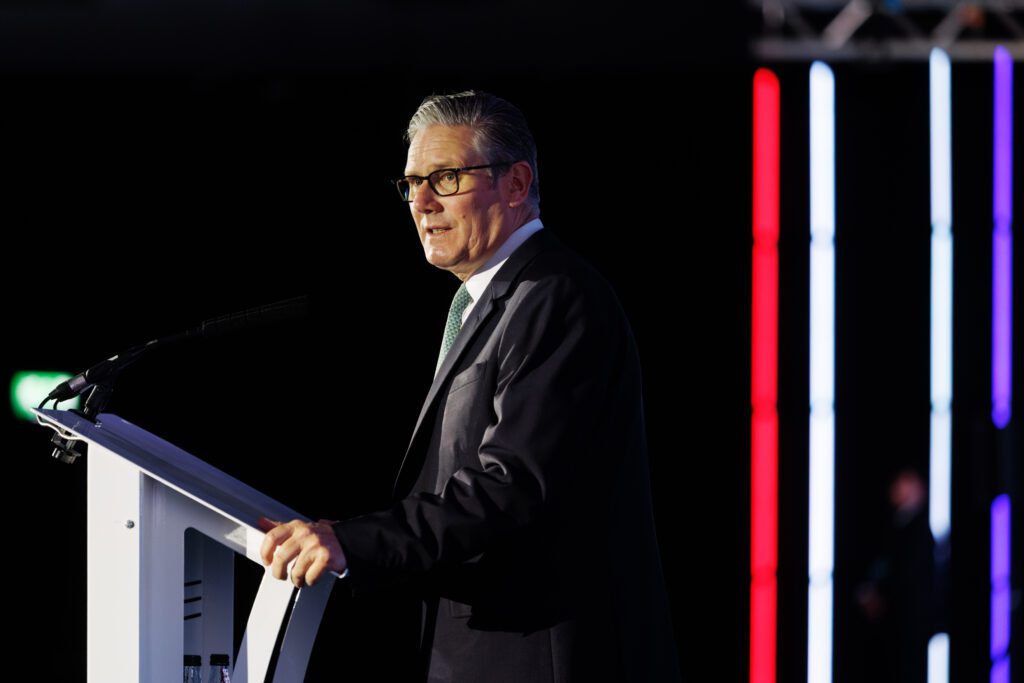
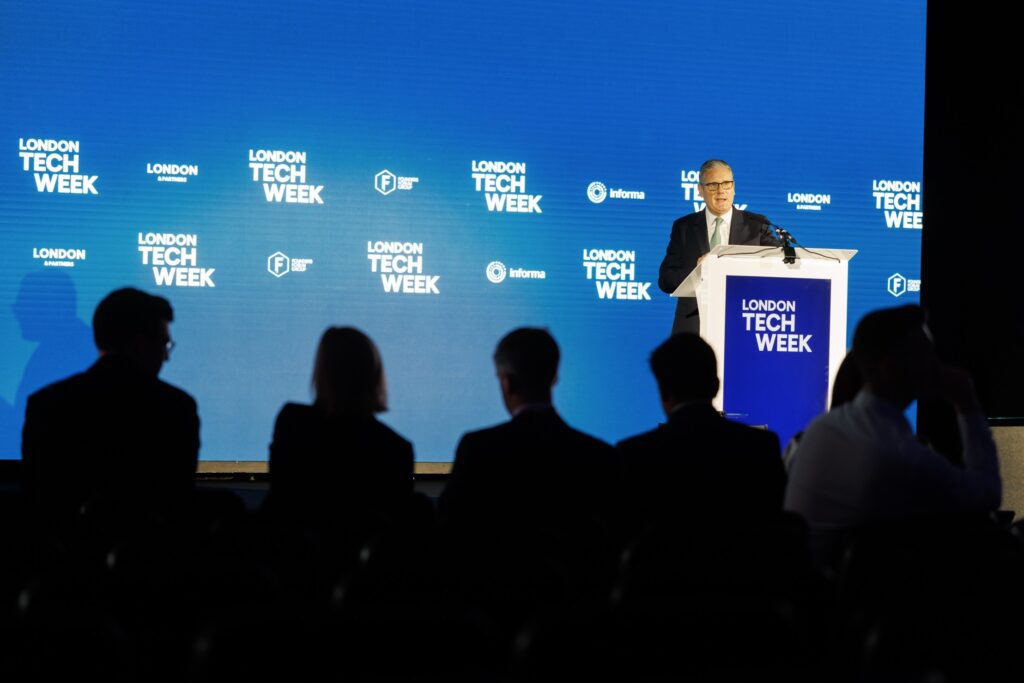
Prime Minister Sir Keir Starmer has used his London Tech Week speech to set out the Government’s ambition for Britain to lead the next phase of the artificial intelligence revolution, arguing that the country must combine innovation, safety and economic renewal.
A tech economy built on British talent
Speaking in London, the Prime Minister said the UK is already the third largest technology economy in the world and that British startups have raised close to half of all European tech investment this year. He argued that this success reflected Britain’s talent base, its growing investment environment and the Government’s approach to regulation, skills and procurement.
At the centre of the speech was a wider argument about the kind of country Britain should become as artificial intelligence reshapes the economy. Starmer rejected both passivity and a completely deregulatory approach, instead presenting a path in which Government backs British businesses, supports risk takers and ensures that the rewards of technological progress are felt across the country.
AI as local renewal, not just national growth
The Prime Minister used the example of Warrington, where a former Unilever soap factory is being transformed into an AI data centre, as a symbol of how technological change could bring new skilled jobs and investment to places that have previously felt left behind.
“We choose to make AI work for the whole of our country.” Sir Keir Starmer, UK Prime Minister
He said young people should be able to look at such sites and see “not what their community used to be…But what it can become”, linking the growth of data centres and AI infrastructure to the Government’s wider mission on local growth and national renewal.
A new sovereign compute strategy
A major announcement in the speech was a new strategy to develop sovereign compute capability. This includes a commitment of around £400 million to purchase specialist AI chips, which the Prime Minister described as a “generational opportunity” for some of Britain’s most promising startups.
The Government will also scale its testbed for AI compute systems into a national capability, designed to support British startups through a multi billion pound infrastructure programme. Starmer framed this as part of an active industrial strategy for technology, with Government acting not only as a regulator but as a partner and customer.
Public procurement was a key theme, with the Prime Minister arguing that Government should use its own buying power to support British ingenuity and give domestic innovators a better chance of competing for public contracts.
Putting working people at the centre
However, the speech was not only focused on economic opportunity. Starmer also sought to address public concerns about the speed and consequences of technological change, particularly around jobs, children’s safety and the risk that the benefits of AI are concentrated in London or among those already ahead.
“Tech should adapt to the needs of society…Not the other way around.” Sir Keir Starmer
He said the Government’s “north star” would be working people, and argued that the British public must see the benefits of AI in their own communities if the technological revolution is to carry public consent.
Child safety and tech responsibility
Child safety formed one of the strongest sections of the speech. The Prime Minister called on tech companies operating in the UK to introduce device controls that prevent children from sending and receiving sexually explicit images.
He said that if companies failed to act voluntarily, the Government would change the law, arguing that “standing by is not an option” when it comes to protecting children from online harm.
Speaking to Politics UK, Chief Executive of trade association for the AI economy in the UK, UKAI, Tim Flagg said “We welcome the Prime Minister’s announcement giving social media companies three months to remove explicit images from their platforms.
“This is an issue on which we have been calling for stronger action from Government, and we believe the direction set out today is the right one. Businesses should always act responsibly first, particularly where there is clear risk of harm. But when action is too slow, inconsistent, or the problem becomes excessive, it is right that Government steps in to set clear expectations.
“This should not be seen simply as a challenge for social media companies alone. It is a reminder of the collective responsibility we all have across industry to ensure technology is used safely, responsibly and in the public interest.
“Going forward, we hope this announcement will encourage platforms to be more proactive, to take more responsibility, act more quickly, and work constructively with Government, regulators and wider industry to prevent harmful content from spreading.”
Skills, jobs and public services
The Prime Minister also highlighted the Government’s skills agenda, saying that 1.7 million workers have already received AI training since he set a target last year to upskill 7.5 million workers by 2030. He linked this to apprenticeships, higher education reform, technical learning and the Youth Guarantee, presenting them as part of a broader response to a changing economy.
Starmer pointed to practical examples of AI already being used in public services, including faster NHS diagnoses, reduced court backlogs and quicker planning decisions. He also announced a new AI jobs tool to help people out of work find suitable roles, create CVs and move back into employment.
A choice to shape the future
The speech closed with a clear message: Britain should not simply watch the future unfold, but help build it. For Starmer, the test is whether AI can support growth, revive communities and give working people a real stake in technological change.
His central argument was that Britain can lead the AI revolution – but only if it does so with British firms at the front, public safety protected, and communities across the country able to share in the rewards.
Read the Prime Minister’s full speech here.
(Picture: Simon Dawson/No 10 Downing Street)