



Steve Yemm MP
Member of Parliament for MansfieldSpeaking at the UKAI and Curia Healthcare and Life Sciences Showcase in Parliament, Steve Yemm MP argued that artificial intelligence can help transform the NHS, but only if the system is ready to adopt and scale what already works.
Speaking at the UKAI and Curia Healthcare and Life Sciences Showcase in Parliament, I was struck by both the scale of opportunity in front of us and the urgency of the challenge facing our health system.
Across healthcare, life sciences and artificial intelligence, the UK is home to extraordinary innovation. We are seeing technologies that can improve patient outcomes, support clinical decision making, reduce waiting times and help ease the pressures facing the NHS. Used well and appropriately, artificial intelligence can help address some of the most difficult problems in healthcare, from workforce shortages to productivity, access and the growing demand on services.
But potential is not enough.
From pilots to system change
Too often in this country, promising healthcare innovations remain trapped at the pilot stage. We see individual examples of excellence. We see brilliant companies proving that their technologies work. We see NHS teams finding better ways to deliver care. Yet too many of these examples remain isolated, rather than becoming part of normal practice across the system.
What we need now is not simply more innovation. We need system change that allows proven innovation to be adopted, integrated and scaled.
That was the central purpose of the UKAI and Curia showcase in Parliament: bringing together parliamentarians, NHS leaders, regulators, innovators, industry and academia to consider how we move from examples of success to wider transformation. The conversation could not have been more timely.

The NHS is under intense pressure. Patients are waiting too long. Staff are stretched. Demand continues to rise. These are not abstract policy challenges. They affect families, communities and clinicians every day.
Artificial intelligence and digital healthcare will not solve every problem, but they can play an important role if we focus on the conditions that allow them to succeed. That means looking beyond the technology itself. It means getting procurement right. It means ensuring regulation protects patients while enabling responsible innovation. It means investing in skills, infrastructure and public trust. It also means asking whether the NHS is ready to adopt what already works.
Parliament has an important role to play in this. We must help create the environment in which innovation can flourish safely and responsibly. We need to support regulatory clarity, encourage investment, strengthen skills and ensure that new technologies are deployed in ways that deliver real benefits for patients.

Taking healthcare innovation beyond London and the South East
This is especially important for places like Mansfield, the East Midlands and other parts of the country that are too often overlooked in national conversations about life sciences and digital health.
If we are serious about spreading economic prosperity across the UK, healthcare innovation cannot be concentrated solely in London and the South East. Growth in life sciences, medical technology and artificial intelligence must be linked to local strengths, local partnerships and local health needs. That means creating high skilled jobs, supporting universities and research institutions, backing innovators and ensuring that communities across the country benefit from the future of healthcare.
The East Midlands has a real role to play in this agenda. With strong academic institutions, local health partnerships and growing innovation capability, the region can help demonstrate how healthcare technology can improve patient outcomes while also supporting economic growth.
The challenge now is to connect the different parts of the system. Industry brings ideas, technology and pace. The NHS brings clinical expertise, patient relationships and the realities of delivery. Academia brings research, evaluation and skills. Regulators bring safety and trust. Parliament can help bring these perspectives together and ensure the barriers to adoption are properly understood.
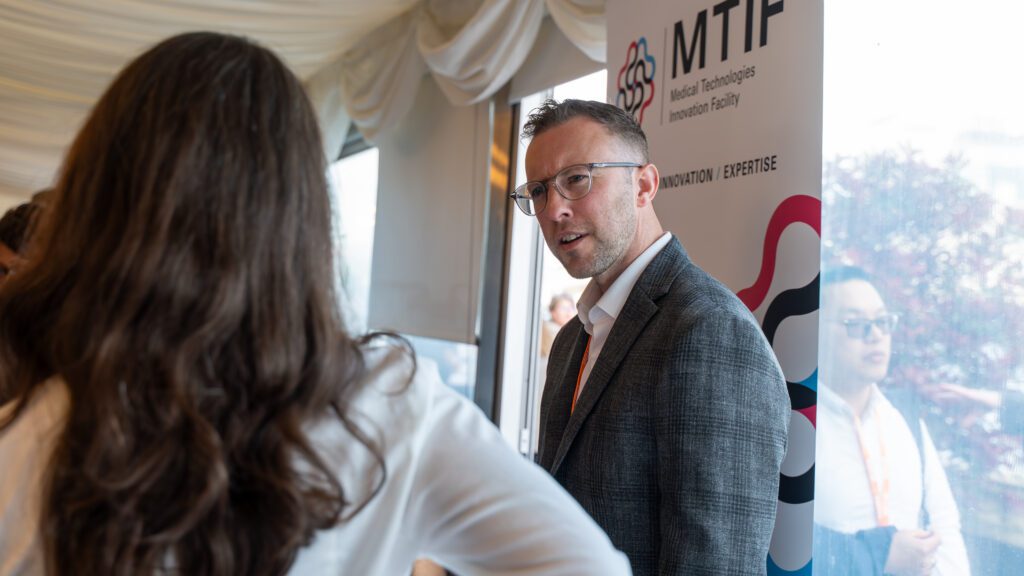
That is why the UKAI and Curia Healthcare and Life Sciences Showcase in Parliament matters. It created space for those different voices to come together, celebrate what is already working and focus on what needs to change.
The UK has world class strengths in healthcare, life sciences and artificial intelligence. We should be ambitious about what these strengths can deliver. But ambition must now be matched by action.
We need to move from pilots to adoption, from isolated examples to system change, and from promising innovation to real benefits for patients across the country.