
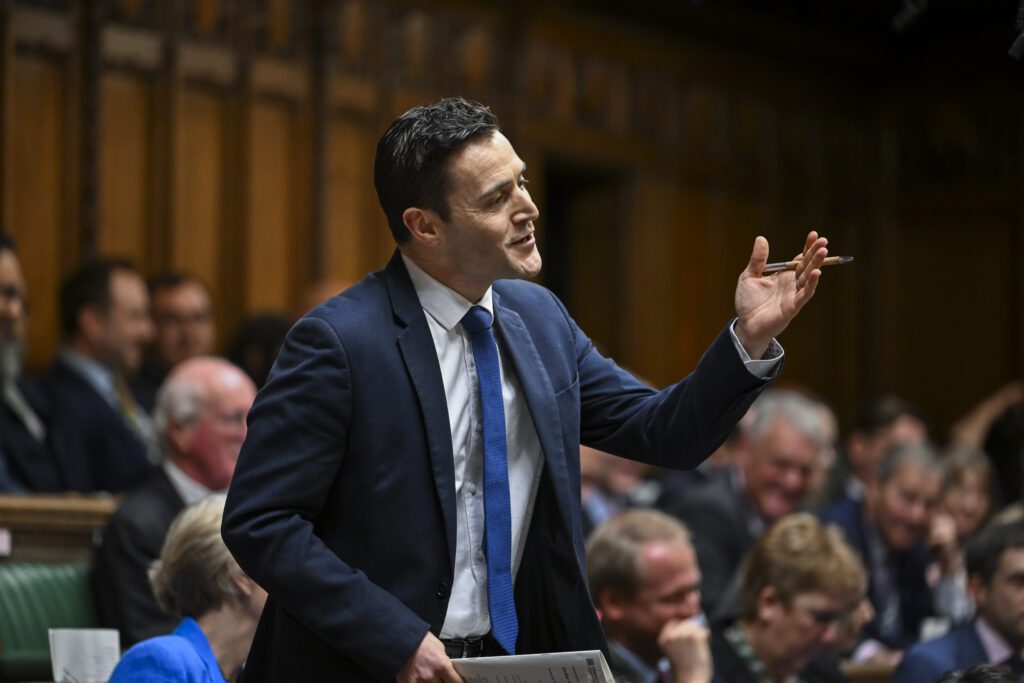

Dr Luke Evans MP
Shadow Minister for Health and Social CareDrawing on his experience building a large audience on TikTok, “TikTok MP” Luke Evans argues that politicians must engage seriously with the platform to explain Parliament, counter misinformation and rebuild trust, making the case that responsible short-form communication is now essential to modern democratic life.
In politics, you have to meet people where they are. For decades, that meant appearing in village halls, touring the television studios, writing in local newspapers and, later, posting on Facebook and Twitter. Today, for a growing number of people, that place is TikTok.
Why Politicians Can’t Ignore TikTok
Since I was elected in 2019, I’ve been using TikTok. I’ve built an audience of over 52,000 people, 1.3 million likes, and an average of around 500,000 views every 60 days on my page. My motivation was simple. If large parts of the public consume information on TikTok, politicians cannot afford to ignore it. Doing so risks leaving a gap where misinformation, confusion, or distrust can grow unchecked.
TikTok is often misunderstood in Westminster. It’s sometimes dismissed as entertainment rather than communication, or as a space dominated by trends rather than substance. But in my experience, it’s better understood as a platform built around interaction. Unlike traditional broadcast media, it invites questions, responses, and conversations with the public in real time. That creates both opportunity and responsibility.
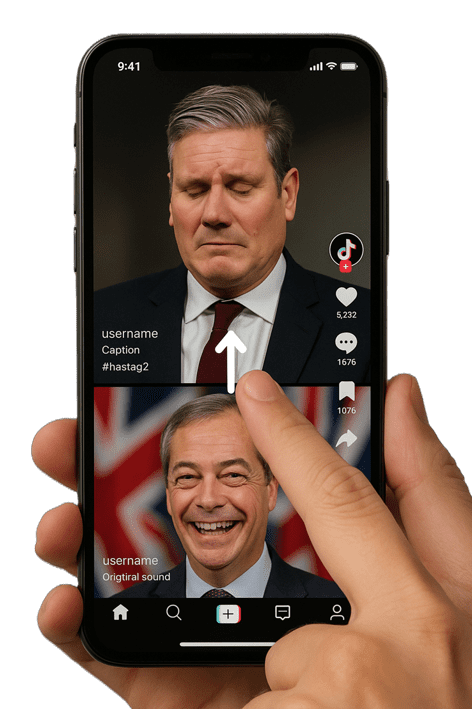
TikTok MP : Authenticity Over Polish
One of the most powerful aspects of the platform is its demand for authenticity. Highly polished political messaging tends not to work well. People respond instead to straightforward explanations and genuine engagement. That has shaped how I use the platform.
Much of my content focuses on explaining how Parliament works, why votes happen, what legislation means in practice, and how decisions are made. These are not always topics that cut through in the traditional media, but on TikTok, they often prompt thoughtful questions and discussion.
This matters because democratic institutions can feel distant or opaque to many people. When someone can ask a question directly and receive an explanation in plain language, it reduces that distance. It makes politics feel more accessible, which is one of the platform’s greatest strengths.
Transparency is another. Social media, including TikTok, allows politicians to explain decisions quickly and directly without relying on intermediaries. The ability to quickly convey your message can help build understanding, even when people disagree with it. In an age where trust in institutions cannot be taken for granted, developing a connection with the public is essential.
But the same features that create opportunity also create risk.
The Risks of Algorithmic Politics
TikTok’s algorithm amplifies content quickly and unpredictably. That can be positive when accurate information spreads widely. But it can be damaging when misinformation does the same. Like other social media platforms, TikTok rewards content that provokes strong reactions, which does not always align with careful policy discussion.
There is also a cultural risk for politics itself. Short-form communication encourages simplification. Complex policy debates do not always translate easily into sixty seconds, or less, of video. There is a balance between clarity and oversimplification, and politicians need to be conscious of that tension.
Another challenge is the broader online environment in which political content sits. Alongside constructive debate, there is exposure to harmful or extreme content. This is not unique to TikTok, but the speed and scale of modern platforms make it a real concern, particularly for younger audiences who may be encountering politics for the first time.
For these reasons, engagement with TikTok cannot be casual or unthinking. It requires judgement, responsibility, and a willingness to engage constructively, balanced against acting performatively. The goal should not be to chase trends alone, but to communicate clearly, using trends as a vehicle to do so – and this itself is a tough skill to master!
What is striking is how quickly the political landscape on TikTok is evolving. When I first joined, relatively few MPs were active on the platform. That’s changing rapidly. More and more parliamentarians, particularly Labour MPs, are establishing a presence there.
A New Layer of Democratic Communication
That shift reflects a broader reality about political communication. Each generation develops its own media habits. Radio did not replace public meetings. Television did not eliminate newspapers. Social media has not removed the importance of face-to-face engagement. Instead, each new medium adds another layer to how politics is discussed and understood.
TikTok is part of that continuing evolution. It may not look the same in five years’ time. The platform itself may change, and the way political content is consumed will certainly continue to evolve. It is impossible to know exactly what the digital landscape will look like by the time of the next General Election.
What is clear, however, is that this form of communication is not going away. Short-form video, interactive platforms, and direct engagement between politicians and the public are now established features of modern democratic life.
Ignoring that reality does not protect politics from the risks of misinformation or online influence. In fact, it can make those risks greater by leaving the space to others. Responsible engagement offers a chance to provide accurate information, explain democratic processes and demonstrate transparency in real time.
My experience on TikTok has reinforced a simple lesson. When politicians are willing to engage openly, explain decisions clearly and respond to questions honestly, people are prepared to listen. They may not always agree, but they value the effort to communicate.
Responsible Engagement in the Digital Public Square
The challenge for politics is not whether to engage with platforms like TikTok, but how to do so thoughtfully. It means recognising both its benefits and weaknesses. It means understanding that authenticity matters more than production value. It means accepting that communication is two-way, rather than one-directional.
Above all, it means being willing to learn. The digital public square continues to evolve, often faster than political institutions themselves. Those who are prepared to explore it responsibly can strengthen democratic participation. Those who ignore it risk falling behind. That doesn’t mean I get it right all the time. I am prepared to try and fail, but that in itself is authentic on TikTok.
TikTok is not a replacement for traditional political engagement, but it is becoming an important complement to it. While the future of political communication will continue to change, the need to meet people where they are remains constant. At this moment, for millions of people across the UK, that place includes TikTok.
This article features in the new edition of ChamberUK. Our parliamentary journal.
Photo Credit: Office of Dr Luke Evans