

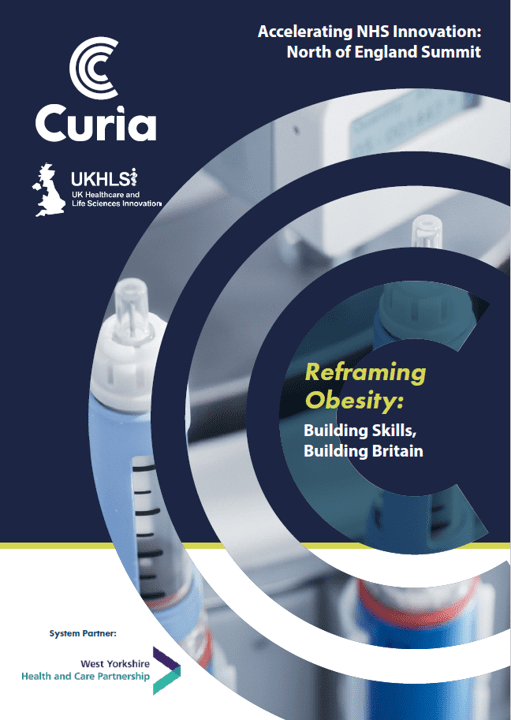
Obesity remains one of the most pressing health issues globally, yet despite the significant attention it has garnered, the prevalence continues to rise, exacerbating chronic diseases, health inequalities, and placing immense pressure on the healthcare system. However, according to a recent report from the Accelerating NHS Innovation: North of England Summit and the Obesity Sprint in West Yorkshire, published by policy institute Curia the solution lies not in isolated efforts but in a comprehensive, coordinated system approach.
Key Findings
Obesity is a complex, chronic, and relapsing condition that demands a new perspective. Intended for pathway system leaders across the NHS, the report emphasises the importance of reframing obesity as a disease influenced by biological, psychological, and environmental factors, rather than just an issue of personal responsibility. The Obesity Sprint, facilitated by Curia’s Health, Care, and Life Sciences Research Group under the leadership of Rt Hon Andrew Stephenson CBE, and supported by Head of Improving Population Health at West Yorkshire Health and Care Partnership, Emmerline Irving and Obesity Programme Manager, Lisa Buchanan, brought together a wide range of stakeholders to address the fragmented approach to obesity care across the UK.
A Fragmented System
Despite numerous initiatives, obesity policy in the UK has suffered from fragmentation.
The system is often disconnected – across national and local priorities, between prevention and treatment, and even across different sectors responsible for obesity management. This lack of integration results in an insufficient response to a growing issue. As outlined in the report, the issue is not a shortage of ideas or expertise, but rather the inability to act cohesively on what is already known about the condition.
“The challenge now is not to generate more discussion, but to translate what we already know into action,” says Irving. The report stresses the urgent need for national leadership and a consistent policy framework, particularly across Integrated Care Systems (ICSs).

Addressing the Root Causes: The Dual Approach
Participants in the Sprint identified two critical pathways in addressing obesity: prevention and treatment. Prevention focuses on the broader societal and environmental factors that contribute to obesity, such as food systems, urban planning, and public health policies. On the other hand, treatment requires a more personalised, structured approach for those already living with obesity, recognising the complexity of the condition and integrating long-term clinical care, psychological support, and behavioural interventions.
“Obesity should be recognised as a chronic, relapsing disease influenced by a complex interaction of biological, psychological, and environmental factors.” Rt Hon Andrew Stephenson CBE, Chair, Curia, Health, Care, and Life Sciences Research Group

The Stigma Barrier
Stigma surrounding obesity emerged as one of the most significant barriers to progress. Buchanan found when commissioning the More Than Weight 2025 report, that individuals reported avoiding social situations, workplaces, and even healthcare settings due to the stigma associated with their weight. “People with lived experience and the workforce are not getting the support needed. 74 per cent of participants living with obesity said they felt misunderstood by healthcare professionals, with only 35 per cent of those healthcare professionals reporting that they felt adequately trained to have sensitive conversations about weight.”
Irving highlighted the importance of changing the narrative surrounding obesity: “Conversations about obesity do not only happen in clinical environments. They happen in schools, workplaces, and communities.” To break the cycle, stigma must be addressed at all levels – through cultural change, a unified public messaging framework, and embedding trauma-informed care within services.
Emerging Treatments: GLP-1 and Metabolic Medicines
The report also covers the potential impact of emerging metabolic treatments, particularly GLP-1 medicines. These therapies represent a significant shift in obesity care, offering patients a clinical tool to manage their condition. However, experts caution that these medicines should not be viewed as a standalone solution. They must be integrated into holistic care pathways that include psychological and behavioural support. The success of these treatments depends on their effective integration into the healthcare system.
“Metabolic medicines must be integrated within comprehensive care pathways that include behavioural support, psychological care, and long-term clinical management.”
Emmerline Irving, Head of Improving Population Health, West Yorkshire Health and Care Partnership
System Reform: What Must Change
The Obesity Sprint report presents a comprehensive set of recommendations to address the obesity crisis. These recommendations centre on three main areas: national coordination, workforce capability, and the integration of metabolic medicines into holistic care pathways.
- National Coordination: Establishing a unified national obesity strategy is crucial. This strategy would recognise obesity as a chronic, relapsing disease and align policies across health, planning, education, and economic sectors.
- Workforce Development: Strengthening workforce education across sectors is necessary to ensure that healthcare professionals are equipped to address the complexity of obesity with compassion and expertise. This includes integrating trauma-informed care into professional training and ensuring that workforce capabilities are aligned with the latest scientific understanding of obesity.
- Metabolic Medicines: As access to GLP-1 therapies and other metabolic treatments grows, it’s essential to ensure equitable access and incorporate these treatments into comprehensive care pathways that include multidisciplinary support and long-term follow-up.
The Path Forward
For the UK to move forward in addressing obesity, a comprehensive, system-wide approach is necessary – one that integrates prevention with treatment, removes stigma, and aligns public policy with clinical delivery. While regional efforts, such as those in West Yorkshire, are paving the way for a more integrated approach, the report makes it clear that the key to lasting change lies in coordinated national leadership and a commitment to system-wide reform.

Final Thought
To create a system that truly supports people living with obesity, we must move beyond fragmented policies and embrace a unified, compassionate, and evidence-based approach. The opportunity is significant – what remains is the willingness to act on the insights we already have.
This report will be disseminated to leads across the NHS as they develop their neighbourhood commissioning pathways.
To find out more about this report and the work of Curia, please contact Chair, Rt Hon Andrew Stephenson CBE at Andrew.stephenson@curia.com.
Curia will be hosting their annual obesity summit in Parliament in June, to find out more and register, visit: www.chamberuk.com/events.