


Richard Kilpatrick
Head of Campaigns at the European MovementNews this week that the Government plans to use secondary legislation to dynamically align with certain EU standards has stirred debate. Yet aligning with Europe and evolving Single Market rules is exactly what many UK businesses have been calling for, and secondary legislation is the most flexible way to achieve it. It allows ministers to amend rules where it is in the national interest.
So-called “Henry VIII clauses” are a longstanding feature of the UK’s legislative process, enabling ministers to amend or repeal primary legislation without passing a new Act. Designed for responsiveness, they mean Parliament does not need to legislate afresh each time the EU updates its rules.
A Familiar Political Backlash
Cue familiar claims of “tyranny”, “lack of scrutiny”, and “Brexit by the back door”. Before critics rush to condemn Keir Starmer for deploying these powers, it is worth recalling how frequently they have been used in recent years.
Henry VIII powers were used extensively to deliver Brexit itself. The Retained EU Law (Revocation and Reform) Act 2023 granted ministers sweeping authority to revoke, replace or restate EU-derived laws. Secondary legislation was then used to determine the future of hundreds, potentially thousands, of measures across nearly 300 policy areas, from workers’ rights to environmental protections and food standards. This occurred alongside the abolition of the European Scrutiny Committee in 2024, removing Parliament’s dedicated mechanism for overseeing EU-related matters.
The Same Tools, A New Direction
Now the same legislative tools are set to facilitate alignment with EU standards in areas such as food and drink imports, access to the European electricity market, and emissions trading. More sectors are likely to follow as the Government builds on its “reset” with the European Union and explores future access to the Single Market and its 460 million consumers.
Secondary legislation is the most practical way to keep pace with evolving regulatory frameworks. It offers the flexibility to respond quickly without overloading the primary legislative timetable. Crucially, the enabling primary legislation will still pass through Parliament, allowing scrutiny of the mechanism itself, as in 2023.
Scrutiny and the Economic Case
Supporters of closer alignment should not dismiss concerns about oversight. Henry VIII clauses are typically subject to the affirmative procedure, requiring debate and approval in either the House of Commons or the House of Lords. That provides a higher level of scrutiny than applies to many statutory instruments.
Greater scrutiny should be welcomed, not resisted. Rather than relitigating old arguments, ministers should use this moment to strengthen parliamentary oversight. That could include reinstating the European Scrutiny Committee and working more closely with groups such as the All-Party Parliamentary Group on Europe to ensure Parliament plays a full role in shaping the UK’s evolving relationship with Europe.
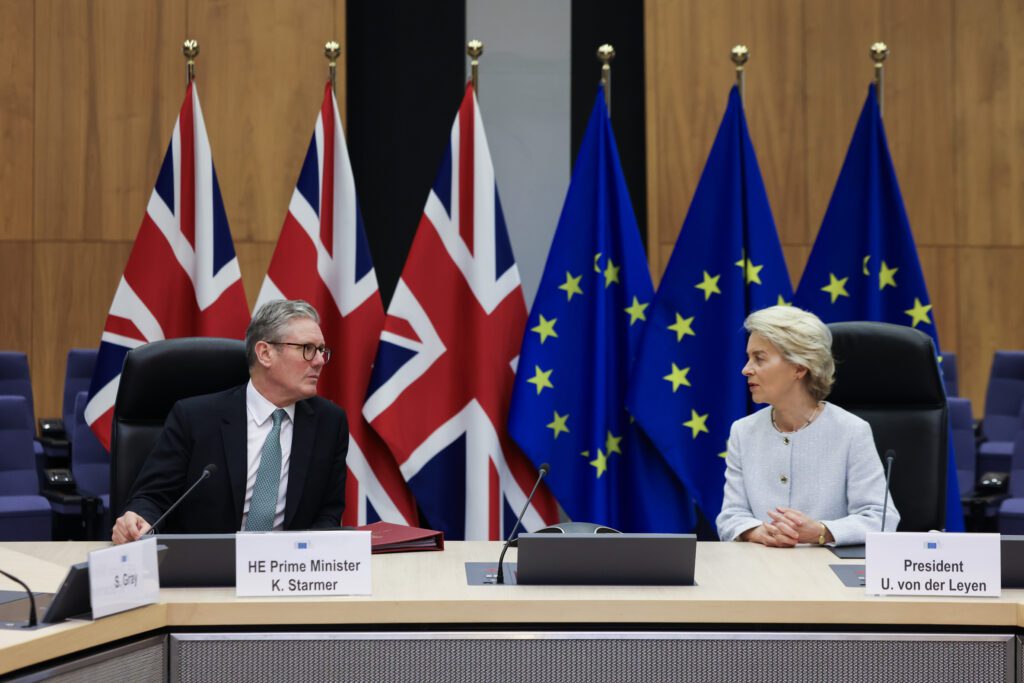
Dynamic alignment is not just a constitutional issue; it is an economic necessity. Red tape remains a significant barrier for UK businesses, particularly small and medium-sized enterprises that form the backbone of the economy. For many, it directly constrains trade. Closer alignment could unlock access to the Single Market and enable more frictionless trade with European partners.
It must also be recognised that these are “gateway drugs”: the UK–EU reset depends on much more than easier trading with the bloc and eliminating unnecessary red tape. Youth mobility, Erasmus and Horizon have never been headline-grabbers, but they are important, and offerings of reconciliation: the easy pickings that demonstrate a willingness to leave the egregious absolutism of the “hard Brexit” behind. It was never a requirement. What can follow, if that hand is played carefully, is a boost to the economy that seemingly cannot be achieved by any other means, and which is needed from any Chancellor willing to take the coldest look at what needs to be done.
In the most pragmatic terms, from energy, to defence to trade, whatever needless barriers to growth can be undone, whatever opens the UK up once again to investment and trade, cannot come a moment too soon. At the moment, one option is staring us all in the face.
Photo Credit: Alexandre Lallemand (Unsplash)