
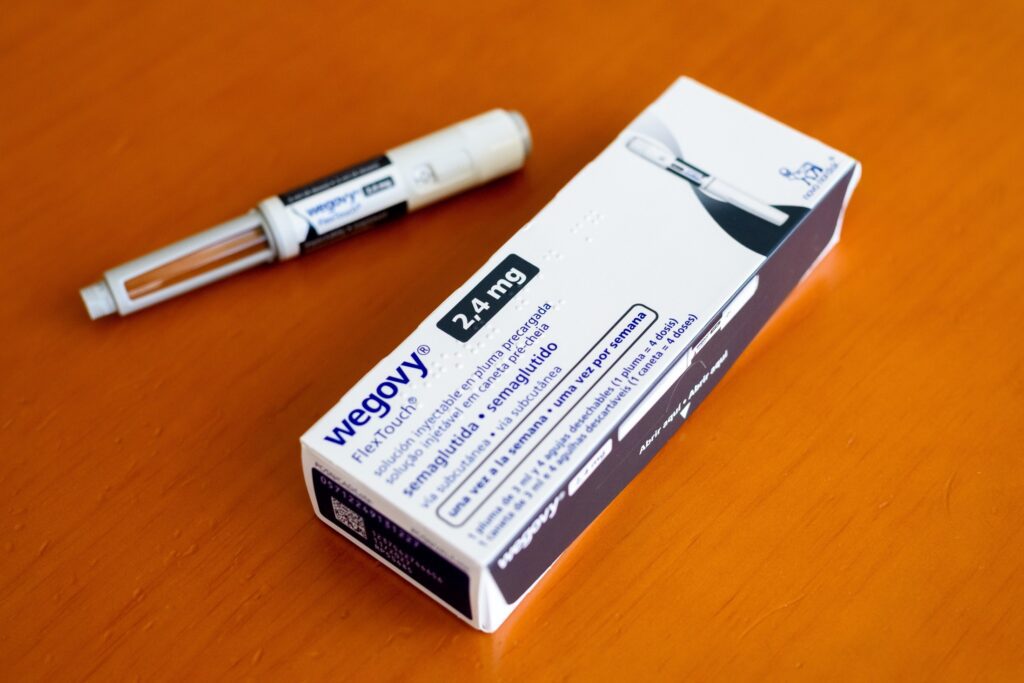
Weight-loss jabs aren’t the breakthrough – understanding who they work for, and building the system around that, is.
A new study outlined in the Nature journal has reignited debate around weight-loss medications – not by questioning whether they work, but by asking a more important question: who do they work for, and why?
The research, drawing on data from 15,000 patients, suggests that genetic variation can influence how effectively individuals respond to drugs such as Wegovy® and Mounjaro®. Some patients lost up to 30% of their body weight, while others saw minimal benefit. Certain genetic variants were also linked to more severe side effects.
At first glance, this appears to be a scientific insight into personalised medicine. But in reality, it points to something much bigger: the UK is entering a new phase in its approach to obesity – one that moves beyond access to treatment and towards understanding outcomes, variation, and system impact.
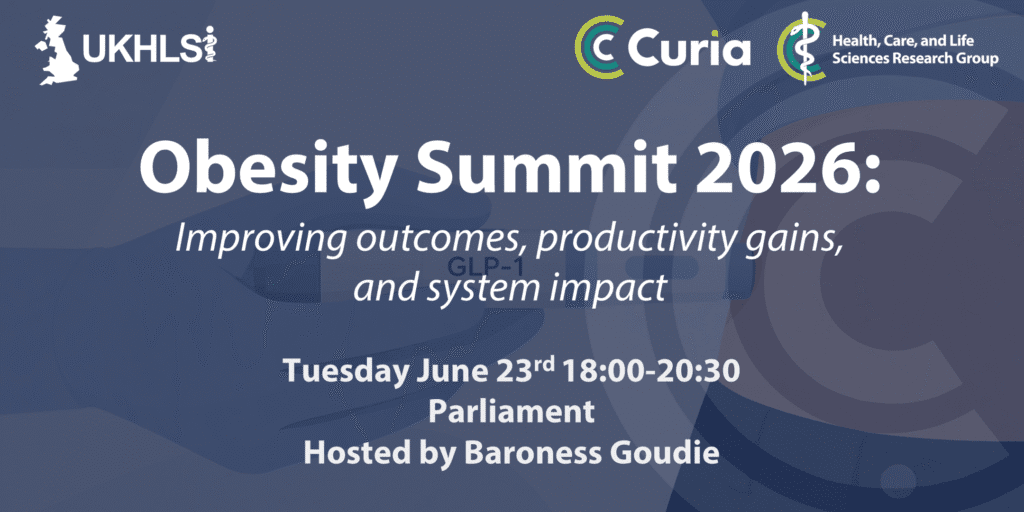
That shift will sit at the centre of the upcoming Curia Obesity Summit on 23 June 2026.
The end of the “access debate”
Over the past two years, the policy conversation has largely focused on expanding access to anti-obesity medications. The NHS has begun to roll out treatments in targeted cohorts, while private uptake has surged – with an estimated 1.6 million people in the UK trying weight-loss drugs in the past year alone.
But access alone is no longer the primary issue.
As the study highlights, outcomes vary widely. Genetics may play a role, but experts are clear that behavioural, clinical and system factors remain the dominant drivers of success. In other words, medication is only one part of a much more complex pathway.
This reflects a broader conclusion emerging from national policy discussions: the UK does not lack treatments – it lacks delivery models that ensure those treatments lead to sustained health outcomes.
From weight loss to whole-system outcomes
The Curia Obesity Summit builds directly on this insight.
While 2025 focused on access, pharmacological innovation and national strategy, the 2026 summit will focus on implementation: how to translate treatment into measurable, long-term outcomes across the health system and economy.
This means shifting the conversation in several critical ways:
- from short-term weight loss → long-term health, relapse prevention and “living well”.
- from medication in isolation → integrated treatment pathways combining behavioural, clinical and digital support.
- from national policy ambition → delivery at Integrated Care System (ICS) and neighbourhood level.
- from activity-based commissioning → outcomes, equity and economic value.
The implication is that success should no longer be measured in kilograms lost, but in reduced NHS demand, improved workforce participation, and sustained patient wellbeing.
Speaking to Politics UK, former Head of Population Health at West Yorkshire Health and Care Partnership and Co-Founder & Director at We Are ATR, Emmerline Irving said “If we want better outcomes, we need to view obesity through a different lens, starting with what has happened to someone, not simply what is wrong with them. GLP-1 medicines are one important tool, but their real value comes when they sit within a holistic, trauma-informed pathway that addresses root causes and connects people to the support that best meets their needs.”
Irving is working with the team at Curia and UK Healthcare and Life Sciences Innovation on the production of UK Healthcare and Life Sciences Innovation’s Obesity Summit with Curia in Parliament in June.
The missing layer: why variation matters
The genetic findings reported this week are significant not because they offer a complete explanation, but because they reinforce the need for more sophisticated, personalised approaches to care.
If different patients respond differently to the same treatment, then a one-size-fits-all pathway is unlikely to deliver consistent results.
Commenting on the findings, former Deputy National Medical Director at NHS England, Professor Mike Bewick said, “The real promise of GLP-1 therapies lies not just in treatment, but in prevention, especially when combined with lifestyle change and informed by genetics to identify who will benefit most.”
Professor Bewick will be facilitating UK Healthcare and Life Sciences Innovation’s Obesity Summit with Curia in Parliament in June.
The summit will explore how to address this through:
- targeted cohort selection – identifying which patients will benefit most
- integrated triage models – combining biological, psychological and social factors
- linked data and real-world evidence – moving beyond clinical trials to
- understand long-term outcomes
This is where the concept of precision medicine becomes operational rather than theoretical.
Beyond biology: trauma, stigma and system design
Crucially, the emerging evidence also highlights what the genetic data does not explain.
As clinicians have repeatedly emphasised, outcomes are shaped not just by biology, but by engagement, adherence and trust in the system. These are influenced by stigma, prior experiences of care, and the way services are designed.
The summit will therefore place a strong emphasis on trauma-informed pathways – recognising that:
- stigma and shame can reduce engagement with treatment.
- unsafe or dismissive clinical interactions can undermine outcomes.
- long-term adherence requires trust, continuity and support.
This represents a fundamental shift from a purely biomedical model to a whole-person, system-based approach.
Building the evidence the system actually needs
One of the most consistent challenges identified across policy and clinical discussions is the lack of robust, long-term data.
While clinical trials demonstrate average weight loss, they do not yet fully capture:
- long-term health outcomes and comorbidity reduction.
- relapse rates and maintenance of weight loss.
- impact on NHS utilisation.
- workforce and productivity gains.
The Curia summit will aim to build consensus around the need for a national outcomes framework and linked datasets that connect NHS, local government and private sector data.
Without this, policymakers and HM Treasury lack the evidence required to justify large-scale investment and system redesign.
Obesity as an economic strategy
Perhaps the most important shift is conceptual.
Obesity is no longer being framed solely as a health issue. It is increasingly recognised as a major driver of economic inactivity, workforce attrition and long-term public spending.
This reframing – from healthcare cost to economic opportunity – will be central to the summit’s discussions.
The question is no longer whether weight-loss treatments work, but whether the UK can design a system that:
- improves population health.
- reduces long-term demand on the NHS.
- supports people to remain in or return to work.
- delivers measurable fiscal value.
From insight to action
Reporting on the findings highlight a critical moment in the evolution of obesity treatment: we are beginning to understand variation in outcomes, but we have not yet built systems that respond to it.
The Curia Obesity Summit is designed to close that gap.
By bringing together policymakers, NHS leaders, clinicians and industry, the aim is to move from insight to implementation – developing practical models for integrated care, data-driven commissioning and long-term outcome measurement.
Because the next phase of obesity policy will not be defined by new drugs alone.
It will be defined by whether the system can turn those drugs into sustained, equitable and economically meaningful outcomes.