

Claudia Kenyatta and Emma Squire
Co-CEOs – Historic EnglandIn this timely case for “good growth”, Claudia Kenyatta and Emma Squire, Co-CEOs of Historic England, draw on new research to argue that everyday historic buildings are not nostalgic luxuries but vital emotional infrastructure that boosts wellbeing, attracts investment, unlocks housing and helps communities thrive.
Walk through a place – a town by the sea, or a city when it’s quieter than usual – and you can’t help but notice its architecture. A row of Georgian houses. A Victorian shopfront. A cabmen’s shelter. A weathered pub sign. Without knowing why, you feel something. Something good.
That response, it turns out, is far more than nostalgia. According to new research from Historic England and the University of Glasgow, our emotional connections to historic places are vital to our mental health and wellbeing – and they’re quietly helping to shape the economic geography of the nation.
The Evidence is Clear
The report, Connecting People and Place: Valuing the Felt Experiences of Historic Places, presents findings that should give pause to anyone in the sphere of planning, development, or regeneration. Historic places possess restorative qualities comparable to natural green spaces. That Victorian pub or Edwardian cinema isn’t just pleasing to the eye – it’s doing genuine psychological work.
The numbers back this up. A new poll commissioned by Historic England found that seven in ten respondents consider local historic buildings important to their quality of life. Almost two-thirds said being in or around historic buildings positively affects their wellbeing. Perhaps most surprising: young adults aged 25–34 reported the strongest positive impact, with 70 per cent saying historic buildings boost their wellbeing. This is not, as some might assume, merely the preserve of older generations.
Emotional Infrastructure
What the research reveals is something many people, from urban planners to economists, have often struggled to quantify: the emotional infrastructure that makes a place feel like somewhere worth being.
Everyday historic places provide what the researchers call “permanence” – a sense of stability and continuity that helps people feel secure. In an era of constant change, this matters a great deal. We’re not talking about castles or country houses, but the ordinary historic buildings woven into the fabric of a place. The familiar clock tower, the seaside pier you visited regularly as a child, the corner pub that’s served the same community for generations, the village church – these aren’t just relics. They’re anchors that instil a sense of pride and belonging in people.
The flipside is equally illuminating. When shown images of historic buildings in disrepair, 56 per cent of poll respondents reported feeling sad. One in five felt ashamed. The collective grief that followed the demolition of the Crooked House pub in Staffordshire, or the felling of the Sycamore Gap tree at Hadrian’s Wall, wasn’t sentimental overreaction. It was a genuine response to loss – loss of shared landmarks that helped communities understand who they are.
It is no surprise, then, that communities are working hard to save local historic landmarks. Take the Grade II* Winter Gardens in Morecambe. In one of the country’s most economically challenged coastal communities, volunteers refused to accept the loss of the Winter Gardens, which sits on the seafront. After decades of decay, a community trust stepped in, beginning its revival as a cultural venue and skills hub. With a cash injection through the Heritage at Risk Capital Fund, the trust is saving a beautiful theatre built in 1897, helping to boost civic pride and the local economy.
Heritage is an Economic Asset
Historic places make a substantial and sustained contribution to economic development. Heritage-driven domestic tourism attracted more than 225 million visits in 2023, generating £16 billion in visitor spending. Creative industries, which contributed £124 billion to the UK economy that same year, actively seek out locations with architectural character and aesthetic quality. They’re not choosing bland business parks, they’re choosing places with history.
But the economic power runs deeper, because the research suggests that emotional connections to historic places drive where people choose to live, work, visit and invest. This is the ripple effect that is transforming sentiment into spending power, and spending power into local prosperity and growth.
A Contribution to Housebuilding
The Government has set an ambitious milestone of 1.5 million new homes this Parliament. Heritage has a role to play here too. Historic buildings across England could provide 670,000 new homes through sensitive conversion and adaptive reuse. These are spaces with character, embedded in communities, and often in locations where people want to live. Reusing historic buildings can also help local authorities achieve their Net Zero targets because the greenest building is the one that already exists.
As part of the High Street Heritage Action Zones programme, which ran in more than 60 places across England, a number of historic buildings were brought back into use for communities. For example, in Hastings in Sussex, a former newspaper office, the Observer building, was restored. It now houses space for 12 residential units, a gym, a cafe and events space, a creative technology hub, and a board room.
In Oswestry in Shropshire, long-term vacant shop premises on Cross Street were repurposed – bringing ground-floor units back into retail use, including the installation of newly designed timber shop fronts, and developing the upper floors into new homes, creating nine units.
The blueprint from this regeneration programme, which saw local authorities come together with partners, can be used to help high streets adapt and remain a fixture in communities.
The Devolution Opportunity
This research comes at an important time as the English Devolution and Community Empowerment Bill progresses through Parliament.
We encourage local leaders to include heritage in their planning and development strategies – and we’re here to support them. Mayors and combined authorities with greater powers over planning, regeneration, and economic development can protect and repurpose historic buildings as drivers of growth, while creating places where people can live happier, healthier lives.
We’re also here to support others with an interest and role in placemaking and local growth, such as local councillors, and those working in local authorities and Business Improvement Districts. Our regional teams have strong working relationships with many councils up and down the country and regularly meet MPs in their constituencies to discuss how heritage can support regeneration and local pride. Many council leaders and their teams are already alive to this potential – they recognise that heritage can generate good growth and that it is valued by people from all backgrounds.
Our job, alongside the wider heritage sector, is to ensure that heritage is recognised and treated as an asset by all local authorities, as well as by developers and their investors.
This article features in the new edition of ChamberUK. Our parliamentary journal.
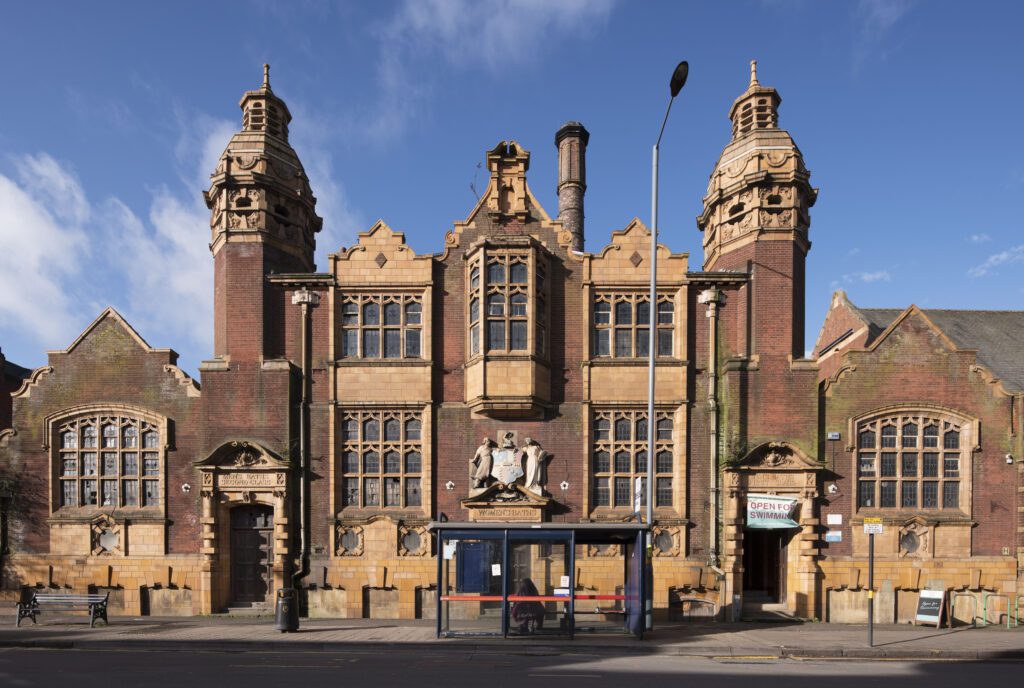
Featured image is of Moseley Road Baths by Historic England. Funding for repairs included £657,000 from the World Monuments Fund, Historic England and Birmingham City Council.