
The Government’s new traffic light ratings for council road maintenance announced this weekend have been widely welcomed as a long overdue step towards transparency. But MPs and councillors are warning that, without a far stronger focus on preventing potholes before they form, the policy risks entrenching the very cycle of decline it claims to break.
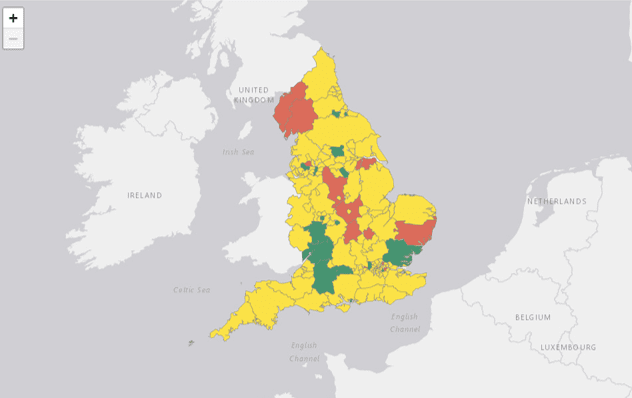
The new interactive map, published by the Department for Transport, grades 154 local highway authorities red, amber or green based on road condition, spending and adherence to best practice. Ministers argue that the system, backed by £7.3 billion of funding, will expose poor performance, reward councils that plan ahead and drive improvement nationwide.
Few in local government disagree with that principle. The concern is not the ratings themselves, but what comes next.
Fixing potholes is not the same as stopping them
While the Government has emphasised record funding and accountability, many MPs and council leaders argue that the policy remains framed around repairing visible damage rather than tackling the underlying causes of road failure.
Even in the press release announcing the scheme, references to “fixing potholes” far outweigh those to long-term asset management. Councillors point out that without sustained investment in resurfacing, drainage and preventative treatments, councils are condemned to repeatedly patch the same stretches of road at far greater long-term cost.
Welcoming the new map, Transport Secretary Heidi Alexander said: “For too long, drivers have paid the price because our roads were left to deteriorate. I have heard time and again their frustration on footing the bill because they hit a pothole – money they should never have to spend in the first place.
“We’ve put our money where our mouth is, increasing the funding for local highway authorities with £7.3 billion to fix roads and given them the long-term certainty they have been asking for. Now it’s over to them to spend the money wisely, and for the first time, we are making sure the public can see how well councils are doing in delivering the improvements they want to see in their local area.
“This government’s record investment will save drivers money on repairs, make roads safer and help restore pride in our communities.”
One senior transport spokesperson for a metropolitan authority said the ratings were “useful and fair”, but added: “You don’t get to green by filling holes faster. You get there by stopping them appearing at all – and that still isn’t properly funded or mandated.”
Funding certainty welcomed – but still too shallow
The £7.3 billion allocation provides welcome multi-year certainty after years of stop-start funding. But MPs from all parties argue it still falls short of what is required to reverse decades of deterioration.
Industry estimates consistently place the backlog of road repairs in England at many tens of billions of pounds. Against that scale, the current settlement risks locking councils into managing decline rather than delivering genuine renewal.
Several MPs have questioned whether performance-linked funding could have unintended consequences, pushing councils to prioritise short-term surface treatments that improve inspection scores but do little to extend road life.
Councils want prevention to be the default, not the exception
The Government says the ratings reward best practice, and examples such as Leeds, Sandwell and Manchester show what can be achieved when councils invest in preventative maintenance. But local leaders argue these remain exceptions rather than the norm.
Preventative approaches often require higher upfront spending, specialist skills and long-term planning horizons that many councils still struggle to sustain. Without a national expectation that prevention comes first, councils say the system still nudges behaviour towards visible repairs rather than invisible resilience.
There is also concern that the support offered to red-rated authorities – £300,000 of expert assistance – is modest when set against the scale of structural change required.
However, Managing Director of Local Council Roads Innovation Group (LCRIG), Kerry Winstanley said: “For many years, highways authorities have worked hard to maintain roads despite declining budgets and resources and the ratings, released alongside record multi-year investment, will enable authorities to benefit from additional support and increase investment in preventative maintenance, while continuing collaborative work supported by LCRIG, including sharing best practices, adopting innovative solutions, and working towards a nationally green-rated road network.
“The release of the national ratings provides a clear opportunity to target support and strengthen the local road network where it is most needed.”
Accountability must apply to central government too
MPs and councillors are also pushing back against what they see as an imbalance in accountability. While councils are now publicly rated, there is no equivalent mechanism for assessing whether national funding levels, inflation uplifts and policy constraints are sufficient to deliver the outcomes ministers expect.
As one backbench Labour MP put it, “You can publish all the maps you like, but if the system still rewards patching over planning, we will be back here in five years with the same roads and a different colour scheme.”
The Shadow Transport Secretary, Ric Holden publicly criticised the Government’s initiative, saying: “A map won’t stop tyres blowing or suspensions snapping.”
Holden argued that motorists need substantive action, not just data, and claimed that only his party could deliver that.

However, AA president and founding member of the Pothole Partnership, Edmund King said: “We welcome this government initiative to hold local highways authorities to account, which should help to promote the Pothole Partnership objective of more proactive and permanent repairs.
“The top transport demand for 96% of AA members is fixing potholes with increased investment in repairing and upgrading roads.”
Brand and Engagement Director of British Cycling and founding member of the Pothole Partnership, Caroline Julian echoed the comments by King: “For cyclists, potholes are far more than an annoyance. One unexpected impact can cause a serious crash, life-changing injury or, in the worst cases, a fatality. Safe riding depends on safe roads, and a smooth, well-maintained surface isn’t a luxury for cyclists, it’s essential for their safety.
“This new mapping tool is a step forward. It gives riders clear insight into how well their council is maintaining the routes they rely on every day, whilst holding decision-makers to account.”
And RAC Head of Policy, Simon Williams, said: “These new ratings are a positive move that will help drivers understand how councils are performing when it comes to improving the state of local roads. While there are examples of good road maintenance practice taking place, this isn’t consistent across the country and means drivers have, for too long, been left with substandard roads.
“We hope this initiative, plus the promise of longer-term funding for councils to allow them to plan and carry out much-needed preventative maintenance, means we’re finally on the way to having smoother, better roads.”
A step forward – but not the solution
The new ratings system is widely seen as a positive development. It gives the public clearer information, highlights good practice and creates pressure for improvement. But MPs and councillors are clear that transparency alone will not fix England’s roads.
Until prevention is treated as the core objective rather than an optional extra, critics argue, the Government’s pothole strategy will remain reactive – managing failure rather than avoiding it.
For drivers, cyclists and communities tired of crumbling roads, the real test will not be the colour on the map, but whether fewer potholes appear in the first place.
Find out more
To find out more about Curia’s Housing and Infrastructure Research Group, contact Partnerships Director, Ben McDermott at ben.mcdermott@chamberuk.com
UKAI is also launching the Mobility & Autonomous Systems Working Group which provides a dedicated forum within UKAI for organisations, researchers, and stakeholders working on AI-enabled mobility and autonomous systems.
Its core purpose is to support the development, safe deployment and strategic scaling of autonomous, connected, and robotic systems – including vehicles, freight & logistics, infrastructure robotics, and broader systems relevant to mobility and autonomy – by aligning industry practice, shaping policy and standards, and facilitating cross-sector collaboration. To find out more, contact Membership Director, Stephen Moore at Stephen.Moore@ukai.co
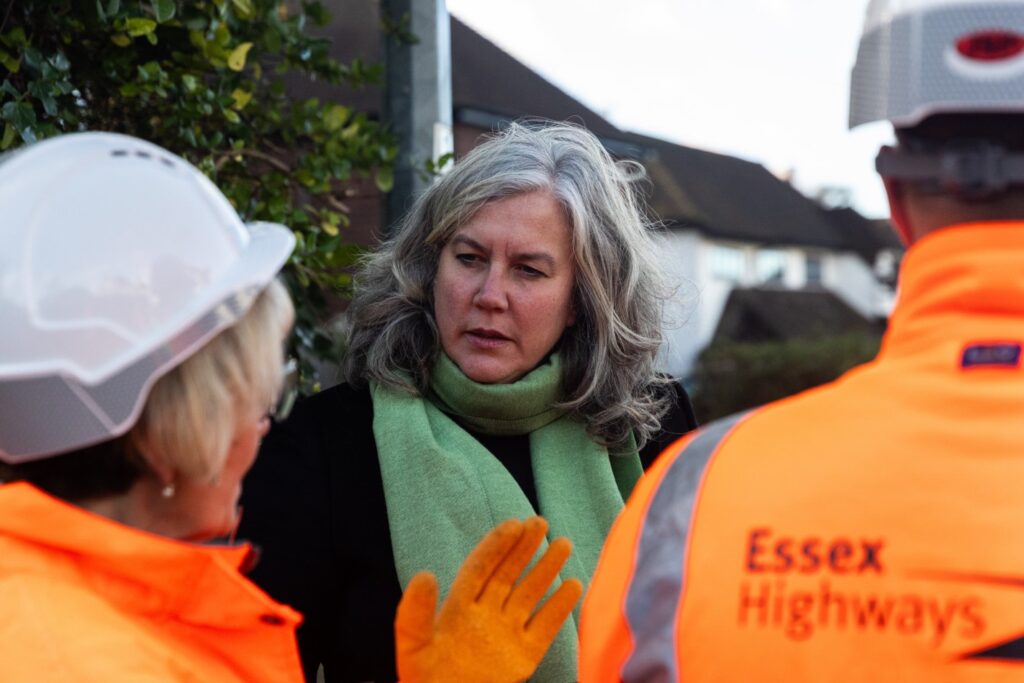
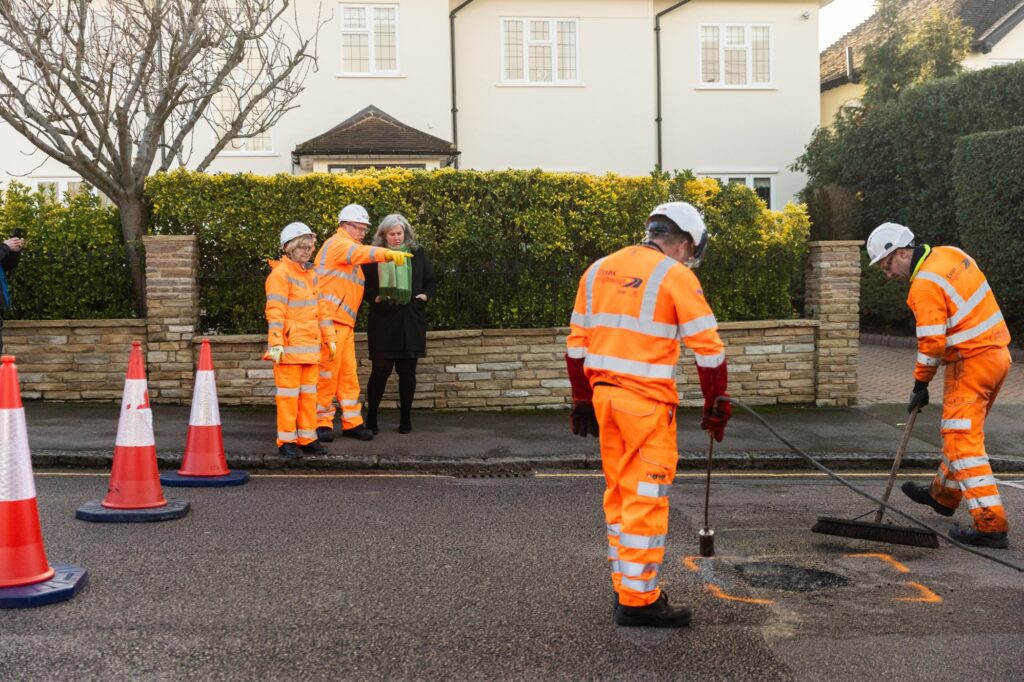
(Photo: Secretary of State Heidi Alexander MP visits road maintenance site in Epping Forest, Department for Transport)