
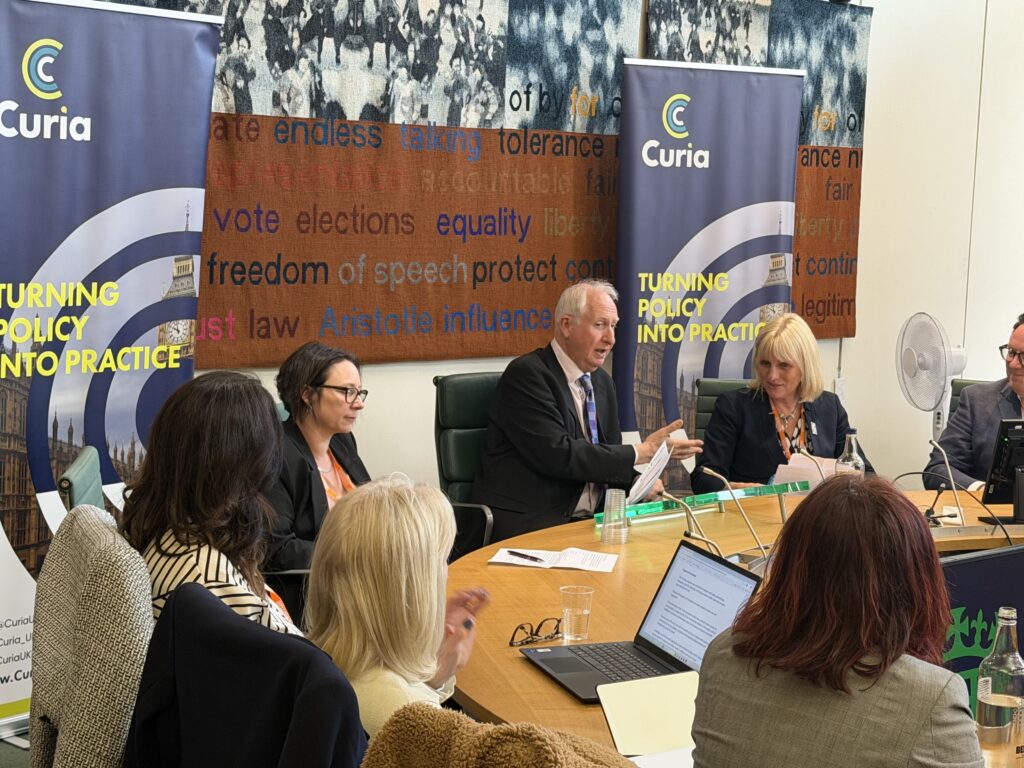
A parliamentary roundtable hosted by UKAI, UK Healthcare and Life Sciences Innovation (UKHLSI) and chaired by Curia explored how the UK can accelerate the adoption of innovation and artificial intelligence across life sciences, diagnostics, procurement, and patient care.
The UK is widely recognised as one of the world’s leading life sciences ecosystems. Its universities, research institutions, NHS datasets, clinical expertise, and thriving innovation sector give it a strong platform from which to lead the next generation of healthcare transformation.
Yet across the health and life sciences sector, a familiar problem continues to hold the country back – the UK is highly effective at generating innovation, but far less consistent at adopting it at scale.
That was the central theme of a parliamentary roundtable on Accelerating the Adoption of Innovation and Artificial Intelligence in UK Life Sciences, held in the House of Commons earlier this year. The event brought together parliamentarians, clinicians, life sciences leaders, innovators, industry representatives, and policy experts to examine what needs to change if artificial intelligence (AI), diagnostics, genomics, data, and digital innovation are to deliver meaningful benefits for patients, the NHS, and the UK economy.
Opening the session, former Minister of State and Member of Parliament for Cambridge, Daniel Zeichner MP welcomed attendees to Parliament and highlighted the importance of life sciences to the UK’s national growth agenda. He pointed to Cambridge’s role as a major life sciences hub, while also stressing that the policy challenge lies not only in scientific discovery, but in ensuring that expertise, and innovation are translated into successful adoption further down the line.
Chairing the discussion, former Chief Executive of the National Institute for Health and Care Excellence (NICE), Professor Gillian Leng CBE set out the scale of the challenge. Drawing on her 20 years at NICE, she argued that implementation and adoption have long been among the greatest barriers facing new technologies.
She recalled that debates about adoption were not new. Even in the early 2000s, discussions in Parliament focused on why proven technologies, such as insulin pumps, were not being taken up consistently across the NHS. While some nationally driven innovations have been implemented quickly, many medical technologies still take years to reach widespread uptake.
Diagnostics and the Adoption Gap
For the Chief Executive of the British In Vitro Diagnostics Association (BIVDA), Helen Dent, the adoption challenge facing AI-enabled diagnostics reflects a wider, pre-existing problem. She argued that the biggest barrier to AI diagnostics is not just AI itself, but the NHS’s difficulty in adopting diagnostics more broadly.
Dent pointed to a lack of clarity about what commissioners want, long procurement timelines, reimbursement challenges, and fragmented decision-making. While national procurement does not necessarily mean a single supplier, she argued that AI diagnostics must be interoperable and aligned across the system if they are to work effectively.
A recurring theme was the need for capital funding. Dent argued that many innovative diagnostics and technologies require upfront investment, yet the NHS too often relies on long-term contractual arrangements that make it difficult to replace older equipment or create a route in for new technologies.
She warned that when innovators are forced to carry the cost of NHS adoption delays, it affects not only individual products but the wider life sciences economy. Capital investment in innovation, she argued, could support domestic companies, strengthen local skills and jobs, attract foreign direct investment, and create a more sustainable route for new technologies to reach patients.
Cybersecurity, Data and Trust
Vice President and Head of Information Technology and Cybersecurity at Bicycle Therapeutics, Matt Harrison shifted the discussion to data security and strategic risk.
As AI becomes more embedded in drug discovery, clinical development, and healthcare operations, he argued that cybersecurity and data integrity are no longer purely technical issues. In life sciences, data is one of the sector’s most valuable assets. Protecting that data is essential not only for organisational resilience, but also for public trust.
Harrison noted that AI is changing the cybersecurity landscape by enabling faster identification and exploitation of vulnerabilities. In response, he suggested that cybersecurity will increasingly need to become more automated, with AI helping to create what he described as a “self-healing envelope” around systems.
He also warned that public confidence matters. If citizens do not trust institutions to handle health data securely, the UK risks losing one of its greatest advantages: the ability to use health data responsibly to improve patient outcomes, support discovery, and grow the life sciences sector.
The debate also touched on regulatory agility. Harrison referenced moves by regulators internationally to monitor clinical data more dynamically, suggesting that the UK must consider how its own regulatory environment can support faster, safer development of novel therapies.
A System Design Challenge
Founder and Chairman of UKHLSI partners Digital4Health Worldwide, Carlos Díez Ruza argued that the UK’s challenge is fundamentally one of system design.
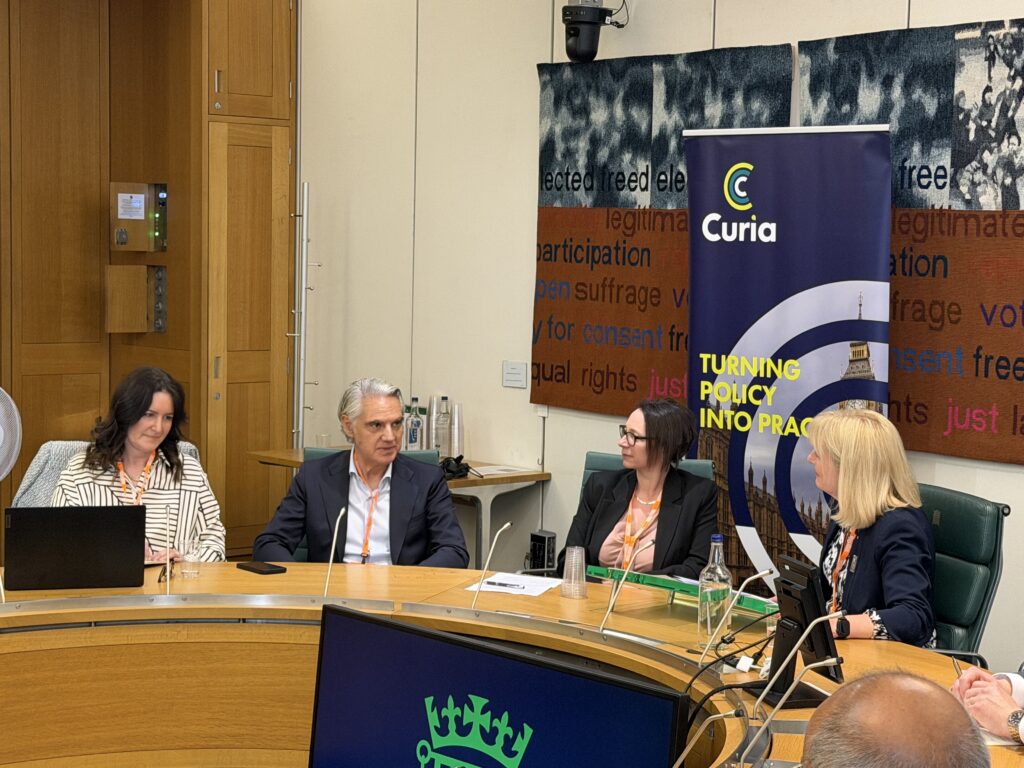
Carlos Díez Ruza offered a global perspective to challenges faced by the UK Life Sciences Sector
In his view, and from a global perspective, the UK does not lack innovation. It has world-class universities, a strong research base, and a large pool of innovators. The problem is that too much innovation fails to move from pilot stage to scaled deployment.
Díez Ruza argued that the UK needs clearer pathways for adoption, better architecture, and a more structured approach to integrating innovation across the health system. Too often, stakeholders speak different languages: innovators, clinicians, commissioners, procurement teams, regulators, and policymakers all operate within systems that are not sufficiently aligned.
He also drew comparisons with other international healthcare systems, arguing that the UK should be proud of its strengths but willing to learn from countries that have taken different approaches to prevention, incentives, integration, and system governance.
One of the starkest points made during the session was that pilots are not enough. Repeatedly testing promising innovations without creating routes to adoption risks wasting time, money, and goodwill. The question, participants suggested, should not be whether the UK can generate more pilots, but whether it can create the mechanisms needed to scale what works.
Procurement Must Be Rewired for Innovation
As is frequently the case at UKAI and UKHLSI sessions, procurement emerged as one of the strongest themes of the discussion. Participants argued that NHS procurement processes remain too slow, too fragmented, and too focused on buying products rather than outcomes.
Dent argued that if government has already funded the development of an innovation, it should be far easier for the NHS to adopt it. Existing procurement rules, she suggested, are often interpreted in ways that create unnecessary barriers. The problem is not always the law itself, but local procedures, risk aversion, and outdated purchasing models.
The discussion also raised the need for national standards. A national decision-making framework would not mean choosing one supplier for the whole NHS. Rather, it could establish minimum standards, evidence expectations, interoperability requirements, and safety thresholds, while allowing a range of suppliers to compete and innovate.
Several contributors noted that procurement teams within Integrated Care Boards (ICBs) and trusts are often asked to assess highly complex technologies without the specialist expertise needed to judge clinical value, technical performance, cybersecurity, data governance, and interoperability. This can lead either to poor decisions or no decisions at all.
The COVID-19 pandemic was repeatedly cited as an example of what can happen when the system has urgency, clarity, funding, and shared objectives. While no one argued for emergency procurement as a permanent model, participants suggested that lessons from the pandemic should be reviewed and applied to innovation adoption more broadly.
Prevention, Public Confidence, and the Social Contract
The discussion also moved beyond technology adoption to consider the wider purpose of healthcare reform.
Director of Corporate Governance at Sussex Partnership NHS Foundation Trust, Nabil Jamshid argued that the debate must be linked to the NHS’s wider shift towards prevention, community care, and digital transformation. He questioned whether enough attention is being paid to building public confidence in the use of health data and AI.
A major challenge, he suggested, is the need to renew the social contract between citizens and the health system. People often allow private technology companies to hold vast amounts of personal data yet may feel more concerned about the NHS using data to improve care. That contradiction points to a wider need for public engagement, explanation and trust-building.
Dent echoed this point, noting that most people are taught to interact with the NHS only when they are unwell. If the health system is to become more preventive and digitally enabled, citizens will need to understand how to engage with it differently.
From Debate to Delivery
In closing reflections, Chief Executive and Co-Founder of UKHLSI, Joanne Bekis argued that the UK has major opportunities but also clear barriers to overcome. She highlighted the need for better regulation, clearer AI guidance, improved procurement, capital funding for innovation and stronger incentives for start-ups.
She also stressed that the UK is “data rich”, with the NHS number providing a potentially powerful basis for joined-up care and research. However, that opportunity can only be realised if systems can communicate with each other and data is used safely, effectively, and consistently.
Natasa Mihajlovic, from the UKAI Life Sciences Working Group, reflected that the session had focused not only on what needs to change, but how it can happen. She argued that businesses need a clearer platform through which to understand standards, engage with the NHS and contribute to responsible adoption.
Final Thought
The key message from the roundtable was that the UK is not short of innovation. It is short of adoption pathways that are clear, properly funded, nationally supported, and designed around outcomes.
If the UK wants to lead in AI and life sciences, it must move beyond fragmented pilots and create the conditions for proven innovation to spread. That means stronger national direction, better procurement, smarter regulation, secure and trusted data use, and a more serious focus on prevention and patient benefit.
As Professor Leng concluded, the challenge is substantial, but achievable: the UK needs national drive, clear direction, the right systems, and the right incentives. The opportunity is already here. The task now is to turn it into delivery.
BIVDA and Bicycle Therapeutics are members of Curia’s Health, Care, and Life Sciences Research Group.
To find out more about UKHLSI, and UKAI, please visit www.ukhlsi.co.uk and www.ukhlsi.co.uk or email Partnerships Director, Ben McDermott Ben.mcdermott@chamberuk.com.