




Jonathan Rowley
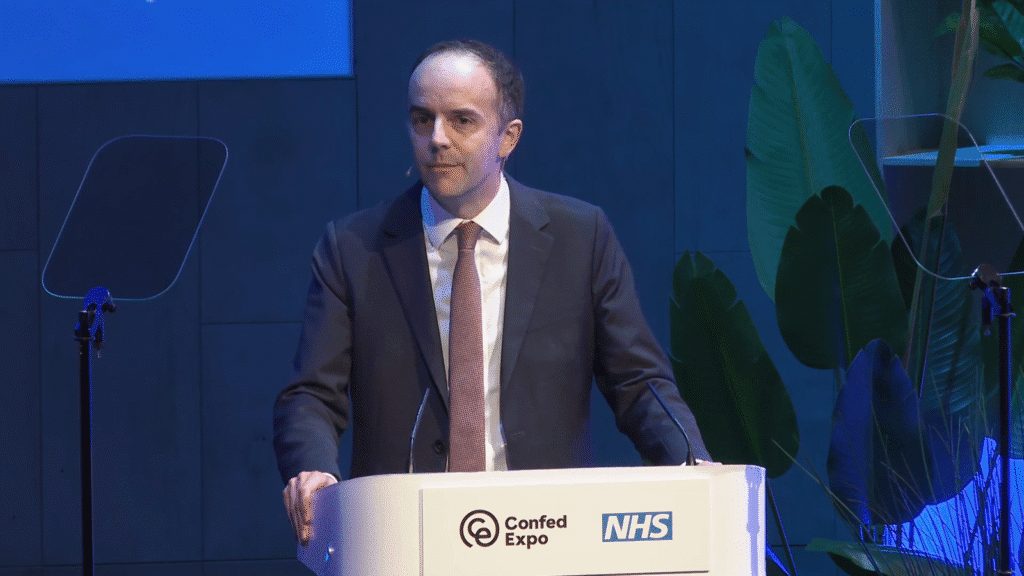
Founder and CEO, THRIVE (Tees Healthcare Research Innovation and Education Ltd)Founder and CEO of THRIVE, Jonathan Rowley argues that the NHS Modernisation Bill will not deliver meaningful change through structural reform alone. Drawing on his work with health innovators, he warns that too many clinically validated and commercially viable solutions are still blocked by unclear procurement routes, weak adoption pathways and a lack of system readiness. He makes the case for a dedicated innovation adoption clause in the Bill, with clearer Integrated Care Board pathways, stronger support for innovators and procurement reform that keeps pace with technology. (Picture: Lauren Hurley/No 10 Downing Street)
Every few years, the NHS reorganises itself. New bodies replace old ones. Strategies are launched. Frameworks are published. And the innovators who have spent three years developing something genuinely useful are left wondering whether the contact they spent twelve months cultivating still has a job.
The NHS Modernisation Bill represents another structural reset. Some of what it proposes is sensible. Integrated neighbourhood teams, shifting care closer to home and greater accountability are all directions of travel the system has needed for years. But structural reform without innovation adoption is little more than rearranging the furniture.
The UK has one of the most productive health innovation ecosystems in the world. The National Institute for Health and Care Research (NIHR) funds world class clinical research. Innovate UK backs early stage development. NHS England has published more innovation frameworks than most.
And yet, the average time from proof of concept to NHS adoption remains somewhere between five and ten years. For a health system under the pressure ours currently faces, that is not a pipeline. It is a blockage.
The problem is not the innovations.
In my work supporting health innovators, I see the same pattern repeatedly. A founder has a genuinely compelling solution: clinically validated, commercially viable and aligned with NHS priorities. But they simply do not know how the system works.
They do not know which procurement route applies to their product. They do not know what a commissioning body needs to see before it will engage. They have never written a health economic model. They have heard of NIHR Invention for Innovation (i4i), but cannot tell you what the assessors actually score.
This is not a failure of ambition. It is a failure of infrastructure.
The NHS is, by design, a complex system. Navigating it requires knowledge that takes years to accumulate. Most founders, however talented, simply do not have that knowledge when they start.

The Modernisation Bill Needs an Innovation Adoption Clause
If the Bill is to deliver on its promise of a more efficient, community centred NHS, it needs to take innovation adoption seriously. That means three things.
First, mandated innovation pathways at Integrated Care Board (ICB) level. Every ICB should be required to publish a clear, accessible route for innovators, setting out what evidence is needed, what procurement options are available and who the right contact is. The current patchwork of local approaches is a barrier, not a feature.
Second, investment in innovation readiness support. The UK has world class grant funding infrastructure, but chronically underinvests in helping founders navigate it. A relatively small investment in structured support – assessment, strategy, bid writing and procurement navigation – can produce a disproportionate return in terms of innovations that actually reach patients.
Third, procurement reform that reflects the speed of innovation. NHS frameworks move on multi year cycles. The technology landscape moves on quarterly cycles. The gap between those two rhythms is where promising innovations go to die. Dynamic purchasing systems and direct award pathways exist, but remain underused. The Bill should make their use the default, not the exception.
The Opportunity Is Real
I have seen what happens when innovators get the right support at the right time.
A diagnostics company that had been circling the NHS for two years secured an exit within six months of properly mapping its adoption pathway. A community health tool went from pilot to procurement win, was featured in Forbes and won an HSJ Award. A femtech cohort raised £300,000 in pre seed investment after going through structured market preparation.
These are not exceptional cases. They are what becomes possible when the gap between innovation and adoption is treated as a solvable problem, rather than an accepted feature of the system.
The NHS Modernisation Bill will reshape how care is organised and delivered. That matters. But the NHS will not transform through structural reform alone.
It will transform when the innovations that have already been developed, already been funded and already been validated finally reach the patients who need them.