

The answer is to professionalise the people who deliver it.

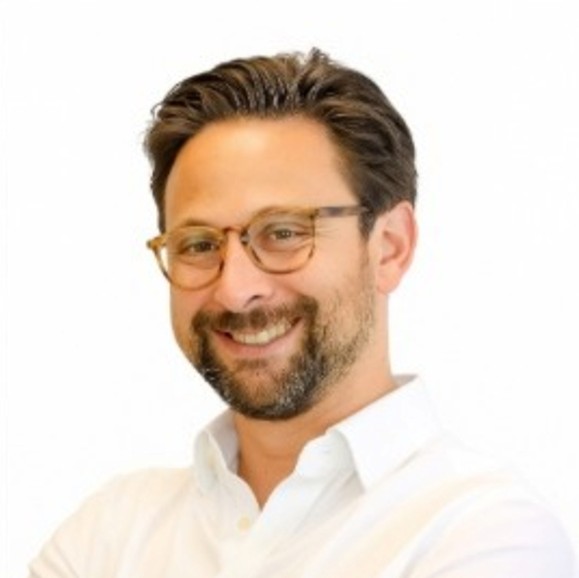
Ryan Kerstein
Surgeon & NHS Innovation Leader and Committee Member at NICEThe NHS has an adoption problem, which is a people problem. The answer is to professionalise the people who deliver it.
The NHS does not have an innovation problem. It is not short of ideas, nor of technology, nor of evidence. It has more pilots, accelerators, and promising tools than it can count, and almost no means to put them to use at scale. The NHS has an adoption problem, and an adoption problem is not a technology problem. It is a people problem. The fix is not more innovation. It is to professionalise its adoption.
Consider the position we are in. We run the largest integrated healthcare system in the world, staffed by some of the most motivated clinicians anywhere, sat on top of a life sciences sector that is the envy of most economies. The 10 Year Plan sets the right destination, as did the strategies before it; what no plan has yet supplied is the means of getting there. Every ingredient for transformation is present. And yet we are having the same conversation we were having a decade ago about why so little reaches the bedside. When every input is in place and the output still does not come, the missing element is not another input. It is the mechanism that turns one into the other.
Connection
That mechanism is human, and we have never truly built it. I have spent 20 years in the gap it leaves. I am a consultant surgeon and, alongside operating, I lead innovation work inside an NHS trust and at a Royal College. Therefore, I can describe what actually happens, which is not the orderly story the technology breakthrough announcements imply. There is rarely anyone whose job at the frontline is to know what technology exists, to hold an honest account of the problems a hospital most needs to solve, and to match the two. Awareness is left to chance, shaped by whatever a supplier happens to push rather than by what a hospital sets out to find. The good idea that would save money and improve care does not arrive, because no one was looking for it. And on the rare occasion it does arrive, it meets a system with almost no one whose actual job is to see it through.
The evidence is in plain sight to anyone who has worked in the service. The same approved technology, the same software, and the same clinical task, deployed in two neighbouring hospitals, will transform care in one and gather dust in the other. The variable is not the problem or the technology. The problems and technology are usually identical between providers. The variable is whether the hospital had the people and the pathway to absorb it. A recent national conference I was speaking at had a ministerial keynote. The minister put the point well, telling a room of clinicians that innovation cannot be imposed from above, cannot be planned from a desk in Whitehall, and must be locally led. She was right. She even conceded that previous governments had rolled out well-meaning technology that quietly got switched off. But the speech named the gap and stepped over it. If innovation must be locally led, the unanswered question is who, locally, is being made responsible for leading it.

Dedication
The honest answer is almost no one. I can count on one hand the people I know across the entire health service whose defined role is to find the high-impact problems, horizon-scan for the right technology or, better still, co-develop the solutions with industry and see that match through to the bedside. Not enthusiasts doing it in the cracks of a clinical job. Not a transformation team with no clinical experience. People for whom this is the work, with the time protected to do it and the standing to be believed on the ward and in the boardroom alike. There are almost none of them, because we have never decided that this is a job. The result is a system that runs on discretionary effort and individual willpower, which makes it fragile and personality-dependent. A capability that exists only because particular people insist on it is always one resignation away from collapse.
We know how to close a gap like this, because we have done it before. Britain is a genuine world leader in clinical academic research, and that is no accident. We did not get there by urging doctors to do research in their spare time. We got there by deciding that the clinical academic was a profession, with a named pathway, protected time, and institutions that owned the route from trainee to professor. We named the role, we structured it, we invested in it, and world-class output followed. The talent was always there. What changed was the architecture around it. We have simply never pointed that same method at the work of getting innovation into practice.
Let me be clear about what this is not. It is not a call to create a new tier of posts, or to spend money the service does not have. The people who do this work already exist, scattered across the system, doing it in the margins of other jobs. To professionalise adoption is to recognise that capability, protect time for it and give it a route, so that what the NHS already contains is organised rather than wasted. Every clinician should understand innovation. Only some will lead it. Those who will should be able to build a career doing so, rather than choosing between the work they are good at and the work that gets recognised.
Adoption
I am realistic about what most readers of this magazine can do with that argument tomorrow. Few have the scope to commission a national career framework. But all of you will, in the months ahead, have an announcement cross your desk – a new fund, a new tool, a new pilot – presented with a number attached and a promise of transformation. When it does, I would ask you to apply a single test. Set the technology and the headline figure aside, and ask one question: who, in the system this is being pushed into, is actually accountable for making it work, and is that a real job with protected time, or is it everyone’s enthusiasm and no one’s role?
If it is the latter, you are looking at the next initiative that will be quietly switched off, exactly as the minister warned. Professionalise adoption, and ask that question of every announcement until the answer is built into the system rather than left to chance. The 10 Year Plan describes a destination worth reaching. Whether we reach it depends on whether anyone is made responsible for the route. That is the difference between a different decade and a repeat of the last one.

The technology is ready. It has been ready for some time. What we have never resourced is the human capability to receive it. We can keep pushing innovation at the NHS and keep being surprised when it lands unevenly, or we can build the people who let the NHS pull it through. The first is what we have always done. The second is the only thing that has ever worked.