


Miles Bennington
Editor – Chamber UK MagazineLabour Party Housing Market Policies Effects: Our Editor argues that Labour’s flagship 1.5 million homes pledge risks collapsing under weak delivery and harsh political realities, warning that unless Labour can turn planning reform into visible progress, frustrated young voters may look elsewhere in 2029.
“A decade of national renewal”, the end of “sticking plaster politics”. It all sounded so good in 2023, when the then Leader of the Opposition, Keir Starmer, signalled a more serious brand of politics, focused on the long term. He followed this up with a promise to build 1.5 million homes in England over the course of the next Parliament. Somewhere north of a 50 per cent increase in house building. A huge ask.
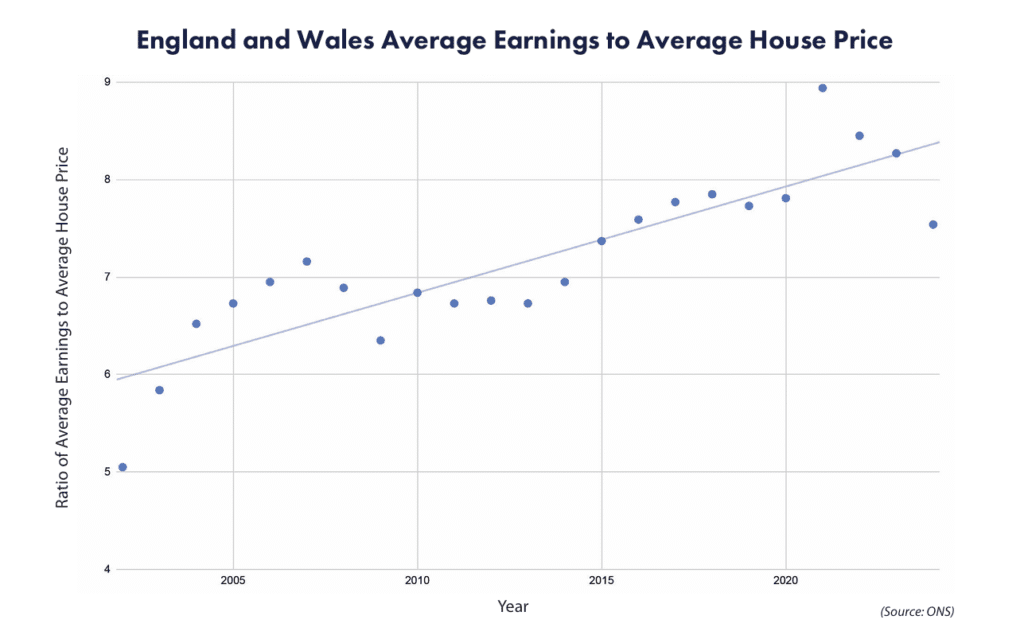
Given the continued rise in the house price to wages ratio, voters were ready to see concerted action from a new government to make housing affordable.
Skills Shortage?
So, over a year into this Government, what progress is there to see? None whatsoever.
The number of residential planning approvals, both in terms of projects and units, has continued its downward trend since 2020, according to the Home Builders Association. According to the National House-Building Council, new home completions were 2 per cent down on the previous year in 2025. Recent figures from the Cobalt Development Index show a 6 per cent increase in planning applications, but an 11 per cent drop in approvals.
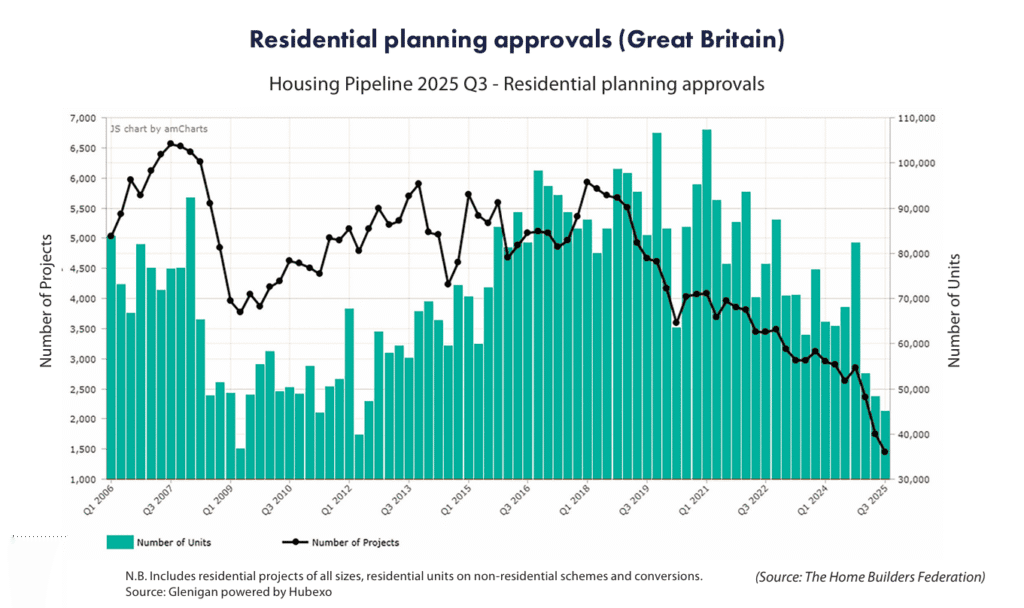
Nowhere is there any evidence that the house-building sector is gearing up for an increase. Complaints of a skills shortage, high material costs, and delayed planning approvals abound.
Labour’s Story
Since the election, Labour has passed the Planning and Infrastructure Act 2025 and has updated the National Planning Policy Framework. Steve Reed, the Housing Secretary, insists that the Government will “just meet” the 1.5 million target by 2029 and that ministers are “pulling every lever” to do so.
When pushed, he points to the effects of Labour’s planning reforms and a “hockey stick” curve describing a sharp increase in house building towards the end of this Parliament. The challenge with that strategy is that the longer any increase is left, the higher the annual rate of house building will need to be to hit the target.
In simple terms, if England builds around 200,000 homes a year, we could expect a million homes over a five-year Parliament. If Labour want to build an additional 500,000 homes before 2029, they will need to deliver almost 170,000 additional homes per year in the last three years of the Parliament. What was a 50 per cent increase in annual home building at the start of this Government has quickly turned into an 85 per cent increase.
The Politics
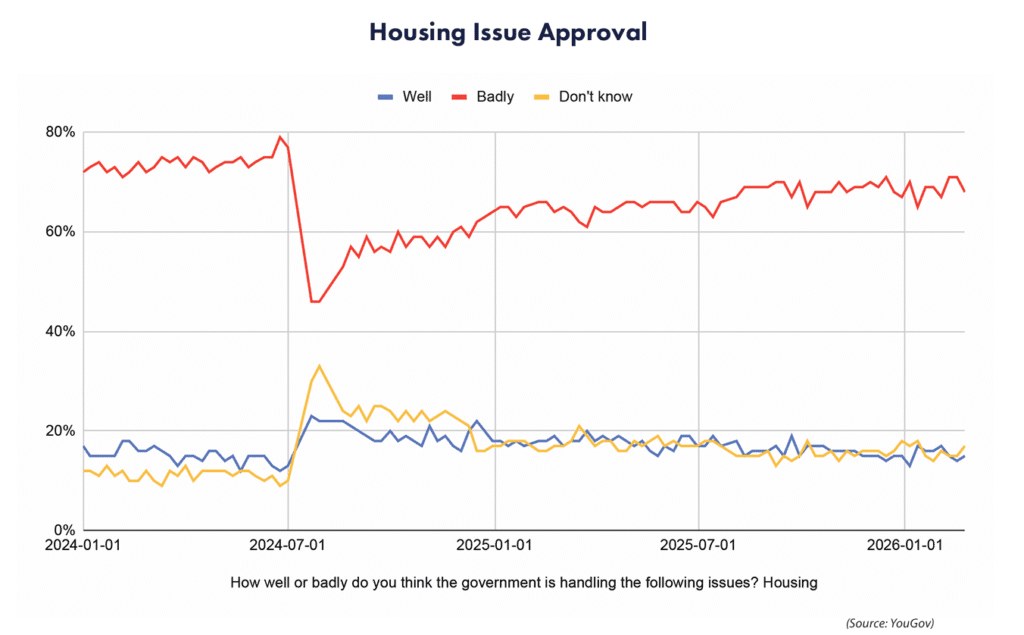
While the implementation of the actual policy looks bad, the politics may be survivable for Labour. According to YouGov tracking surveys, around 50 per cent of voters believe that it would be good for the country if house prices went down. However, only around 20 per cent believe it would make them better off, while a similar number believe it would make them worse off. Disapproval with Labour’s handling of housing is creeping up to a similar level of the last Government, but housing remains the most important issue facing the country for only 20 per cent of voters, though this is notably higher among the young.
Has this Government grasped the same political insight that every government since Right to Buy must have? Increasing supply and easing prices risks denting the paper wealth of older existing homeowners, a high turnout voter group, to increase the wealth of hypothetical younger future homeowners, a low turnout voter group. Worse, the effects of developments – be they disruption, strain on infrastructure, or depreciation in house prices – are localised, allowing opposition to organise effectively to thwart or punish pro-development politicians.
With frustration among voters growing, however, Labour has no counter against Reform’s arguments that stopping immigration will solve the housing crisis. Indeed, their promise-high, deliver-low strategy seems tailor-made to push young people into the arms of less mainstream parties.
Sticking Plaster Politics – Labour Party Housing Market Policies Effects
After a year and a half, Labour’s decade of renewal seems nowhere in sight. If Labour cannot prove that government can at least make progress on the issues facing voters, they risk leaving voters politically homeless… as well as literally homeless. Steve Reed has said that his job is “on the line” if the 1.5 million target is missed. That is also true of all Labour MPs who enjoy anything less than crushing majorities.
Time for an end to sticking plaster politics?

This article features in the new edition of ChamberUK. Our parliamentary journal.
Photo Credit: Shutterstock