




Geri Silverstone
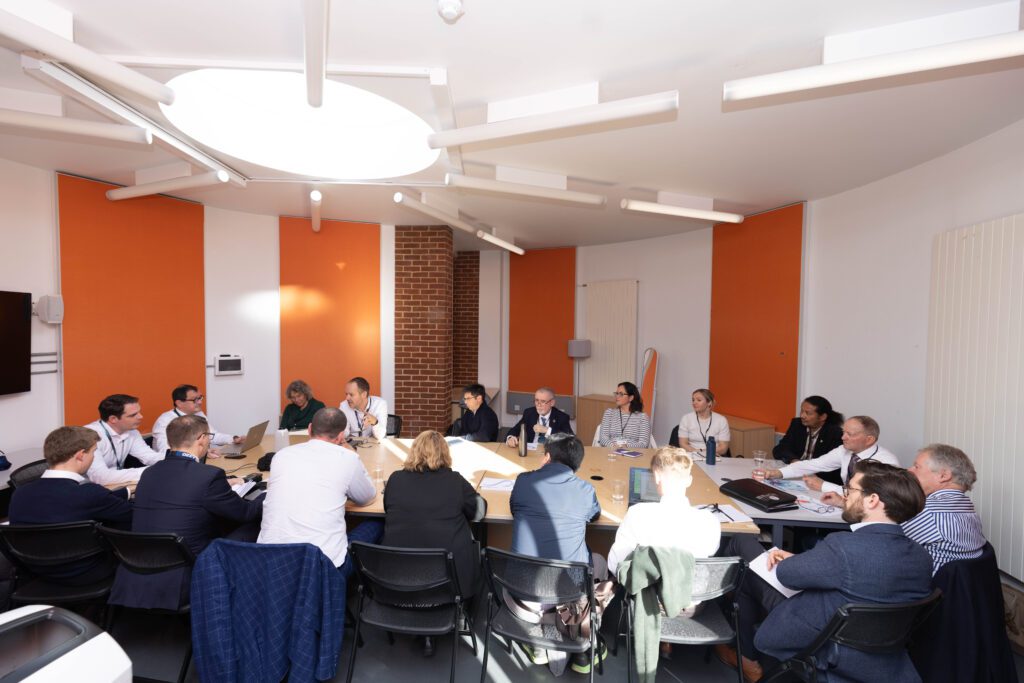
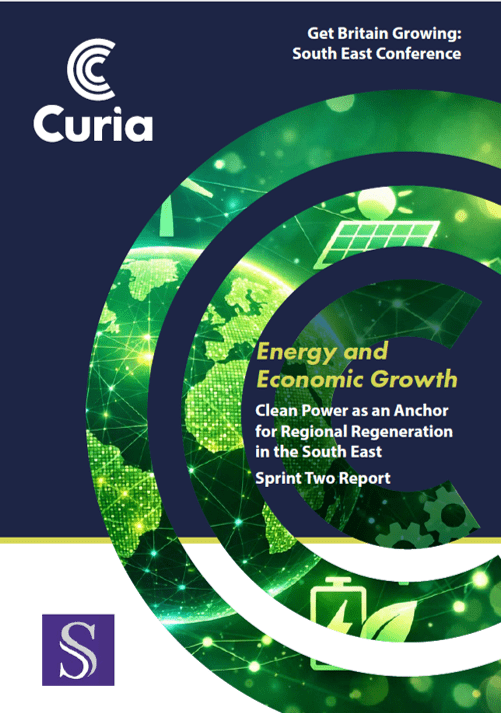
Chief Executive, Silverstone CommunicationsSpeaking on the recent clean energy report from Curia, Sprint facilitator Geri Silverstone says the South East does not lack ambition or opportunity – it lacks the coordinated infrastructure and leadership needed to deliver them. (Image: The Clean Energy Sprint at the Get Britain Growing: South East conference. Photo: Silverstone Communications)
Energy sits at the heart of almost every challenge and opportunity facing the South East. From economic growth and regeneration to public health, housing delivery, industrial competitiveness, and climate responsibility, our ability to generate, move and use clean, affordable power will shape the future of our region for decades to come.
The South East is home to critically important national infrastructure – ports, transport corridors, coastal communities, and energy assets – but it is also on the frontline of many of the pressures discussed during this Sprint. Air quality along major freight routes, constrained grid capacity, rising electricity costs, and planning systems that struggle to balance local consent with national need are not abstract policy debates. They are lived experiences for residents, businesses, and councils across Sussex and the wider South East.
This Sprint on Energy and Economic Growth brought together an unusually broad and valuable mix of voices: local government leaders, industry operators, port authorities, energy suppliers, academics, infrastructure specialists, and community representatives. What emerged was not a single silver bullet, but a clear and consistent diagnosis of the problem we face – and a set of practical, grounded ideas for how we begin to address it.
The starting point for the discussion was an implicit but important assumption: the South East must be able to generate more of its own power, closer to where it is used. Long grid connection times, rising transmission costs, and national infrastructure bottlenecks mean that waiting for distant solutions will leave our region exposed. If we want resilient growth, cleaner air, and lower energy bills, local and regional solutions must form a far greater part of the mix.
From Grid Constraints to Local Energy Generation
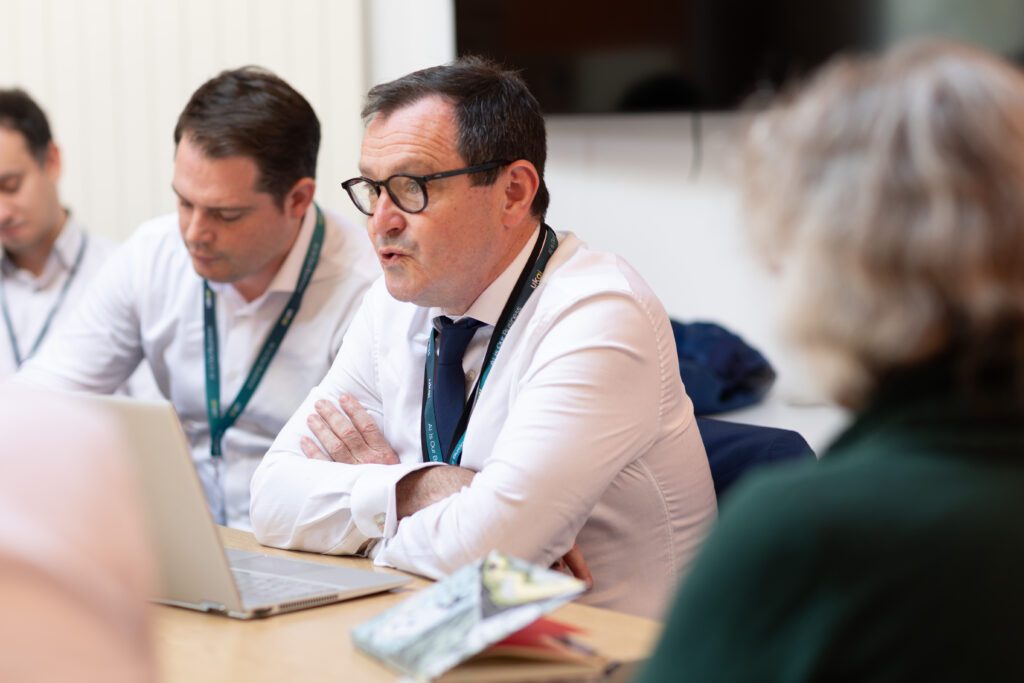
Participants I met at the Sprint and conference were frank about the scale of the challenge. Ports that could act as hubs for clean energy are constrained by grid access and electricity prices that make electrification commercially unattractive. Airports face ambitious targets for sustainable aviation fuel without a credible supply roadmap. Heavy goods vehicles continue to dominate freight movement in a region with limited rail alternatives, yet the infrastructure for large-scale electrification does not exist. Meanwhile, communities are being asked to absorb the visual and environmental impact of new energy infrastructure without always seeing clear local benefits.
What struck me most was the degree of consensus around the systemic nature of these issues. Again and again, contributors returned to the same themes: fragmented decision-making, siloed expertise, misaligned incentives, and an adversarial planning system that rewards objection rather than collaboration. The South East does not lack knowledge or ambition – it lacks coherence.
Breaking the Planning and Infrastructure Bottleneck
At the same time, this was a positive conversation. The Sprint surfaced a wealth of opportunity – local renewable generation, microgrids, community energy schemes, green roofs, tidal projects, port-based electrification, and innovative regulatory mechanisms all offer tangible ways forward. Crucially, many of these solutions are smaller, more agile, and more reversible than the large-scale infrastructure projects that often dominate national debate.
There was also strong recognition that evidence and trust matter. Whether discussing solar farms, onshore wind, or biodiversity impacts, participants highlighted the need for better shared data and more transparent modelling. The proposal to develop a digital twin of the South East – capable of testing scenarios, trade-offs, and cumulative impacts – is emblematic of the more mature, evidence-led approach that is now required.
This Sprint reinforced my view that delivering the energy transition is not just about technology or targets. It is about leadership. Local political leadership that is prepared to make the case for infrastructure, to engage communities honestly and to articulate the benefits as well as the costs. National leadership that enables regions to act, rather than tying them up in delay and uncertainty.
A Place-Based Strategy for Energy and Growth
The South East has enormous assets: ports, universities, skilled workforces, innovative companies, and engaged communities. Harnessing those assets requires us to move beyond one-size-fits-all solutions and towards a genuinely place-based energy strategy. This report captures the substance of that conversation and sets out a credible path from discussion to delivery.
The challenge now is not understanding what needs to be done. It is having the confidence and co-ordination to do it.
Get Involved
Building on the momentum of this Sprint, in 2026 Curia is now taking forward a programme of work focused on translating these energy insights into practical delivery – including their wider work on new towns and place-based development.
This next phase will bring together policymakers, developers, infrastructure providers, and innovators to explore how clean power can be embedded from the outset in new communities, rather than retrofitted into constrained systems. Those interested can get involved through Curia’s Clean Energy and Environment Research Group, upcoming roundtables, and targeted working sessions, with Mayors and local government leaders from across the UK.
These sessions will shape policy recommendations, pilot projects, and future reports. By participating, stakeholders have the opportunity to directly inform how regional energy systems and new settlements are designed, ensuring that growth is both sustainable and deliverable in practice.
To find out more about this programme, contact Partnerships Director, Ben McDermott at ben.mcdermott@chamberuk.com.
Save the Date:
The Get Britain Growing: South East conference returns to Brighton in 2026. To find out more about the sessions and get more involved, please contact Partnerships Director, Ben McDermott at ben.mcdermott@chamberuk.com.
Save the date 6th November 2026.